From Na Mo’olelo Hawai’i o ka Wa Kahiko, Stories of Old Hawai’i, How Kapa Was Made, p. 66-67. by Roy Kakulu Alameida (1997), Bess Press, Honolulu
How Kapa Was Made
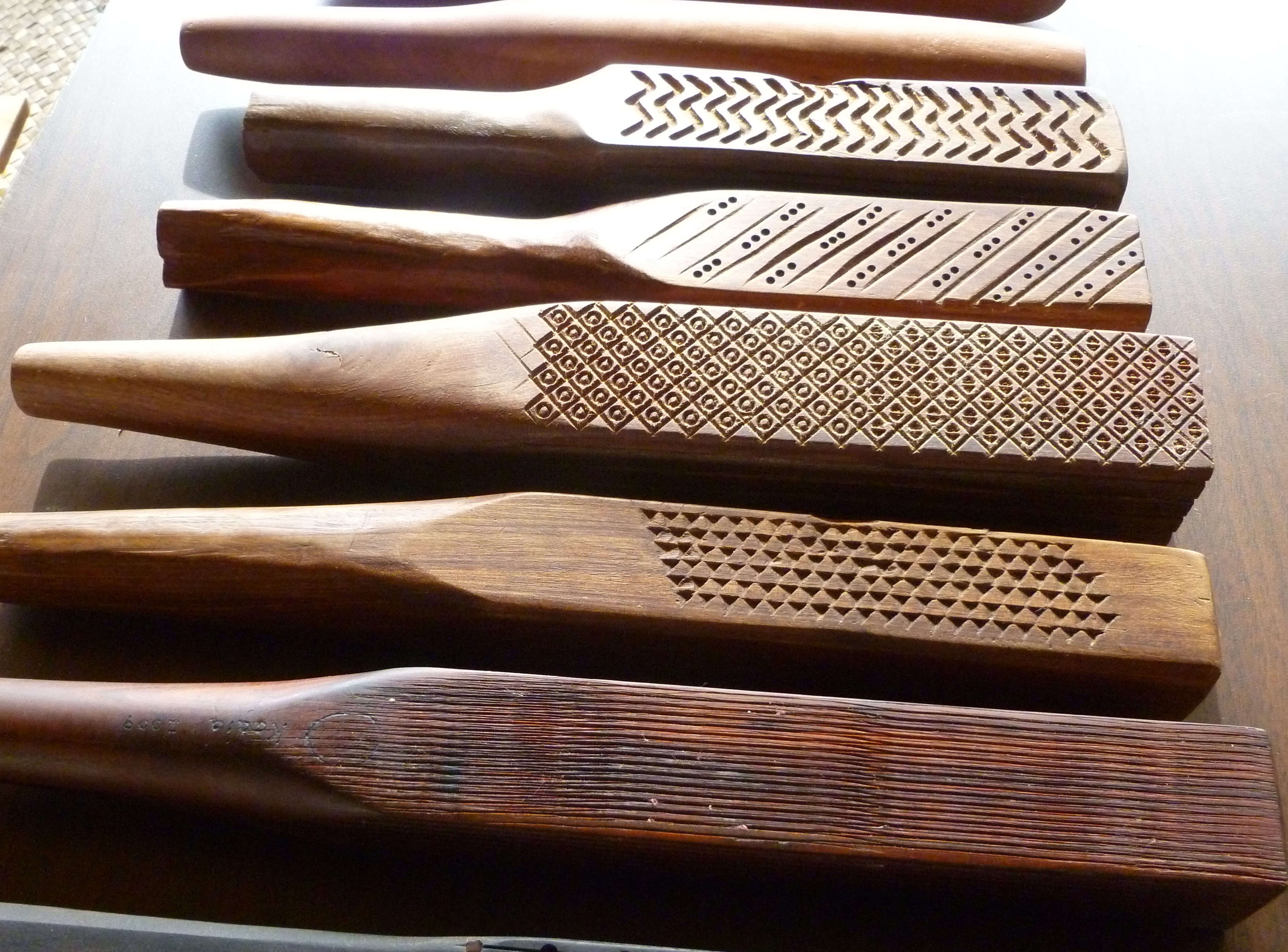
After he died, Maikoha became the ‘aumakua of all kapa makers. Wauke branches were planted on all the islands. Prayers and sacrifices were offered to Maikoha. Soon each of his daughters also became an ‘aumakua. Lauhu’iki became the ‘aumakua of all the women who pounded the prepared bark from the wauke. She was given the power of finding kapa in the bark of the tree. She also had the power of teaching others how to pound the bark correctly. She taught them how to care for those who worshiped her. The other daughter, La’ahana, was worshiped by those who used special kapa ku’i that made marks and patterns on the kapa. Thus, Maikoha and his daughters were the main ‘aumakua of all kapa makers. But the other gods from time to time found new ways to use the wauke.
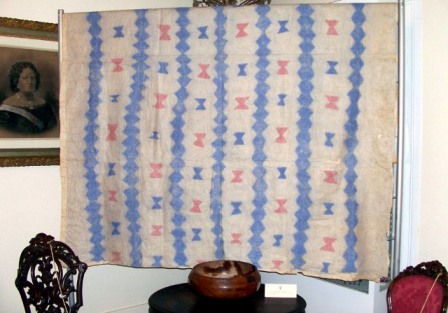
One was ‘Ehu. He learned and taught others how to dip kapa into dyes to give it color. He discovered that a red dye can be made from the kukui tree. Prayers and food were offered to him while the dyes were being collected and when the kapa maker wanted to add color to the kapa. There were kapa of different colors and designs. Sometimes kapa were spotted by sprinkling colors over them. Sometimes torn-up pieces of kapa were pounded together with new kapa to produce a spotted look. Sometimes bamboo was used to draw lines and figures. White kapa were used in the heiau to cover the images. When kapa was laid on an object, it meant that the object was not to be touched. Anyone who removed the kapa would be punished by the ‘aumakua. When kapa was hung on a pole and placed on a trail, it meant that the trail was kapu. A kapa dipped in black dye was kept for covering the body of an ali’i who had died.
Sometimes the sweet-smelling flowers or the oil from the ‘iliahi tree were pounded into the kapa. Flowers from the niu and hala and other sweet-smelling plants were placed in hot water. This made perfume. When the kapa was perfumed, it was dried inside a house. That way the smell would not be lost.
Sometimes kapa were well scraped with pieces of shell or rubbed with stones. Then they were rolled in dirt and placed in a calabash. They were soaked in water for a long time. After they were washed and pounded again, the kapa became very soft. Often kapa were spread out over cold, wet freshwater moss overnight. This made kapa very bright and shining. Spider eggs were often used to oil the kapa.
Hina, the mother of Maui, was a great kapa maker. Her kapa is spread all over the sky. These are the beautiful clouds of all colors. Sometimes they are piled on top of each other. Sometimes they are lying in sheets. Sometimes the strong winds blow and lift and toss the kapa. The winds blow off the stones Hina placed on the kapa to hold them down. Sometimes Hina throws off the stones herself. The noise of the rolling stones sounds like thunder. Sometimes Hina rolls the cloud sheets together. The folds flash in the light of the sun like lightning.
Glossary of Hawaiian Words
‘aumakua: family god (singular or plural form)
wauke: paper mulberry tree (Brousonetia papyrifera) its bark was pounded to make cloth
kapa: tapa (bark cloth)
kapa ku’i: tapa beater
kukui: candlenut tree (Aleurites moluccana)
heiau: temple
kapu: forbidden; sacred
ali’i: chief
‘iliahi: sandalwood (Santulum paniculatum)
niu: coconut (Cocos nucifera)
hala: pandanus tree (Pandanus utilis)
Posted in
Mo'olelo (stories),
Research Project and tagged
'Olelo Hawai'i,
archaeology,
arts,
bark cloth,
canoe plants,
cultural arts,
hawai'i,
hawaiian,
hawaiian language,
hawaiiana,
history,
kapa,
legends,
mo'olelo,
Polynesia,
stories,
wauke |



 kapa kulture