kapa kulture
This blog is dedicated to Hawaiian kapa and matters related to Hawai'i nei…kuku kapa e!

Archive for the tag “bark cloth”
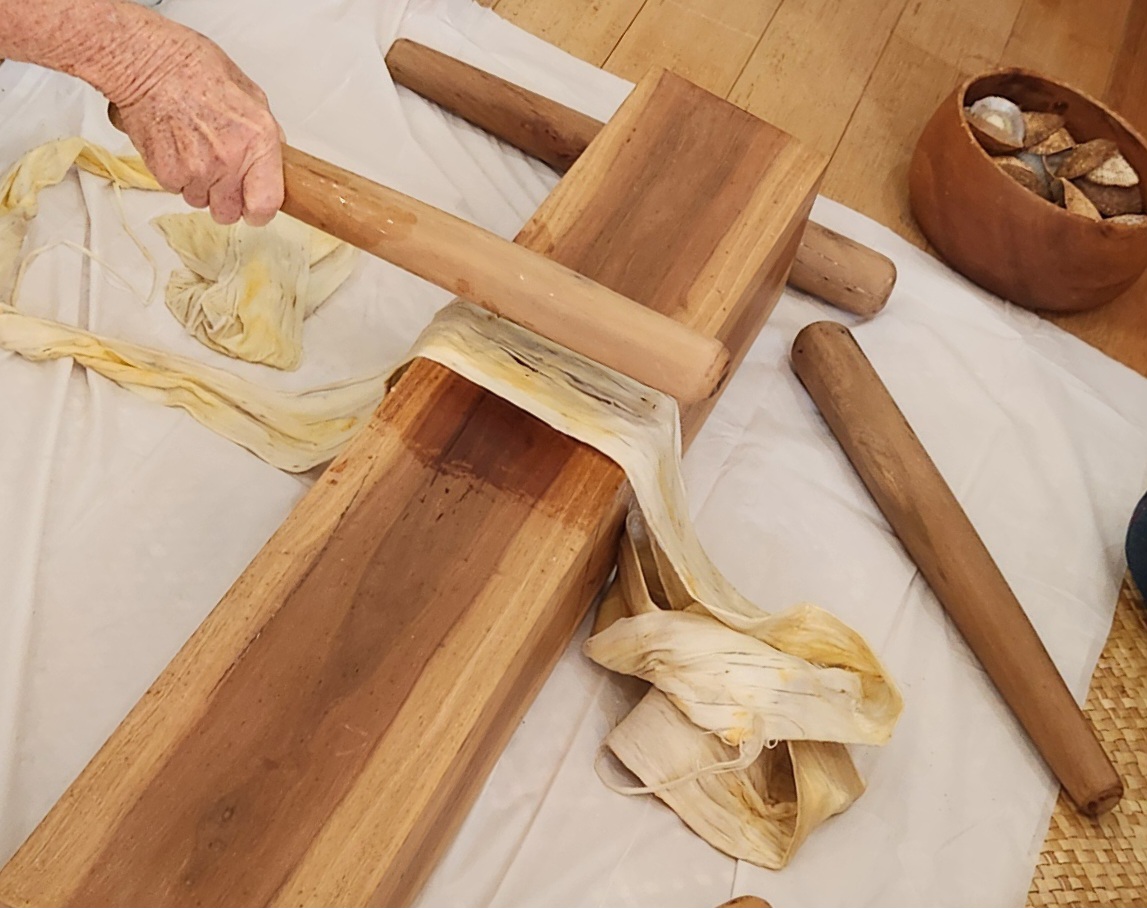
HALE KAPA, or Kapa House in English
New gallery shop opened in Lihu’e on Kaua’i, Hawai’i. It is a home for the Kapa Revival Project, a place to hold classes and workshops in the Hawaiian arts, especially kapa arts, and a place to see kapa on display and purchase tools for kapa making. There are also a number of beautiful island-style items for sale. Right now there are Christmas ornaments made with kapa and stamped with ‘ohe kapala, bamboo stamps in traditional Hawaiian motifs.

2981 Kalena Street, Lihu’e, HI. 96766
Bark Cloth of the Cook Islands
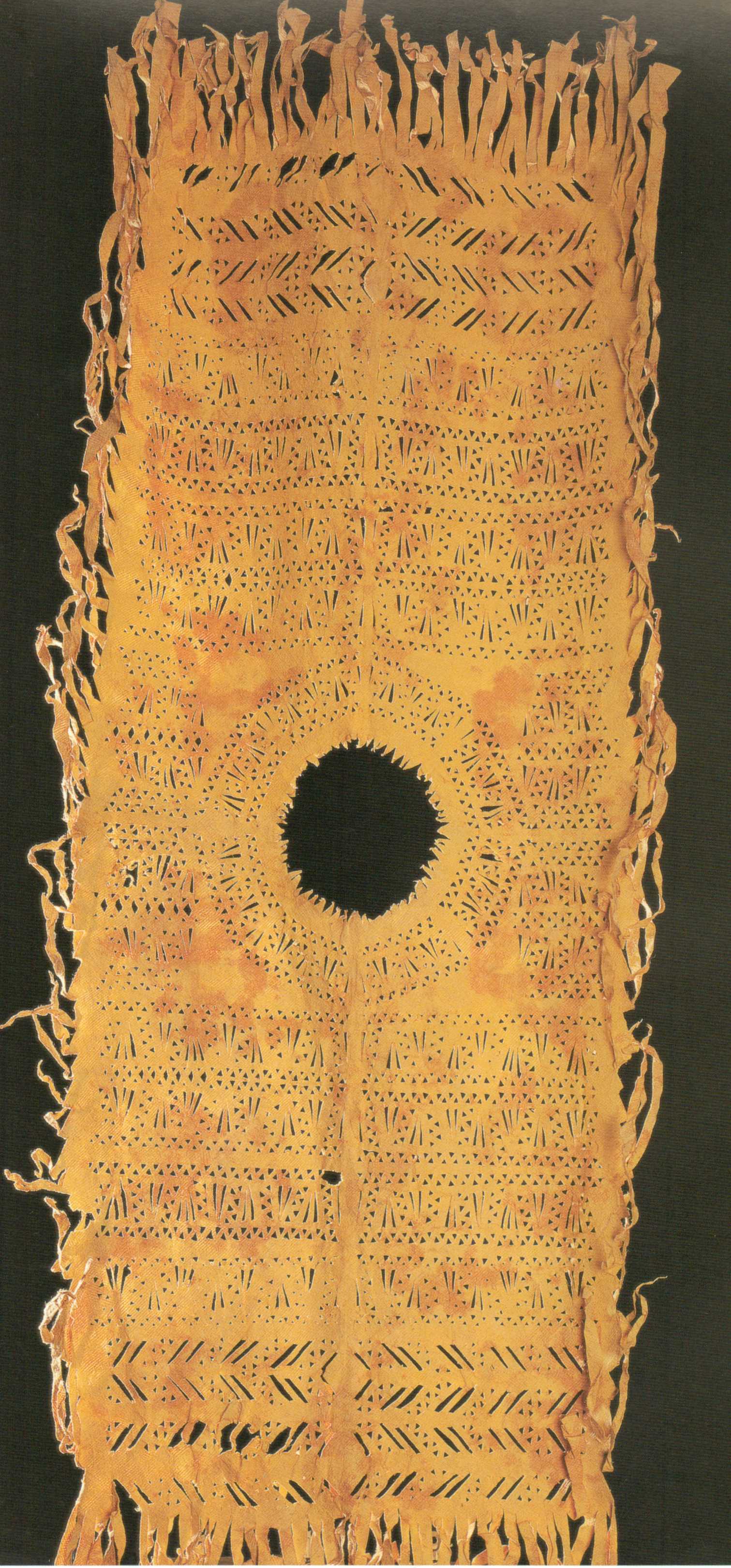
Cook Islands Tiputa
Tapa is the name used for bark cloth in the Cook Islands. In the northern Cook Islands the paper mulberry did not grow well. But it did grow in the southern Cook Islands and was made into tapa there. As in other Polynesian islands, the breadfruit tree bark and banyan bark were also used to make tapa. In the southern Cooks tapa was felted into a single layer, with no sign of joining.
Decorating the finished tapa was done with freehand painting, immersion in dye baths, or it was cut with designs in a patterned motif. The rubbing method using design tablets was not used in the Cook Islands. Diamond motifs, which were “associated with the sacred world of the gods,” were applied on masks using the freehand painting method. Masks were made and decorated in Mangaia and Rarotonga and they were used in pageants called eva, to remember gods and cultural heroes. These ceremonies also were performed in association with mourning.
Tiputa was worn as clothing in the Cook Islands, in the Tahitian style that is believed to have been the result of the strong missionary influence. The tiputa was fashioned as a long piece of tapa that had a hole cut into the middle to be worn on the body like a poncho. Pants were made too. Articles of clothing were cut at the edges in fringes and cuts were made throughout the article in repetitive patterns, as in Futuna.
In the Cook Islands, as elsewhere in Polynesia, making bark cloth was done by women. However, a special, heavier, white cloth called tikoru was made by men. This was a special ceremonial bark cloth that was used to wrap around god images and was the attire of priests and high chiefs. This use may reflect the connection to spiritual beliefs that the chief and priests are descendant from the gods themselves.
(Neich & Pendergrast, Pacific Tapa, 1997).
Hoʻowehi i ke kapa
Today I am experimenting with various dyes and creating colors that will be used to dye the kapa I have made. I will hoʻawa, extract dye colors from plants, to make ka waihoʻoluʻu, the dye, using ʻōlena for yellow, ʻukiʻuki for blue… overlapped they might make green… we shall see…will post photos later…
The botanical names for these dye plants are:
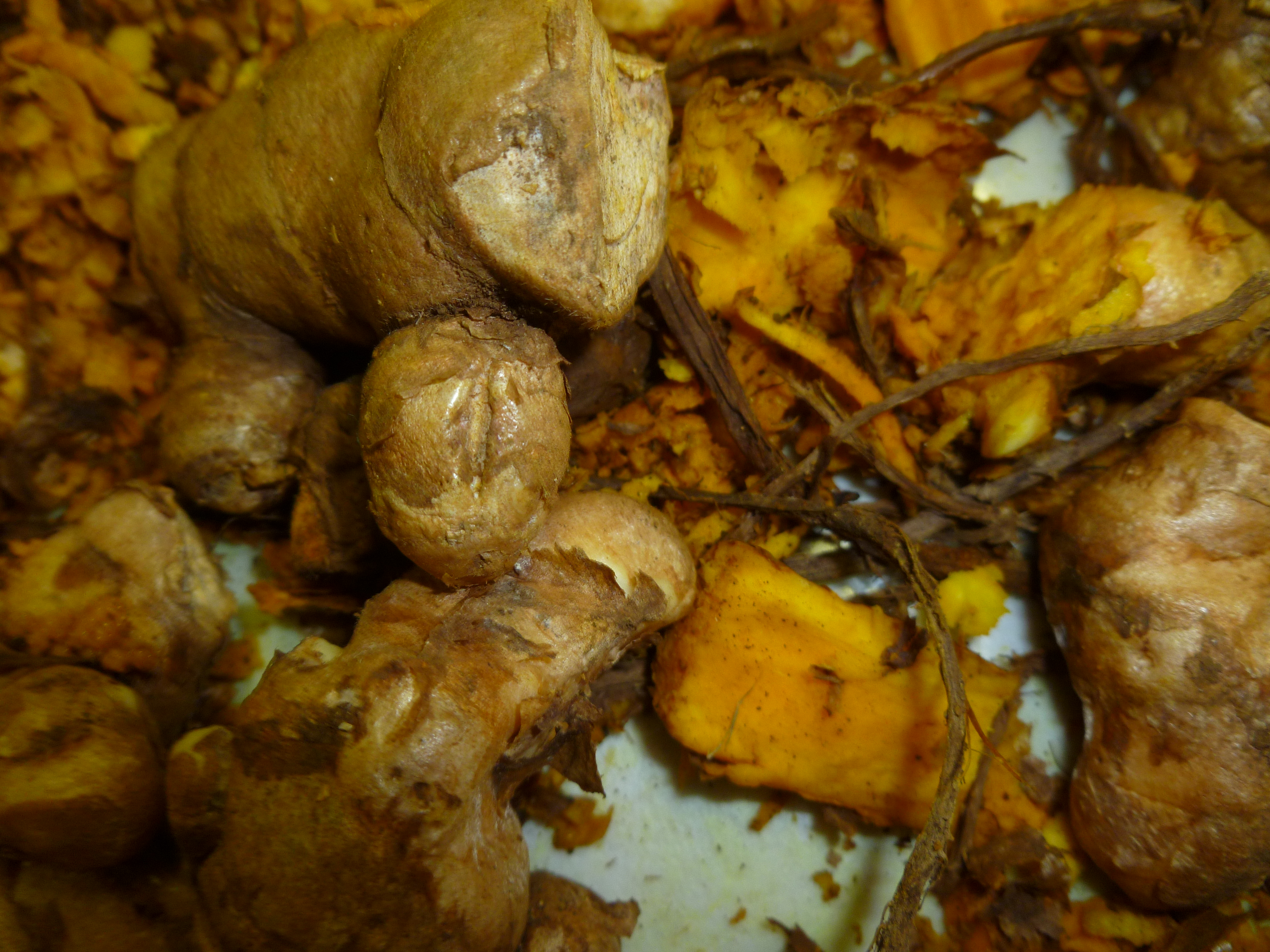
ʻōlena ~ Curcuma longa
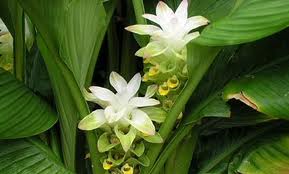
ʻōlena plant

ʻukiʻuki ~ Dianella sandwicensis
~ALOHA~
Hawaiian Word of the Day: pōpoki
pōpoki: Cat (said by some to be derived from English “poor pussy”). Pōpoki kī, a spitting cat [spiteful, malignant person]. Pōpoki lehu, Maltese cat; lit., ash cat. Pōpoki nāwaliwali, weak cat [a weakling]. Pōpoki peʻelua, gray cat with darker markings, as a tabby cat; lit., caterpillar cat.
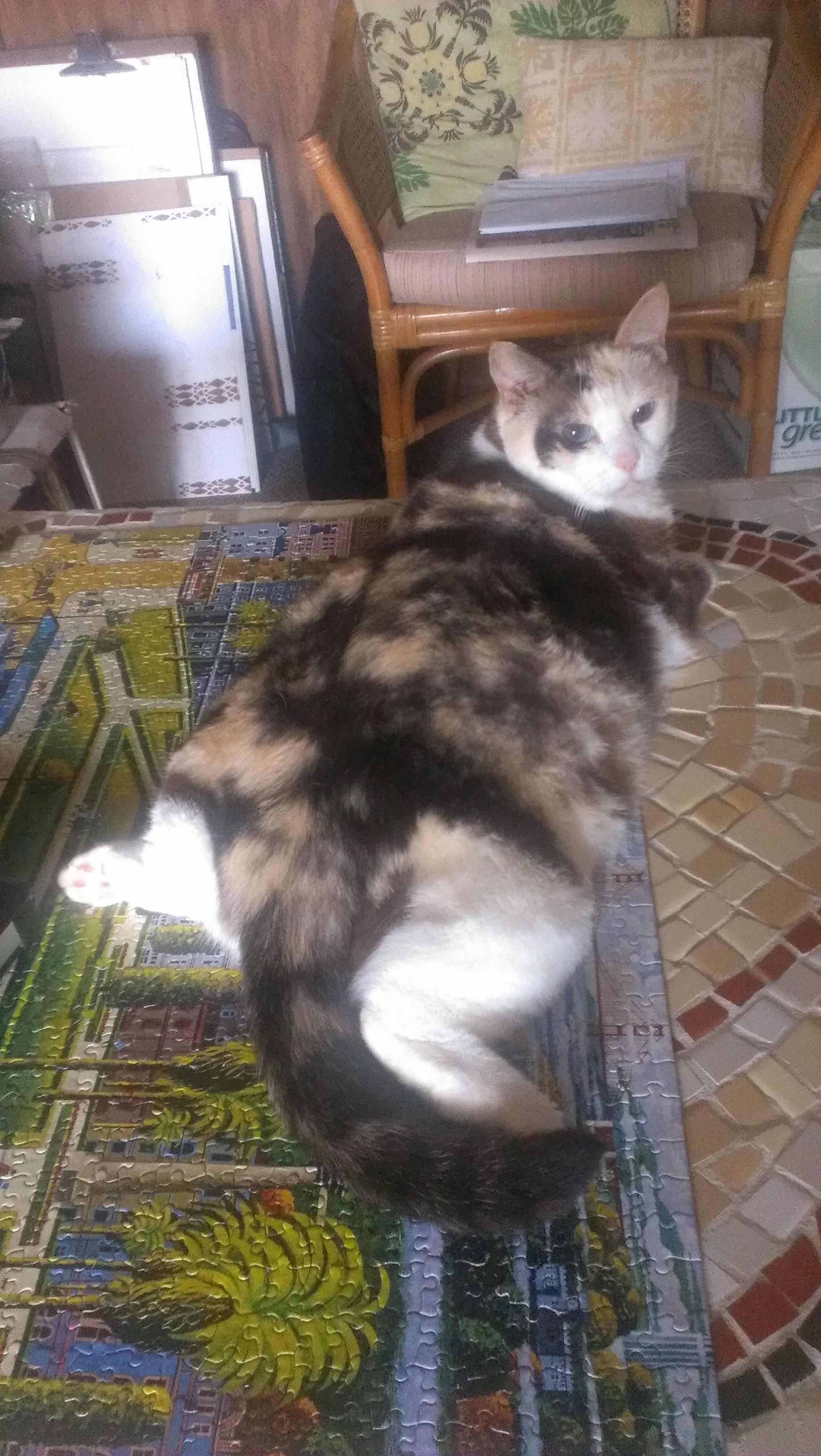
ko’u pōpoki, my cat
Tapa from Fiji is called Masi
Fijian Masi
The term for the beaten cloth in Fiji is masi. The method for making masi is basically the same as in Tonga where it is prepared using a process of soaking and beating the inner bast of the paper mulberry (Broussonetia papyrifera) is followed by pasting the pounded sheets together for length and strength.

Fiji Masi
In the past, men commonly wore a malo or masi, which is a strip of plain white bark cloth wound around the waist and between the legs, with a train billowing behind. The longer the length of the train, the greater the chiefly status. For women, everyday clothing was a skirt called a liku. Masi is considered nearly obsolete for traditional dress since its replacement by western style clothing and textiles. Traditional dress styles using masi are not worn as everyday wear but they are still used for dances and important ceremonies like the installation of a chief, or special family occasions.

Traditional Wedding Dress
Ceremonial masi on the occasions of funerals, weddings, and chiefly ceremonies is ongoing. The bride and groom will be wrapped in long pieces of masi, in the customary fashion, and similar coverings would be worn when chiefs are installed. There is great honor associated with masi and it is a symbol of wealth. Gifts of masi are given in extravagance for marriages. It is a source of pride for the whole village to produce this exchange of wealth. Masi is very significant at death and is presented as a gift when someone dies. There is spiritual power associated with masi, as it was “recognized as having ability to carry the strength of the gods” (Fulmer, 1998).
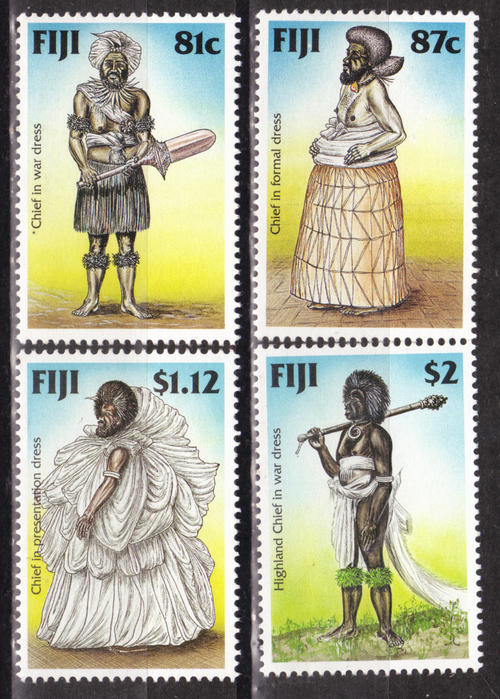
Fijian Chiefs Wearing Masi Depicted on Commemorative Stamps
Design work of Fijian Masi
There is a variety of techniques used in Fiji to decorate the masi. They range from freehand painting with pandanus brushes as in Samoa, to Fijian rollers and stencils, to the design tablets of Tongan influence. The finished lengths of masi decorated using rubbing tablets with midrib patterns are known as gatu vakatoga, translated as “Tongan cloth made in the Tongan way.” Gatu vakaviti is a combination of the Tongan rubbing method and the Fijian stencil application method. Gatu vakaviti literally means, “Tongan cloth in the style of Fiji” (Neich & Pendergrast, 1997).
Do you want to know more about Fiji? Here are two good articles that explain current events, traditional foundations, and colonial history:
TRADITIONAL CHIEFS REMAIN CORNERSTONE IN CHANGING FIJI
Fiji’s military ruler disbands Great Council of Chiefs

Fiji in Oceania
Dyes & Designs in Samoan Siapo
Faʻa Samoa…In the Samoan Way…
Natural Dye
Dyes used in Samoan siapo come from nature. They are extracted or ground from nuts, tree bark, tree sap, roots, and seeds. There are five colors collected: oʻa is brown, lama is black, ago is yellow, loa is red, and soaʻa is purple. The traditional designs are symbols that reflect Samoan natural environment. There are 13 symbols used in siapo and they represent nets, coconut leaf and sennit, the trochus shell, pandanus blooms, pandanus leaves, breadfruit leaf, sandpiper bird designs, starfish, banana pod, rolled pandanus leaves, worm (this is almost extinct), centipede (which has been discontinued), and lastly, logologo (not found in modern siapo to the point that the meaning of this design has been lost). Original siapo artworks are made by combining these design elements (siapo.com).
Design Methods
There are two kinds of siapo design application methods practiced in Samoa and they are Siapo ʻElei (the rubbing method) and Siapo Mamanu (the freehand method). The Siapo ʻElei method leaves an imprint on the uʻa (bark cloth material). This is done by laying the uʻa on a design printing block that is carved into wood, called an upeti, and rubbing the uʻa with a swab that has been dipped in oʻa. Oʻa is a brown dye that is extracted from the bark of the Bishofia javanica, or blood tree. This is a pest in the Hawaiian Islands where it is known as the Bishop Tree or is called koko (blood). It is also called koko in Tonga and other island languages. The oʻa changes color over time from a pale tan to a rich, dark brown.
The next step in the process is to rub a red color over to define the design. Arrowroot plant is used as glue and is dabbed on any small holes, and then a second layer is placed on top and rubbing the oʻa is repeated, this time pressing the two layers together. Sections are joined using arrowroot and rubbing. This is usually the end of the process for large pieces known as ululima and uluselau. But for smaller pieces called vala, the design might be highlighted with more brown dye. Upeti in the older form was of both the sewn midrib variety as in Tongan kupesi, and also carved wood. Today, the men have been carving the upeti and have become the main artist of siapo ʻelei designs. However, they still base their designs on the traditional symbols. One upeti carving can yield many different imprints as dye can be applied to certain areas only to create an interesting design using the positive and negative space (Pacific Tapa, p. 16, 1997).

Siapo Mamanu is the freehand method of design and is creatively applied by hand using a dried pandanus brush, called a paogo. The design is created by the artist using black dye to sketch the design, and then the artist may choose to use a veriety of color to finish the piece (siapo.com)
These two methods of desing can also be combined to create unique artwork that is reinvented with each piece of uʻa. Siapo is one of the oldest art forms and symbols of Samoan culture. Used for clothing, burial shrouds, bed covers, ceremonial garments, and much more… (siapo.com)
Samoan Tapa is Siapo
Siapo is the common name used for bark cloth in Samoa. The siapo is the paper mulberry tree bark for the material called uʻa. The bark is prepared in the common way of removing and preparing the bast. The tools used to beat out the uʻa is the anvil called a tutua, which is about 3 feet long for a single person to work, or six feet long for two or three people to work together. The beater used is called an is called an iʻe. The iʻe has two smooth sides and two grooved sides. After the uʻa is beaten into a sheet, it is dried in the sun and made ready for design applications.

Samoan Siapo
Would you like to learn more about this topic? Check out this amazing website full of great info: siapo.com
Hawaiian Word of the Day: hānai
hānai: 1. Foster child, adopted child; foster, adopted. Keiki hānai, foster child. Lawe hānai, to adopt a child. Makua hānai, foster parent. Kāna hānai, his adopted child. 2. To raise, rear, feed, nourish, sustain; provider, caretaker (said affectionately of chiefs by members of the court). Hānai holoholona, to feed and care for domestic animals. Makamaka hānai, generous and hospitable friend. Hānai ā momona, to fatten. Hānai maila ʻoia iāia meli, he fed him the honey. 3. Body of a kōkō net carrier, and cords attached to it; fish net or trap, as for ʻoʻopu fish; kite.
akua hānai: 1. Spirits, as of a recently dead kinsman, who were fed (hānai) offerings (such as food) and sent out to destroy an enemy. 2. The kauila, nioi, and the ʻohe “poison” woods of Molokaʻi, which were kept by sorcerers in their houses, wrapped in tapa, and to which food offerings were made daily; scraps of these woods were used as poison, and poison itself was sometimes called akua hānai.
hānaiāhuhu: To make a pet of an animal; to care for well, as a pet; cherished plans, pet projects. Eia kekahi mau hānaiāhuhu a ke aupuni, here are some favorite plans of the government.
hanaina: Feeding. Eia mai ka moa i hanaina lā, here is the rooster fed in the sun; the cock fed in the sun was believed strong because of turning his head to avoid heat.
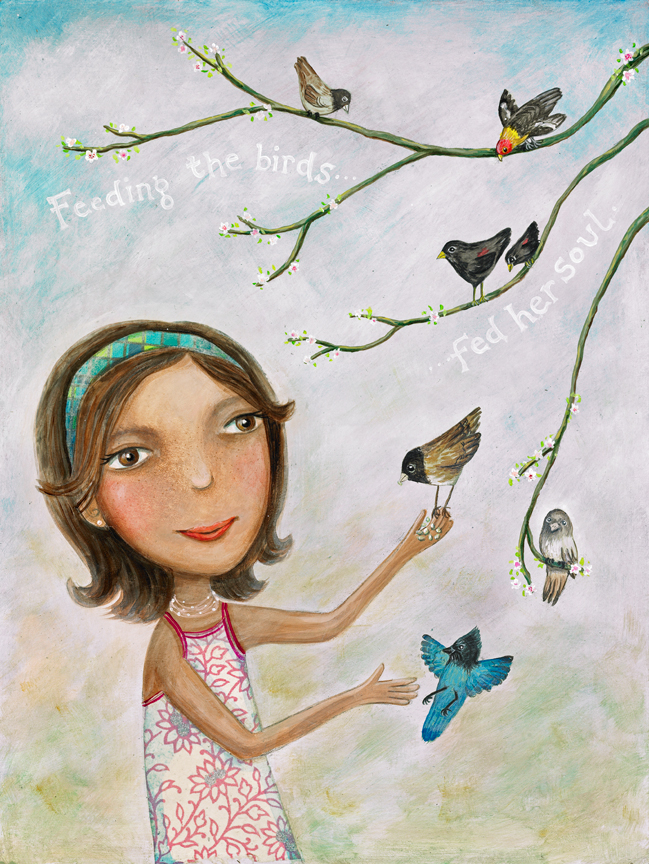
Feeding the Birds, by Joanna Dover
 kapa kulture