kapa kulture

This blog is dedicated to Hawaiian kapa and matters related to Hawai'i nei…kuku kapa e!

People + Families + Kuleana = Community

Ala Kahakai Ranger's avatarPacific Island National Parks


People + Family + Kuleana = Community

Kohala celebrated Kamehameha Day on Tuesday June 11, 2013 . Kids and adults who came by the Ala Kahakai NHT booth got to put their feet on the trail. 40+ footprints of people, family names and kuleana (responsibility) graced a 15 foot long poster created by the local community and guests at this annual Kohala event.

One of the formula for connecting, reconnecting and enhancing connections to the Ala Kahakai National Historic Trail is using outreach activities which can engage active involvement of people at community events. People who participated got to realize that their families are part of the living culture of the trail. Mahalo to all the footsteps on the paper trail. Hope to see you out and about on the real trail soon.


View original post

Education: Culture Matters…a video produced by Kamehameha Schools

Education: Culture Matters, a video produced by Kamehameha Schools

An intimate look at the heart of culture-based education and the indisputable evidence that children thrive in an environment that fosters a learning process they can relate to.

Hawaiian Word of the Day: kumu

kumu: 1. Bottom, base, foundation, basis, title (as to land), main stalk of a tree, trunk, handle, root (in arithmetic); basic; hereditary, fundamental. Kumu pali, base foot of a cliff. ʻIke kumu, basic, fundamental knowledge. Aliʻi kumu, hereditary chief. Alanui kumu, main street. ʻAuikumu, nominative case. Kumu kāhili, staff of a kāhili. Kumu nalu, source of waves, as where surfing starts. Mai ke kumu ā ka wēlau, from trunk to tip [all, entirely]. (Proto-Polynesian: tumu.) 2. Teacher, tutor, manual, primer, model, pattern. Kumu alakaʻi, guide, model, example. Kaʻu kumu, my teacher. Kumu hoʻohālike, pattern, example, model. Kumu hula, hula teacher. Kumu kuʻi, boxing teacher. Kumu kula, school teacher. Kumu leo mele, song book. Kumu mua, first primer. 3. Beginning, source, origin; starting point of plaiting. ho’okumu. To make a beginning, originate, create, commence, establish, inaugurate, initiate, institute, found, start. 4. Reason, cause, goal, justification, motive, grounds, purpose, object, why. Kumu no ka ʻoki male, grounds for divorce. Kumu ʻole, without reason or cause. He aha ke kumu i ʻeha ai kou wāwae? What is the reason for your foot hurting? 5. an article bought, sold or exchanged; price. kumu kūʻai. Kumu lilo, price paid, cost. Kumu loaʻa, selling price. 6. Herd, flock. kumu hipa, kumu pipi.

tree_canopy

kapa-apprentice

Ka Hana Kapa Video by lomilomihawaii…it’s a good one!

” title=”ka hana kapa” target=”_blank”>

Hawaiian Word of the Day: lau

lau: 1. Leaf, frond, leaflet, greens; to leaf out. Lau is sometimes contracted to lā-, as lā’ī, lāʻie, lāʻō. ho’olau. to grow leaves; to leaf out. 2. Dragnet, seine, so called because formerly made of ti leaves (lau) tied to a rope. Hukilau, lauahi, lauʻapoʻapo, laukō. ho’olau. (a) To use a lau. (b) A bundle of grass or ferns set in water to attract shrimps or ʻoʻopu fish; a net was placed under this bundle, and the fish shaken into it. (Proto-Polynesian rau.) 3. Sheet; surface; blade, as of grass. 4. To be much, many; very many, numerous; four-hundred. Lau ā lau nā hōkū o ka lani, hundreds and hundreds of stars in the heaven. Lau lena ka pua o ka māmane, the māmane is yellow with blossoms. ho’olau. To make numerous; to assemble, as of numerous persons or animals; numerous. 5. Pattern, as for quilts; design; print of a cloth. Pāhoehoe lau, brocaded satin. 6. Thatched mountain hut, as used by farmers, canoe-makers, bird catchers. 7. Tip, as of the tongue; top (probably related to wēlau and ʻēlau, tip). Lau make, death-dealing tip, as of a weapon. Moe…i ka lau o ka lihilhi, to doze; lit., sleep by the tip of the eyelash. 8. Sweet-potato slip or vine.

P1020793

“You Are Accused of Throwing Sticks at the Queen …”

Misunderstandings and cultural differences are still no excuse for land grabbing and greed…

tkmorin's avatarBite Size Canada


“The law is a hard, queer thing.  I do not understand it.” — Poundmaker, at his trial, 1885

Louis Riel surrendered to General Middleton on May 15, 1885, and the Northwest Rebellion was over, although the Indian Chiefs Poundmaker and Big Bear were still at large.  Poundmaker was in the bag first, but Big Bear did not give up until July 2.  He scattered his men,Chief Poundmaker, 1885 eluded dozens of military scouts, and reached Fort Carlton, where he surrendered personally to Sergeant Smart of the Northwest Mounted Police.

Poundmaker and captured a supply train and twenty-two prisoners on May 14, but realized the game was up when he heard the news of Riel’s capture.  He released Indian agent Jefferson, who had been one of his prisoners, and sent him with a message to Middleton on May 24.  He asked for surrender terms in…

View original post 341 more words

Hawaiian Word of the Day: maopopo

maopopo: To understand, recognize, realize; clear; plainly, clearly; understanding. Ua maopopo iā’oe? Do you understand? Ua maopopo ia’u kou mana’o, I understand your idea. Ha’i maopopo, to tell clearly. Maopopo ka ‘ikena, clearly seen or known. Maopopo ‘ole, unintelligible, unaware, unaccountable. Maopopo loa, to understand clearly, definite, certain. Maopopo maika’i, maopopo le’a, obvious, evident, clearly understood.
ho’omaopopo. To understand, make plain or clear, tell clearly, cause to understand, pay attention in order to understand; to certify, inform, remember, recollect, recall, think about, remind, believe in, realize, ascertain, take care of, recognize, discover. (Depending on context, many translations are possible; for substitution of maopopo for ho’omaopopo) Ho’omaopopo ‘ē, to understand ahead, to anticipate; inkling. Ho’omaopopo ‘ole ‘ia, misunderstood, unintelligible, uncared for, unclear. E ho’omaopopo aku ‘oe, i ka hola ‘ehia kākou e hele ai, find out what hour we are going. E ho’omaopopo aku ‘oe e hele mai i kēla ‘apōpō, remind [him] to come tomorrow. E ho’omapopo mai ‘oe i kēia mea e a’o ‘ia aku nei, pay attention and comprehend these things being taught you. (From Hawaiian Dictionary, Pukui & Elbert, p 241, 1971).

e ala e

e ala e

Protect your park from aliens

islanderparkscience's avatarPacific Island National Parks

You can be part of the frontline defense against new alien plant invaders. 

The Pacific Island Network, the Inventory & Monitoring arm of the NPS in the tropical Pacific,  just released  Invasive Plant Field Guides as part of the Early Detection of invasive plants monitoring protocol. Each Pacific island national park unit is now armed with sets of these useful cards to increase awareness and detection of aggressive park invaders before they spread and become a devastating nuisance for the parks and communities around them.

NPS Botanist Alison Ainsworth and her vegetation team worked closely with Natural Resources Management at each Pacific island park to develop a list of likely invasive species. “We focused on plants not yet in the parks, but ones that may cause park-wide damage,” said Ainsworth. “If we find them before they become established in the parks, there is a good shot at controlling them.” 

The…

View original post 121 more words

Hawaiian Word of the Day: wiwo’ole

wiwo’ole: Fearless, brave, bold, courageous, dauntless, intrepid. Hana wiwo’ole, bold or brave deed, adventure. Mea wiwo’ole, intrepid person, adventurer.

warrior

Hawaiian Word of the Day: kāhili

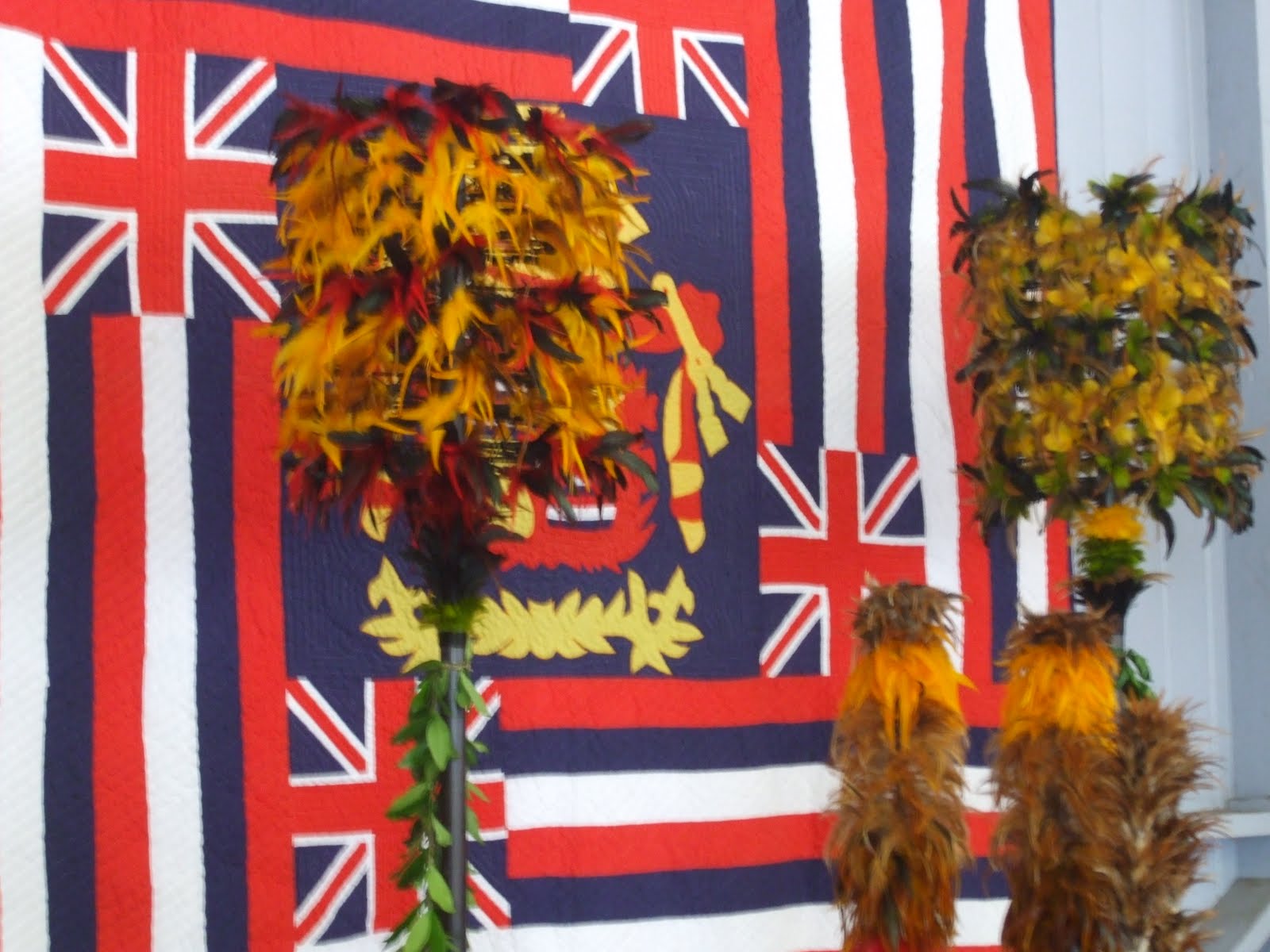
kāhili: 1. Feather standard, symbolic of royalty; segment of a rainbow standing like a shaft (also a sign of royalty); to brush, sweep, switch (to spray, as in kāhilihili: Kāhilihili ke kai a ka he’e nalu, spraying sea of surf-rider).

Kāhili chants (As in ‘ou’ou, to describe the pinnacle or high peak): I ka lālā wēkiu ka pua o Lono, i ka ‘ou’ou o nā lani nui, in the topmost branch the flowers of Lono, among the highest of the high chiefs.

2. Pa’a kāhili, kāhili bearer. Kū kāhili, one standing by a kāhili or carrying it. Kāhili pulu, to clear away mulch. Haku ‘ia na’e ho’i ka hulu o ka moa i kāhili i mua o nā ali’i; kāhili ‘ia na’e ho’i kō kua, chicken feathers indeed are woven into a standard for the presence of the chiefs; your back is brushed by the kāhili.

ho’okāhili. To brush or fan gently. 2. The crape myrtle (Lagerstroemea indica), an ornamental shrub from China, with small oval leaves and panicles of pink, white, or purple crape flowers. 3. A small tree (Grevillea banksii) from Australia, related to the silky oak, ‘oka kilika, but the leaves with fewer subdivisions and the flowers red or cream-white. This is a later application of kāhili to a plant. Flowers not used for leis on head or around neck because of irritating hairs, but made into leis for hats by sewing alternated rows of flower clusters and own leaves on pandanus band. 4. Kāhili ginger (Hedychium gardnerianum), from the Himalaya region; much like the white ginger but with a more open flower head, the flowers with narrow yellow segments and one bright red stamen apiece. Also ‘awapuhi kāhili. 5. A seaweed, probably Turbinaria ornata.

kahili against flag quilt

kahili ginger

kahili bearer

restored kahili returned to bishop museum

Post Navigation