kapa kulture

This blog is dedicated to Hawaiian kapa and matters related to Hawai'i nei…kuku kapa e!

Protect your park from aliens

islanderparkscience's avatarPacific Island National Parks

You can be part of the frontline defense against new alien plant invaders. 

The Pacific Island Network, the Inventory & Monitoring arm of the NPS in the tropical Pacific,  just released  Invasive Plant Field Guides as part of the Early Detection of invasive plants monitoring protocol. Each Pacific island national park unit is now armed with sets of these useful cards to increase awareness and detection of aggressive park invaders before they spread and become a devastating nuisance for the parks and communities around them.

NPS Botanist Alison Ainsworth and her vegetation team worked closely with Natural Resources Management at each Pacific island park to develop a list of likely invasive species. “We focused on plants not yet in the parks, but ones that may cause park-wide damage,” said Ainsworth. “If we find them before they become established in the parks, there is a good shot at controlling them.” 

The…

View original post 121 more words

Hawaiian Word of the Day: wiwo’ole

wiwo’ole: Fearless, brave, bold, courageous, dauntless, intrepid. Hana wiwo’ole, bold or brave deed, adventure. Mea wiwo’ole, intrepid person, adventurer.

warrior

Hawaiian Word of the Day: kāhili

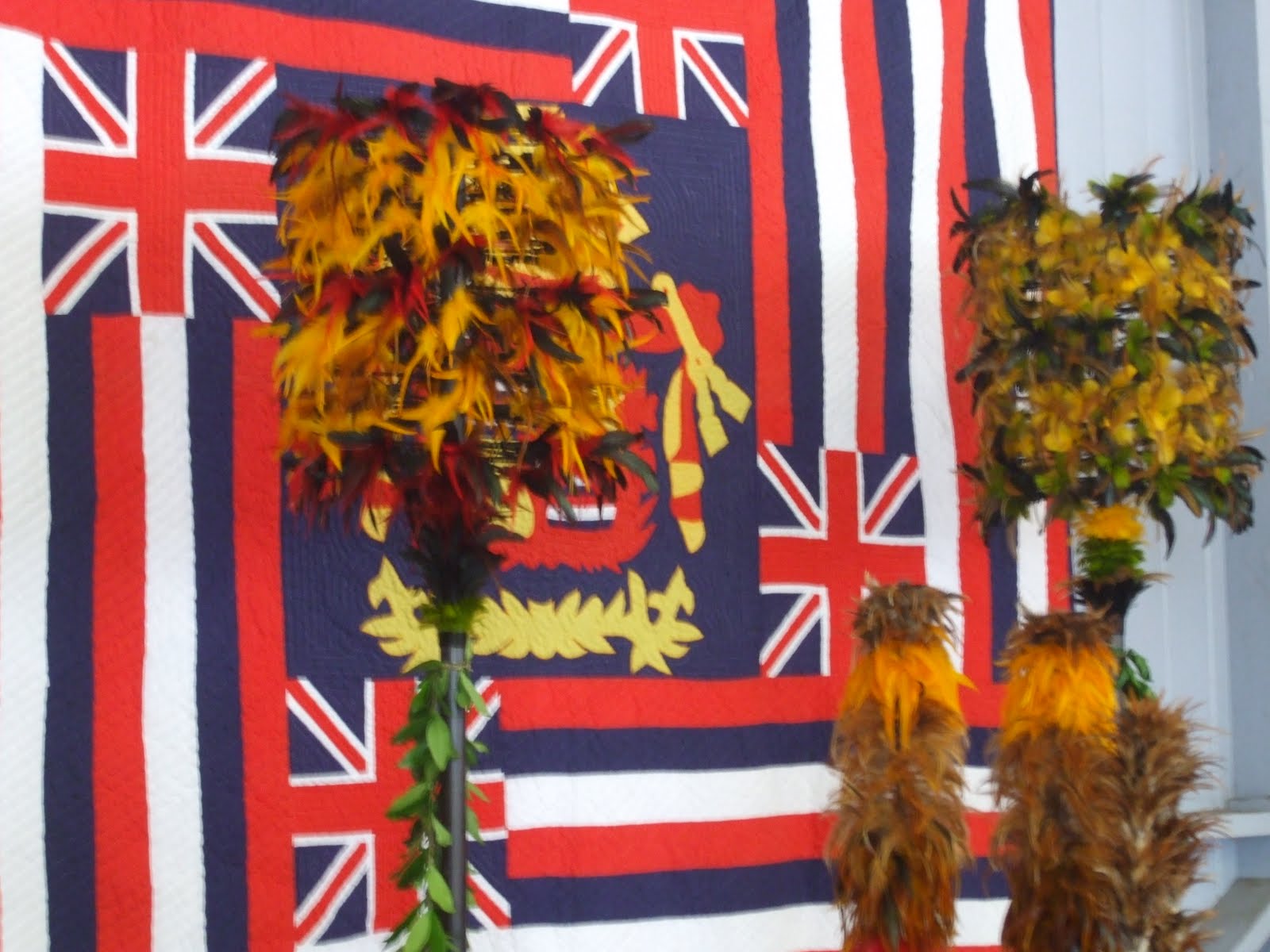
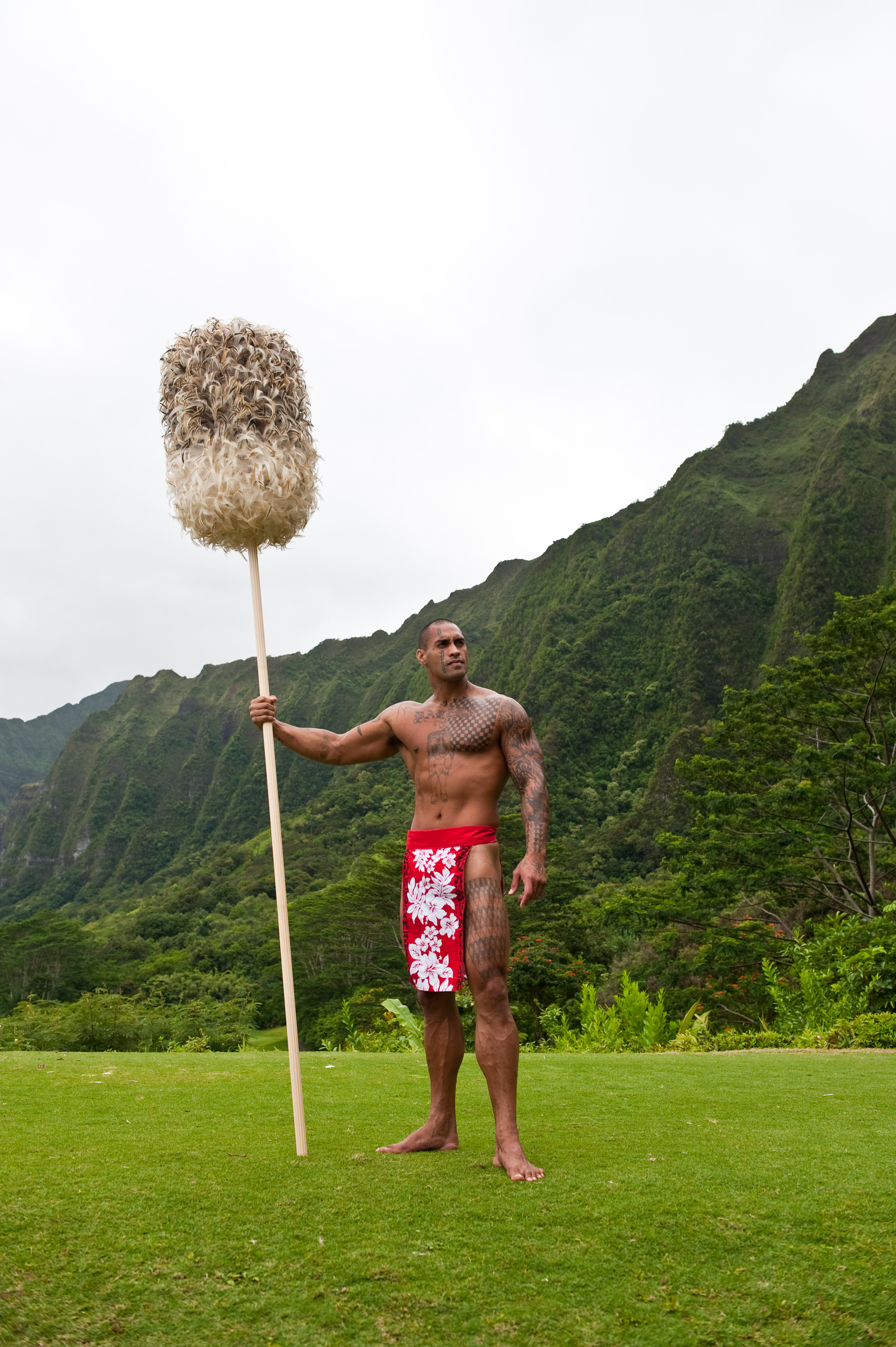
kāhili: 1. Feather standard, symbolic of royalty; segment of a rainbow standing like a shaft (also a sign of royalty); to brush, sweep, switch (to spray, as in kāhilihili: Kāhilihili ke kai a ka he’e nalu, spraying sea of surf-rider).

Kāhili chants (As in ‘ou’ou, to describe the pinnacle or high peak): I ka lālā wēkiu ka pua o Lono, i ka ‘ou’ou o nā lani nui, in the topmost branch the flowers of Lono, among the highest of the high chiefs.

2. Pa’a kāhili, kāhili bearer. Kū kāhili, one standing by a kāhili or carrying it. Kāhili pulu, to clear away mulch. Haku ‘ia na’e ho’i ka hulu o ka moa i kāhili i mua o nā ali’i; kāhili ‘ia na’e ho’i kō kua, chicken feathers indeed are woven into a standard for the presence of the chiefs; your back is brushed by the kāhili.

ho’okāhili. To brush or fan gently. 2. The crape myrtle (Lagerstroemea indica), an ornamental shrub from China, with small oval leaves and panicles of pink, white, or purple crape flowers. 3. A small tree (Grevillea banksii) from Australia, related to the silky oak, ‘oka kilika, but the leaves with fewer subdivisions and the flowers red or cream-white. This is a later application of kāhili to a plant. Flowers not used for leis on head or around neck because of irritating hairs, but made into leis for hats by sewing alternated rows of flower clusters and own leaves on pandanus band. 4. Kāhili ginger (Hedychium gardnerianum), from the Himalaya region; much like the white ginger but with a more open flower head, the flowers with narrow yellow segments and one bright red stamen apiece. Also ‘awapuhi kāhili. 5. A seaweed, probably Turbinaria ornata.

kahili against flag quilt

kahili ginger

kahili bearer

restored kahili returned to bishop museum

Video of kapa implements and processes from start to finish in a nutshell

old kapa cook eraKa Hana Kapa Video

Hawaiian Word of the Day: ‘onipa’a

‘onipa’a: Fixed, immovable, motionless, steadfast, established, firm, resolute, determined (this was the motto of Ka-mehameha V and of Lili’u-o-ka-lani. Lit., fixed movement). hō’onipa’a. To fix, establish firmly. E hō’onipa’a loa wau iā ‘oukou (Bible: Jer. 42:10), I will plant you securely (Pukui & Elbert, Hawaiian Dictionary, 1971).

tree_canopy

Hawaiian Word of the Day: puke / buke

puke/buke: Book, volume (in a series).

ka puke

ka puke

Oratory is a valuable art form throughout Polynesia. As such it has an important role, with etiquette and rules of protocol. Passing down legacies of cultural stories, events, and skills exclusively through oral transmission was a way of life. When the Missionaries came to the islands of Hawai’i in 1820, they eventually established schools in which the spoken Hawaiian language was extended to written forms. The Hawaiian alphabet could be learned for reading and writing and vocabulary words were continuously being added to the written Hawaiian language.

In 1869, a Native Hawaiian historian reported in a newspaper article that Hawai’i was the only Pacific island government to be represented at an Exposition in Paris. Books of law, newspapers, agricultural products, Bibles, textbooks, as well as other examples of writing in ‘ōlelo Hawai’i were exhibited. It is said that European visitors to the Paris Exhibition were awestruck at the examples of their literary accomplishments. For in Europe at that time, monarchs and their noble classes alone received excellent educations. It is reported that one viewer exclaimed, “This…island is ahead in literacy; and the enlightened countries of Europe are behind it!”

Survey and Contact Form

← Back

Thank you for your response. ✨

Hawaiian Word of the Day: mo’o kū’auhau

mo’o kū’auhau: Genealogical succession, pedigree.

mo’o kupuna: Ancestral genealogy.

I am working on my mo’o kū’auhau, my family genealogy, today with the help of a good friend who has the mana’o about ‘ōlelo. The purpose is to be able to honor my kupuna, my ancestors, when the time comes to introduce myself in the proper way. Ancient protocol would have lengthy introductions in order to know with whom one was speaking… aloha kākou

making_a_family_tree_kalo

Kapa Māna’o…(knowledge)

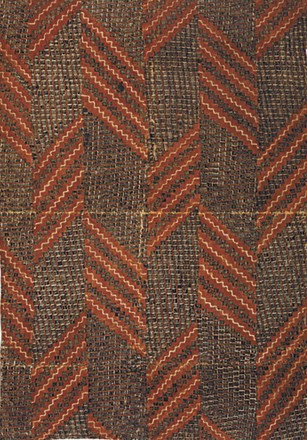
I had a long conversation the other night with my new friend and kapa maker extraordinaire, Dalani Tanahy www.kapahawaii.com. We hit on topics up, down, and sideways…but guided by a set of questions I held in my hand. The purpose of the call was to understand her point of view related to things of “kapa kulture.” Some of the Q’s were theoretical, political, or cultural in nature. But the practical, …oh, the practical… how wonderful to get the scoop from such a dedicated kapa master! Her wisdom and expertise inspired me to revisit several pieces of my own recently pounded kapa which I felt to be under par. I was unsatisfied with the look and feel of these pieces. I had underestimated the work involved and the previous 10 or more hours was not yet sufficient time spent to pound the wauke fibers into soft and flat submission. The result was striated sheets which were stiff and cardboard-like rather than the papery softness I was aiming for. If it was to be worn as a malo or pā’u garment, scratchy and uncomfortable to wear indeed!

Back to my kua I went, taking my kapa with me… I wet the dried sheet with sprays of misty water. After careful pounding for a couple of hours, I managed to produce a softer, whiter, and more delicate specimen that was getting closer to the ideal proposed by Hawaiian historian, Samuel Kamakau, who had declared that the “well-made tapa must be clearer than the light of the moon, whiter than the snow upon the mountains.” Kapa making is not for the faint of heart or impatient, but as an art it requires careful labor and the time to coax a smooth and graceful hand from coarse, raw material.

kapa2

Hawaiian Word of the Day: ‘ili

‘ili: 1. Skin, complexion, hide, pelt, scalp, bark, rind, peel. Ho’okae ‘ili, race prejudice; to have race prejudice. Ka ‘ili o ke po’o, scalp. Kāne i ka ‘ili, husband. ‘A’ohe mea ‘ē a’e, ‘o ka lole wale nō i ka ‘ili, there was nothing else except the clothing on the back. 2. Leather. ‘ili lahilahi, thin leather. ‘Ili mānoanoa, thick leather. 3. Surface, area. ‘ili ‘āina, ‘ilikai. 4. Binding, cover. ‘Ili pa’a, hard cover (of a book). 5. Land section, next in importance to ahupua’a and usually a subdivision of an ahupua’a. 6. Strap of any kind, as reins, harness, fan belt, machine belt; hose. 7. Pebble (less used than ‘ili’ili); kōnane pebble. 8. Square, as in measurements. A na ‘ili, square measurements (Pukui & Elbert, 1971).

‘ili lepo o waho… dirty outer bark…of wauke when making kapa. The outer bark that is scrapped off to begin the process of making kapa.

'ili lepo o waho

‘ili lepo o waho

Post Navigation