kapa kulture

This blog is dedicated to Hawaiian kapa and matters related to Hawai'i nei…kuku kapa e!

Archive for the tag “hawaiian language”

Hawaiian Word of the Day: hapa haole

hapa haole: Part-white person; of part-white blood; part white and part Hawaiian, as an individual or phenomenon. Hula hapa haole, a hula danced to a mele hapa haole (a Hawaiian type of song with English words and perhaps a few Hawaiian words) (Pukui & Elbert, 1971).

I am hapa haole.

I am hapa haole. He hapa haole au.

Hawaiian Word of the Day: palapala

palapala: 1. Document of any kind, bill, deed, warrant, certificate, policy, letter, tract, writ, diploma, manuscript; writing of any kind, literature; printing on tapa or paper; formerly the Scriptures or learning in general; to write, send a written message. 2. Maui name for pualu, a fish. 3. Variation of name for maomao, a fish (Pukui & Elbert, 1971).

Palapala to the U.S. written by Queen Lili'uokalani

Palapala to the U.S. written by Queen Lili’uokalani

Hawaiian Word of the Day: ho’okupu

ho’okupu: Tribute, tax, ceremonial gift-giving to a chief as a sign of honor and respect; to pay such tribute; church offering.

IMAG0038

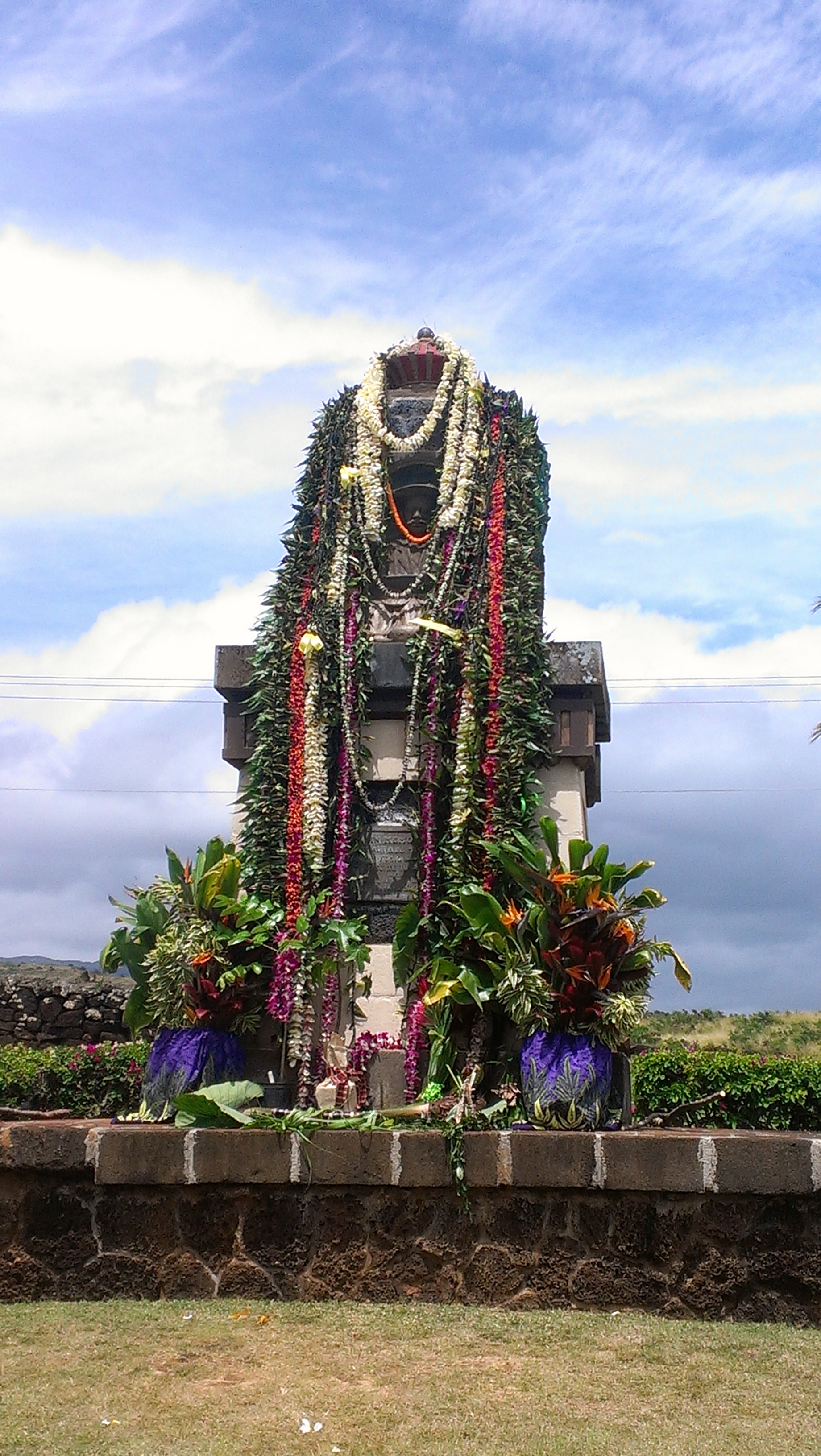
Ho’okupu for Prince Jonah Kūhiō Kalaniana’ole Pi’ikoi. This statue commemorates Ali’i Kūhiō at Prince Kūhiō Park in Kōloa. A celebration for aloha hali’a is held annually to honor this great Ali’i who did so much for Hawaiians in his life (1871-1922). http://princekuhio.net/

Hawaiian Word of the Day: hali’a

hali’a: Sudden remembrance, memory, especially of a loved one; fond recollection, premonition; to recall, recollect fondly. Hali’a aloha, cherished or loving memory; to remember fondly. ho’ohali’a. To evoke reminiscence or recollection; remembrance; to remind (Pukui & Elbert, 1971)..

Hawaiian Word of the Day: pō’ulu

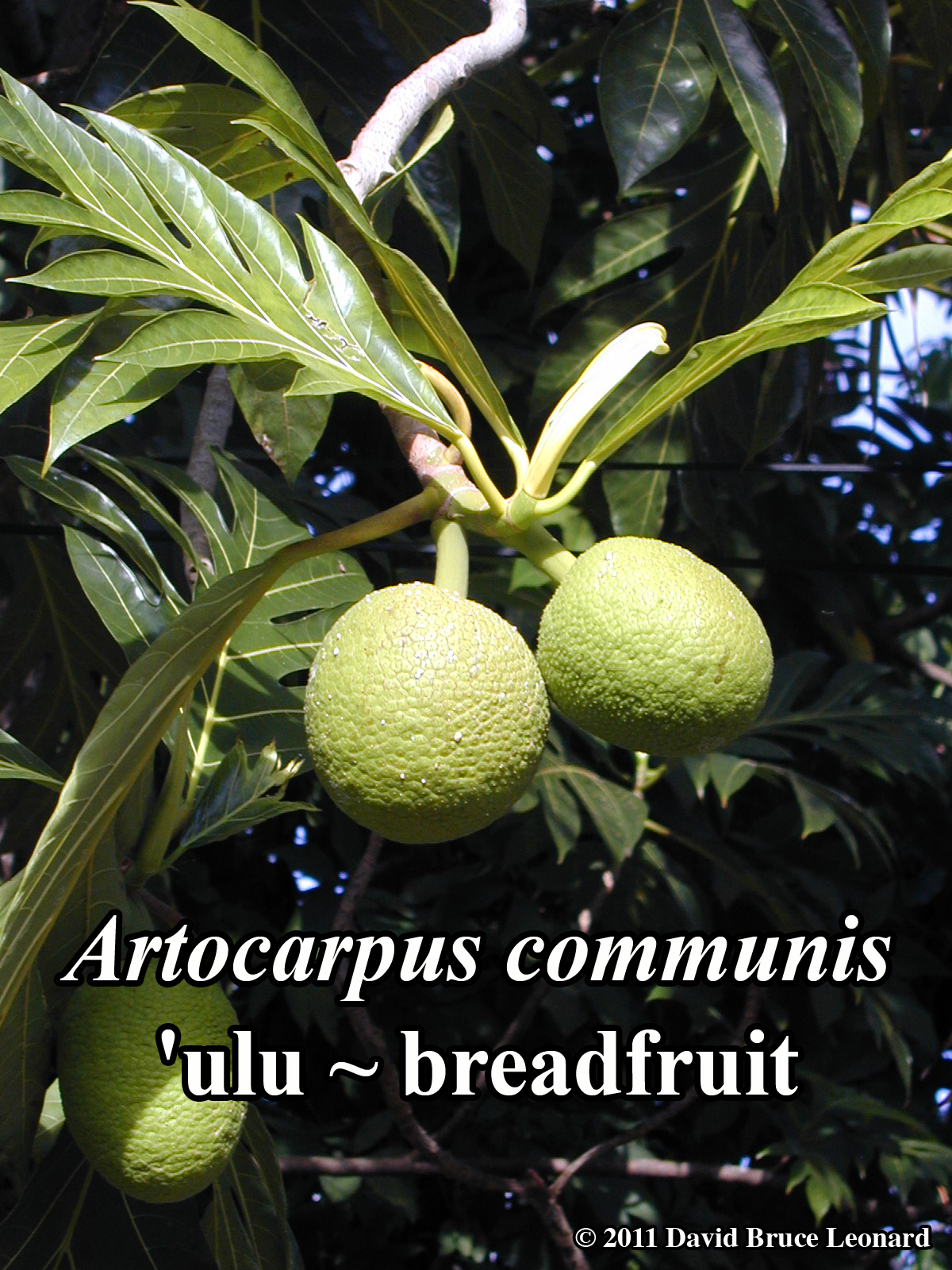
pō’ulu: Bark of tender breadfruit shoots, as used for less fine tapa (Pukui & Elbert, 1971).

OLYMPUS DIGITAL CAMERA

Hawaiian Word of the Day: ho’oki

ho’ōki: To put an end to, terminate, conclude, annul, to finish, stop; end.

Proto-Polynesian: oti.

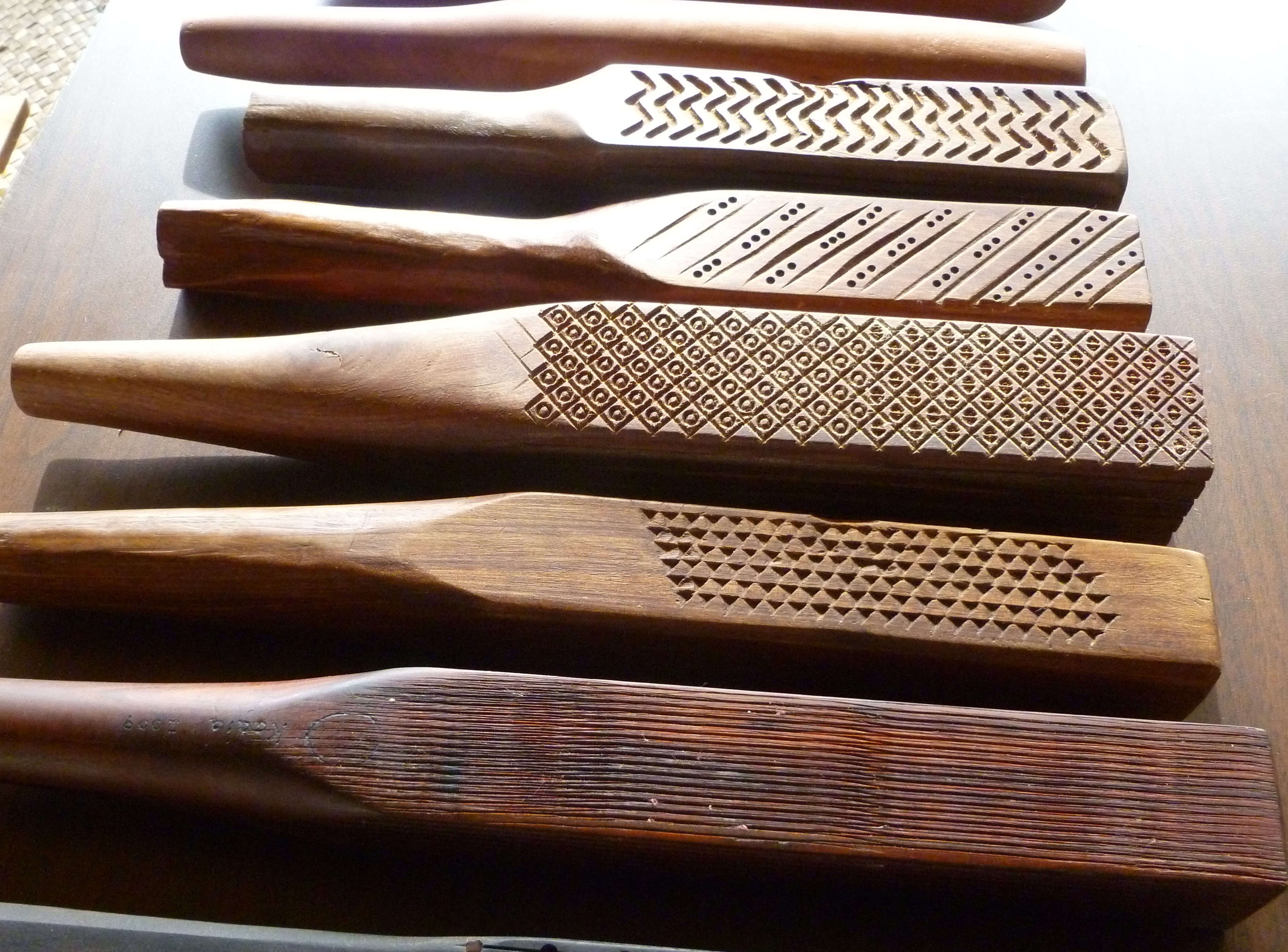
Stages of kapa-beating includes the final stage of ho’ōki, which requires using an i’e kuku ho’ōki with a watermark such as an ‘upena hālua niho mano, shark tooth with fishnet design.

P1020871

Hawaiian Word of the Day: maoli

maoli: Native, indigenous, aborigine, genuine, true, real, actual; very, really, truly. Maika’i maoli, very good indeed. Kanaka maoli, ‘ōlelo maoli, Hawaiian native, Hawaiian language [so used in reports of 1852 legislative session]. E puka ai ka makemake maoli o ka mea koho, expressing the free will of the voter.

The Legend of the Kua Kapa

The Legend of the Kua Kapa
From “Nā Mo’olelo Hawai’i o ka Wā Kahiko, Stories of Old Hawai’i” By Roy Kākulu Alameida, Bess Press, Honolulu, 1997.

One day Kalei, who lived in Kahuku on O’ahu, could not find her kua kapa. She looked all over the hale, but it was nowhere to be seen. She asked her neighbors if they had seen it. No one had. She began to feel very sad because it was her favorite kua kapa.

Kalei walked through the village. She listened for her kua kapa. Each kua kapa gave a sound of its own that was either a high or low sound. Her kua kapa made a sound that only she could recognize. She heard others, but they were not hers. She walked to Maunalua, then to Manoa. She still could not find her kua kapa. After reaching Kapalama, she stopped to rest under a lama tree. She had been traveling all day and all night and she was very tired.

Soon Kalei was sound asleep. While she slept, a gentle breeze wafted over her. It carried a faint sound. She woke up with a start and listened carefully. Again, the gentle breeze wafted from ma uka. It carried a familiar sound through the valley to where she sat. “That sounds like my kua kapa,” Kalei said to herself. So Kalei started to walk in the direction of the sound. As she walked toward Līhu’e, near Ka’ala the sound got louder and louder. It sounded so sweet that tears began to roll down her cheeks. At last she would hold her favorite kua kapa again.

The woman who was using the kua kapa lived in Keanapueo, or owl’s cave, near Waikele. Kalei walked along the stream until she reached the cave. “That sounds like my kua kapa,” Kalei told the woman. “How did you get it?” She asked.

“I found it floating in the stream that comes from the mountain,” said the woman.

“It belongs to me. I recognize the sound,” said Kalei.

The woman gave back the kua kapa. But she was not convince that it belonged to Kalei. To see if Kalei was telling the truth, the woman followed her to Kahuku. When they reached there, the woman tied a bundle of ti leaves together. She tossed it into the stream at Pu’uho’olapa. After it floated downstream and disappeared, the woman returned to her home at Keanapueo. A few days later, she saw the bundle of ti leaves floating in the stream near her home. This proved to her that Kalei was the true owner of the kua kapa.

Glossary of Hawaiian Words

kua kapa: tapa-beating anvil

kapa: tapa (bark cloth)

hale: house

lama: hardwood tree

ma uka: toward the mountain
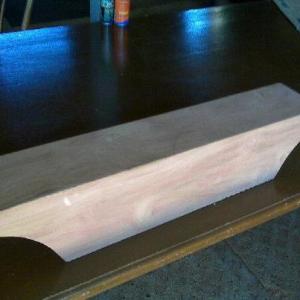
kua kapa o milo

kua kapa o milo

Hawaiian Word of the day: hālu’a

hālu’a: 1. stripe, ripple; ridged seamed, streaked, wrinkled. ‘ālu’a. 2. Pattern on the surface of a tapa beater or tapa. This term may follow types of beaters, as ko’eau hālu’a, mole hālua, pū’ili halu’a. It also precedes types of beaters, as listed below. 3. Variation of hānu’a (thick).

hālu’a ko’eau: Design on a tapa beater consisting of one or more straight lines separating every two wavy lines. Gently waving, delicate parallel lines (the waves are smaller and less jagged than those of the ha’ao.

hālu’a lei hala: Tapa beater design said to resemble pandanus lei and consisting of interlocked triangles.

hālu’a maka ‘upena: Tapa-beater design resembling net mesh.

hālu’a mana mana: Tapa-beater design. Branch, limb; a line projecting from another line, forked.

hālu’a niho manō: The panels between the hālu’a lines are enhanced by regularly spaced small triangles. Lit., shark tooth hālu’a.

hālu’a pāwehe niho manō: Tapa-beater design. The triangles of the niho manō pattern are bordered by oblique lines (pāwehe).

hālu’a pu’ili: A tapa-beater design pattern: tips of zigzag ridges in adjacent surfaces meet and form sunken lozenges. (ko’eau, in which the ridges are parallel).

hālu’a pūpū: A tapa-beater pattern with circular motifs (pūpū), also kōnane pūpū. (pūpū: 1. general name for marine and land shells; beads, snail. 2. any circular motif as in tapa, kōnane pūpū, checkerboard pattern [with rounded pits on each square, as on tapa].

(Hawaiian Dictionary,Revised and Enlarged Edition. Pukui & Elbert, 1971).

P1020871

‘Ōlelo Hawai’i

Linguistic origin of the Hawaiian language can be traced through genealogy chants, indicating family ties to the South Pacific islands of Polynesia and beyond. Words have similarities in sound and meaning. For example, one general rule is that in South Pacific Polynesia, the /r/ and /t/ sounds substitute for /l/ and /k/, as in the words kapa, kalo, and moku of Hawai’i and tapa, taro, and motu of Tahiti. An exception to this rule is found in Ni’ihau, where a soft /t/ sound is predominantly used in place of the /k/. The /k/ used in song, prayer and other specific occasions.

word_translation

Post Navigation