kapa kulture

This blog is dedicated to Hawaiian kapa and matters related to Hawai'i nei…kuku kapa e!

Staying Safe During Hawaii’s “Two Seasons”

Pacific Island Ranger's avatarPacific Island National Parks

(The following article courtesy National Weather Service Honolulu Office Website )

Hawaii’s Ocean Awareness Week: October 21st – 25th, 2013

Hawaii Governor Neil Abercrombie’s Proclamation for Ocean Awareness Week

Weather and surf are distinguished by two distinct seasons in Hawaii. The surf seasons generally follow the seasonal changes in the weather pattern across the North-Central Pacific Ocean. The dry season in Hawaii runs from May through September, while the wet season runs from October through April.

During the dry season, long period south swells are most common. These swells are generated by storm systems churning away in the southern hemisphere to the east of Australia and New Zealand. Two distinct zones of storm generation are favorable for south swell development. The most favorable location is in the area just east of New Zealand, while a second less consistent area is located between Australia and New Zealand. The south swells travel nearly…

View original post 435 more words
Hawaiian Word of the Day: Makaliʻi

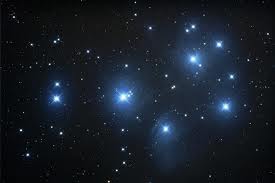
Makaliʻi: 1. Tiny, very small, fine, wee, small-meshed; narrow wefts. Makaliʻi ʻohua, tiny ʻohua, spawn: fig., anything wee, tiny. 2. Pleiades; Castor and Pollux. 3. Hawaiian month name; the six summer months collectively.

Makaliʻi  (Pleiades)

Makaliʻi (Pleiades)

To learn more about the Makaliʻi constellation and the associated Hawaiian season of Makahiki, check out this website:

http://www.kaahelehawaii.com/pages/culture_makahiki.htm

Bark Cloth on the Island of Uvea is Ngatu

Closely related to Tonga, the term for bark cloth in the island of Uvea is ngatu. Paper mulberry, Broussonetia papyrifera, or hiapo, is cultivated on the east coast where rainfall is heavy. Double layers of ngatu are beaten out and pasted together and are designed using freehand designs or kupesi-imprinted methods. If the kupesi pattern block is used, it is made form the midrib of leaf sewn to wads of leaf as in Tonga, and this is the traditional style for Uvea to make designs on the cloth.

Contemporary kupesi are carved in wood. Freehand painting is also done. The design motifs have changed over time from simple, repetitious patterns to modern designs that show a slice of life such as drinking kava, dancing, climbing trees, and fishing. Uses of ngatu include bed covers and screens, and clothing. There are two types of wrap-around skirts that are distinct in Uvea. One called a lafi that is decorated using the kupesi and then over-painted with black dye. The second is called a tohihina, which is decorated completely with freehand design using a pen in black dye on white ngatu cloth.

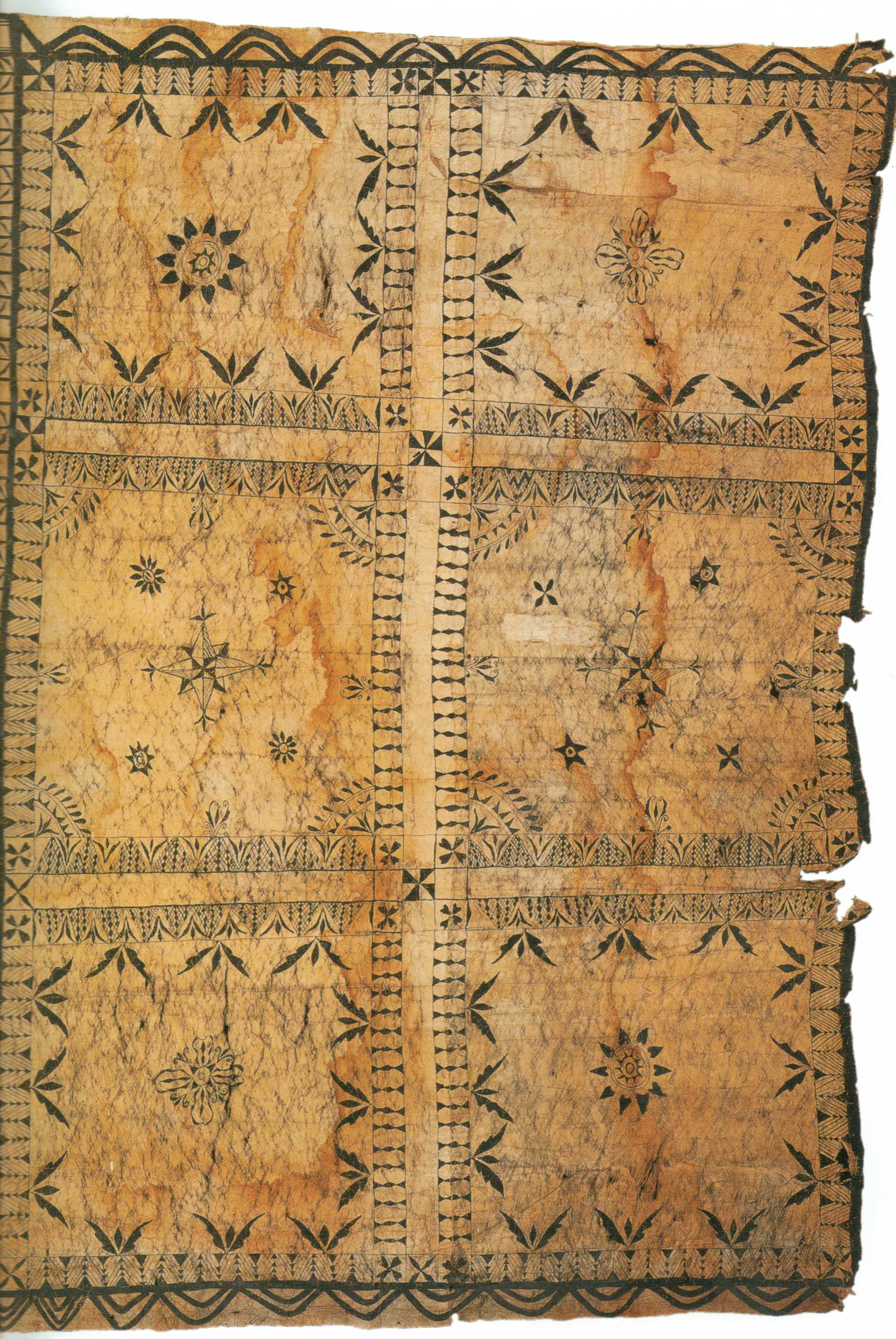
Ngatu of Uvea

Ngatu of Uvea

Hawaiian Word of the Day: ʻāwīwī

ʻāwīwī: To hurry; speedy, swift, quick, fast.

ʻĀwīwī kēia ka'a.  This car is fast.

ʻĀwīwī kēia ka’a. This car is fast.

Hawaiian Word of the Day: lapa ahi

lapa ahi: Flame, blaze.

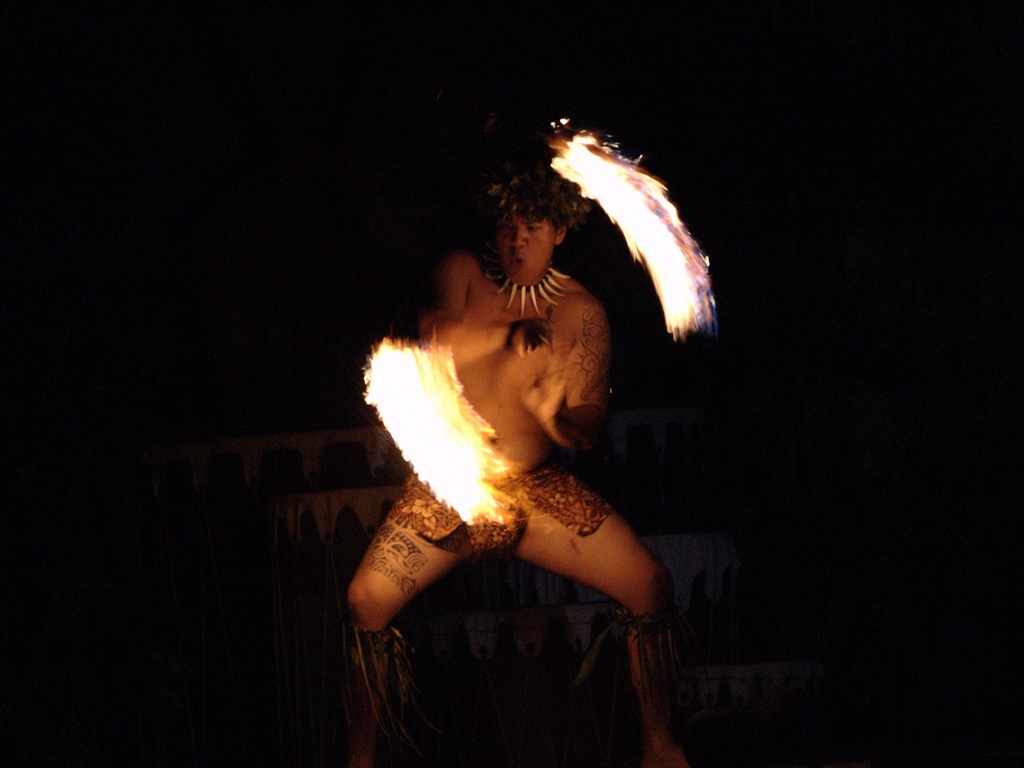
Hula kane me ka lapa ahi

Hula kāne me ka lapa ahi

Hawaiian Word of the Day: ʻoluʻolu

ʻoluʻolu: Pleasant, nice, amiable, satisfied, contented, happy, affable, agreeable, congenial, cordial, gracious; please. E ʻoluʻolu ʻoe e hele mai, please come here; lit., be kind to come here. E ʻoluʻolu ʻoe i koʻu manaʻo, please do me a favor. ʻOluʻolu ʻole, unpleasant, impolite, uncomfortable. ʻaʻole o lākou ʻoluʻolu i ʻelua dālā, they are not satisfied with two dollars. Mōʻi ʻoluʻolu, gracious majesty. ʻOluʻolu nō iāia iho, satisfied with himself, complacent. ʻAʻahu ʻoluʻolu, comfortable, casual, informal wear. Ke noi aku nei au i kou ʻoluʻolu, I am asking a favor of you. E ʻoluʻolu i ka mea i loaʻa, be satisfied with what you have got.

hoʻoluʻolu: To satisfy, alleviate, allay, console; to retire to rest, to seek rest; parade rest, at ease (military commands). E hōʻoluʻolu mai i kō ʻoukou mau naʻau, comfort your hearts.

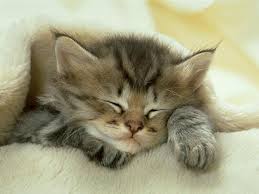
ʻOluʻolu ka pōpoki.

ʻOluʻolu ka pōpoki.

Tapa in Niue

On the island of Niue, hiapo is the term for bark cloth. When Samoan missionaries came to Niue in 1830, it is recorded that they brought hiapo with them, along with the Tahitian tiputa, which is a sort of poncho. It is reasonable to believe that this cultural sharing could be a historical bridge between Samoan and the Society Islands,arising not only from Missionary influence, but also as a result of a long history of inter-island voyaging typical of canoe expeditions in the region.

Although the hiapo is said to have come originally from Samoa, the quality in Niue is different from Samoan siapo. Samples from Niue, are made by felting layers into a single sheet the way it’s done in the Cook Islands. The mystery about hiapo of Niue is that no one knows what it is made for, since the size seems to be small for clothing or blankets. Speculation has it that the very creative designs on Niuen hiapo were made for some sort of commercial purpose. Perhaps the artistry involved points to a creative purpose that served as a pastime activity? Since 1901, no hiapo has been produced in Niue.

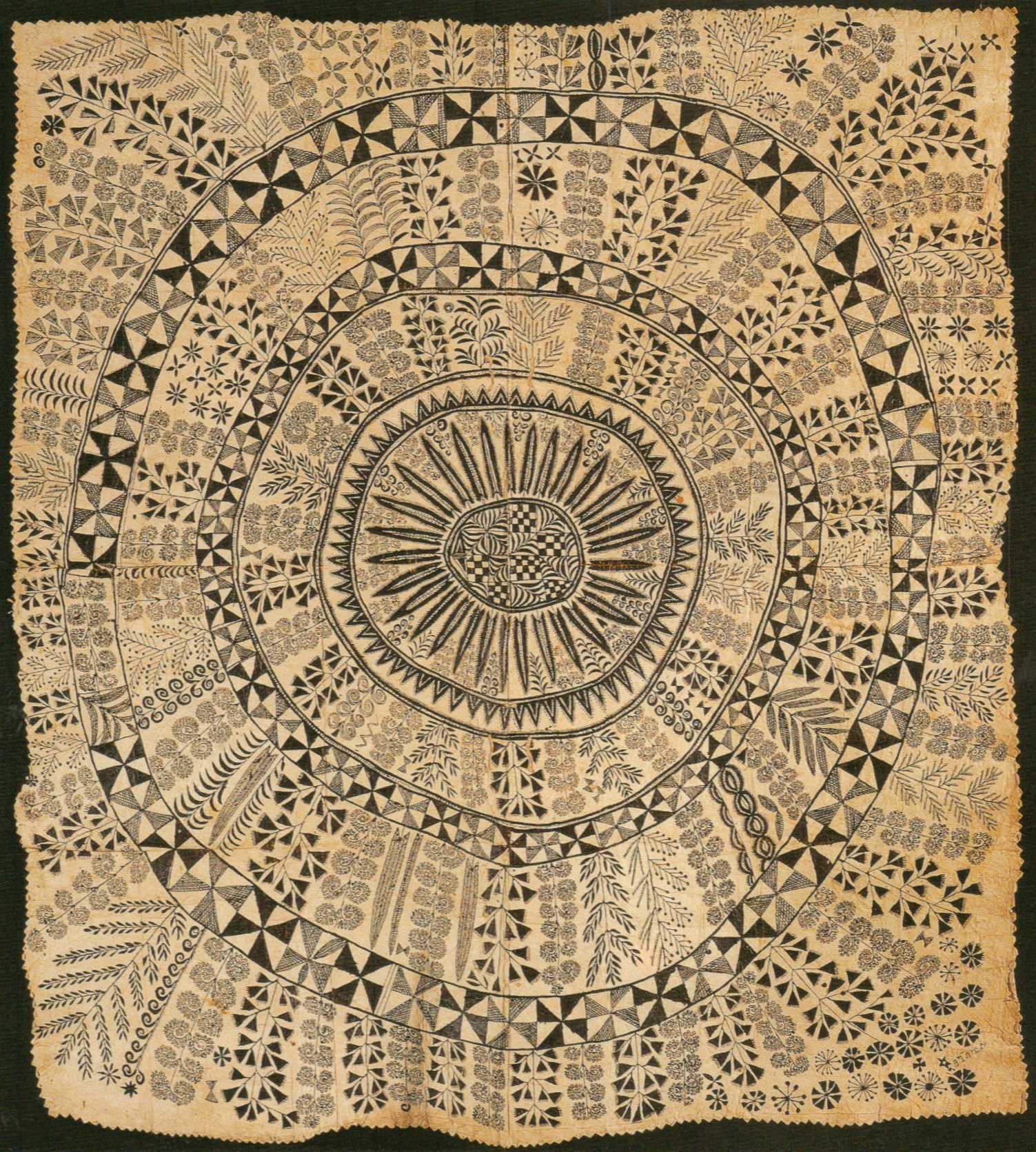
The designs on Niuen hiapo are not made with the rubbing method. The Niuens decorated their hiapo with freehand painting that is similar to the Samoan style. Rectangular or circular design compositions with abstract forms and plant forms are drawn with fine black lines, in a grid formation. Occasionally, people, stars, and fish are also drawn into the design. Hiapo beaters found in Niue, called ike, are unique to Niue. The ike are carved with very fine grooves and shaped with a cuff on the handle.

(Neich & Pendergrast, Pacific Tapa, 1997).

Niuen Hiapo

Niuen Hiapo

Bark Cloth of the Cook Islands

Cook Islands Tiput

Cook Islands Tiputa

Tapa is the name used for bark cloth in the Cook Islands. In the northern Cook Islands the paper mulberry did not grow well. But it did grow in the southern Cook Islands and was made into tapa there. As in other Polynesian islands, the breadfruit tree bark and banyan bark were also used to make tapa. In the southern Cooks tapa was felted into a single layer, with no sign of joining.

Decorating the finished tapa was done with freehand painting, immersion in dye baths, or it was cut with designs in a patterned motif. The rubbing method using design tablets was not used in the Cook Islands. Diamond motifs, which were “associated with the sacred world of the gods,” were applied on masks using the freehand painting method. Masks were made and decorated in Mangaia and Rarotonga and they were used in pageants called eva, to remember gods and cultural heroes. These ceremonies also were performed in association with mourning.

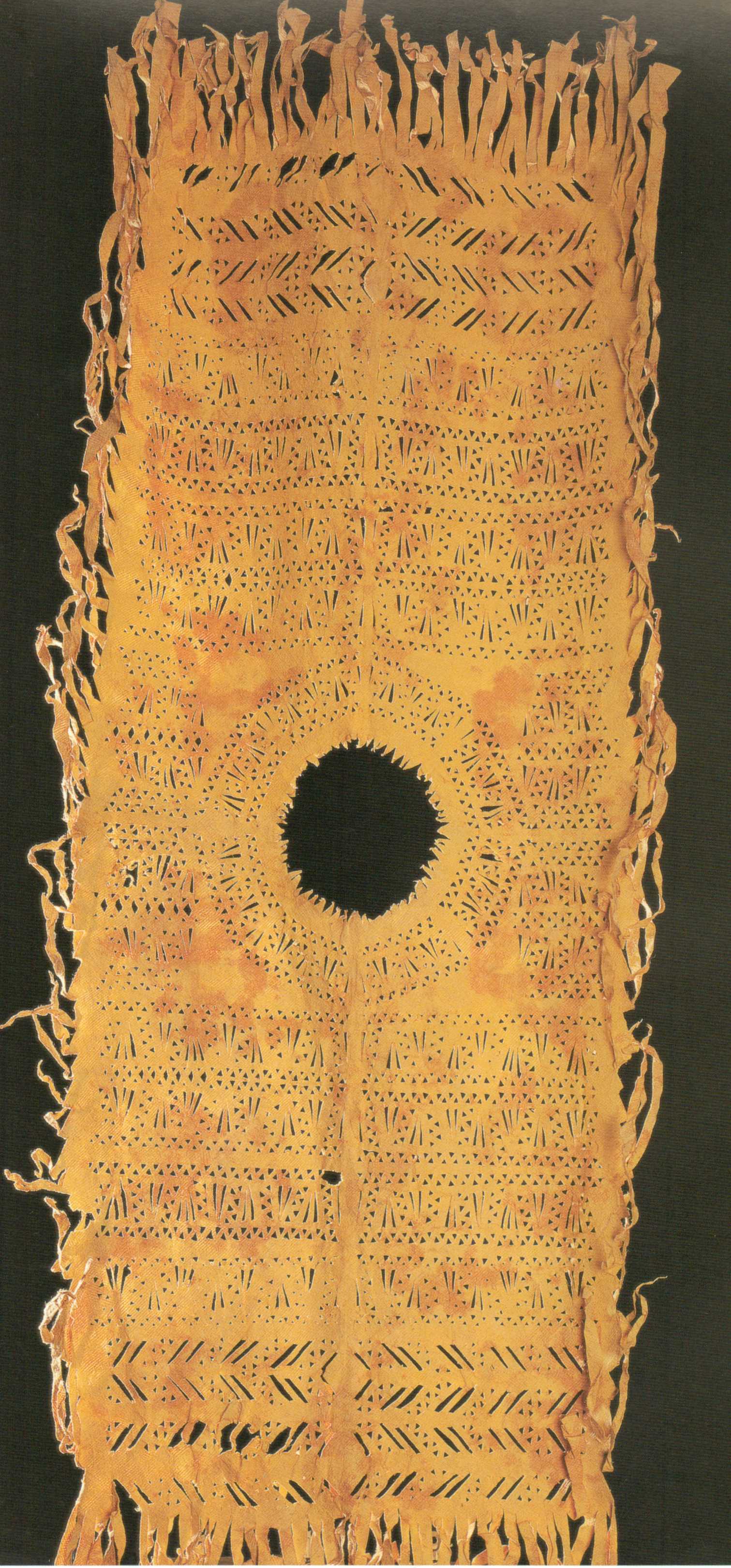
Tiputa was worn as clothing in the Cook Islands, in the Tahitian style that is believed to have been the result of the strong missionary influence. The tiputa was fashioned as a long piece of tapa that had a hole cut into the middle to be worn on the body like a poncho. Pants were made too. Articles of clothing were cut at the edges in fringes and cuts were made throughout the article in repetitive patterns, as in Futuna.

In the Cook Islands, as elsewhere in Polynesia, making bark cloth was done by women. However, a special, heavier, white cloth called tikoru was made by men. This was a special ceremonial bark cloth that was used to wrap around god images and was the attire of priests and high chiefs. This use may reflect the connection to spiritual beliefs that the chief and priests are descendant from the gods themselves.

(Neich & Pendergrast, Pacific Tapa, 1997).

The Book of Tapa Samples Collected by Captain James Cook and Assembled by Alexander Shaw

18th century Hawaiian Kapa

18th century Hawaiian Kapa

click on this link to learn more about this topic

What’s Going on with Kīlauea?

HAVO Public Affairs Specialist's avatarPacific Island National Parks

What’s going on with Kīlauea, you ask? Kīlauea continues to erupt from 2 locations. Within Hawai‘i Volcanoes National Park, at Halema‘uma‘u, the lava lake is about 150 feet deep within the crater (give or take) and the best viewing of this eruption is from the Jaggar Museum observation deck, open 24 hours a day. Go after dark or before dawn for the best eruption viewing, and the most amazing “glow show” in the park!

Out in Kīlauea’s East Rift Zone, Pu’u ‘Ō’ō continues to erupt, but there are currently no flows entering the ocean or pooling up on the coastal plain. According to the USGS Hawaiian Volcano Observatory, active breakouts in the Kahauale’a 2 area are scattered over a broad area within the state’s Natural Area Reserve, extremely hazardous and closed to the public. In this aerial photo of the Kahauale’a 2 eruption, a breakout near the edge of…

View original post 34 more words

Post Navigation