kapa kulture
This blog is dedicated to Hawaiian kapa and matters related to Hawai'i nei…kuku kapa e!

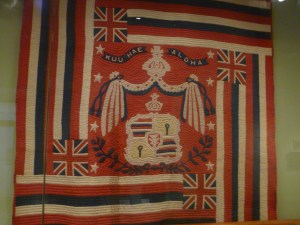
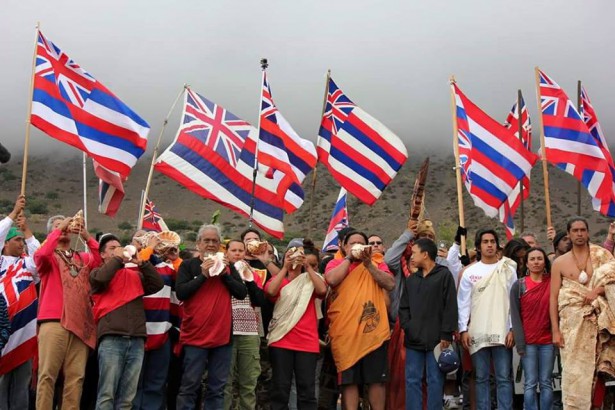
The Beauty of Mauna Kea
Ua mau ke ea o ka ʻāina i ka pono, life of the land is preserved in righteousness….
Although Mauna Kea has been under siege, people care. Technology is not a bad thing in and of itself, but the infrastructure needed to accommodate the humongous telescopes is detrimental to the natural and spiritual health of this most beautiful place. If the need for infrastructure increases, then the situation will only become worse. Electromagnetism is another concern and this kind of pollution is only now coming into public knowledge. E ola pono me ke malama pono kākou. i kū mau mau!
http://www.bigislandvideonews.com/2015/10/22/mauna-kea-update-october-22-2015
Kīlauea Volcano’s summit eruption in Halema‘uma‘u Crater turns 7 soon

The following is an excerpt from this week’s edition of the USGS Hawaiian Volcano Observatory‘s Volcano Watch, with tips on viewing the Halema‘uma‘u eruption within Hawai‘i Volcanoes National Park provided by park rangers.
 The lava lake within Halema‘uma‘u Crater at the summit of Kīlauea on February 1, 2014. USGS Photo.
While Kīlauea Volcano’s East Rift Zone eruption at Pu‘u ‘Ō‘ō has been making headlines with the June 27th lava flow and its hazards, Kīlauea’s summit eruption within Halema‘uma‘u Crater has steadily continued in the absence of much press. However, the lack of media attention does not reflect on the eruption’s remarkable nature.
Kīlauea’s ongoing summit eruption began on March 19, 2008, after several months of increasing seismic tremor and gas emissions. A small “throat clearing” explosion opened a new crater (informally called the Overlook crater, because it is located immediately below the former National Park visitor overlook) on…
View original post 884 more words
Mauna Loa: Quiet for Many Years, But Not to be Forgotten

 ʻAʻā lava flows erupt from the Northeast Rift Zone of Mauna Loa on March 25, 1984—the first day of the volcano’s most recent eruption. (USGS photo.)
The following is this week’s edition of the USGS Hawaiian Volcano Observatory‘s Volcano Watch:
Over the past few months, Mauna Loa, Hawaiʻi Island’s largest volcano, has shown subtle signs of stirring from its 31-year-long slumber (its most recent eruption began on March 25, 1984). The U.S. Geological Survey’s Hawaiian Volcano Observatory (HVO) has recorded numerous small earthquakes beneath Mauna Loa’s summit and western flank, and has detected slight expansion across Mokuʻāweoweo, the volcano’s summit caldera—signals that Mauna Loa should not be forgotten!
What can we expect as this great volcano reawakens and builds toward its next eruption?
Generally, as magma rises and eventually infiltrates and fills Mauna Loa’s summit magma reservoir, pressure builds within the volcano. When sufficient pressure is achieved, the volcano expands…
View original post 603 more words
Mauna Loa lava flow blazes a trail for the Saddle Road

The following is this week’s edition of the USGS Hawaiian Volcano Observatory‘s Volcano Watch:
With the recent downgrade of the Volcano Alert Level for Kīlauea’s June 27th lava flow that has been threatening the Pāhoa area, it’s interesting to take a look back at the 1880-1881 Mauna Loa lava flow and the threat that it posed to Hilo.
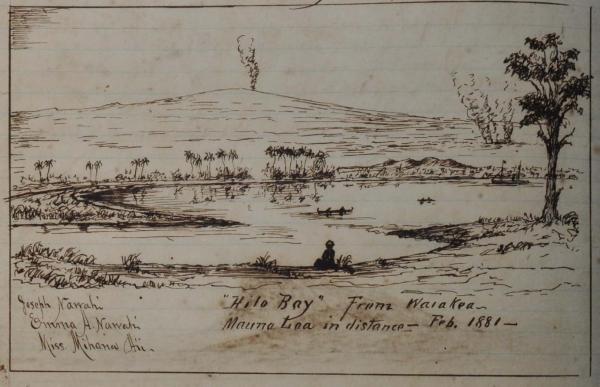 A sketch by Joseph Nāwahī showing the 1881 lava flow approaching Hilo. (Courtesy of National Park Service, Hawaiʻi Volcanoes National Park, HAVO 394, Volcano House Guest Register 1873 to 1885, illustration by Joseph Nāwahī, February 21, 1881.)
On the evening of November 5, 1880, people in Hilo and at the Volcano House hotel at the summit of Kīlauea noticed a glow on Mauna Loa—produced by an eruption located northeast of the volcano’s summit. A vent at about the 3,200 m (10,500 ft) elevation produced one lava flow that moved to the southeast…
View original post 619 more words
Hawaiian Word of the Day: kanu
kanu: To plant, bury; planting, burial. Fig., hereditary. Mea kanu, crops, plants. Kanu papahu wili, to set solidly into the ground by twisting in and then tamping with a post; lit., plant stick twist. He moʻopuna na kō lākou haku kanu, he was a grandson of their hereditary lord.
hoʻokanu. To cause to plant or bury, (Proto-Polynesian tanu).
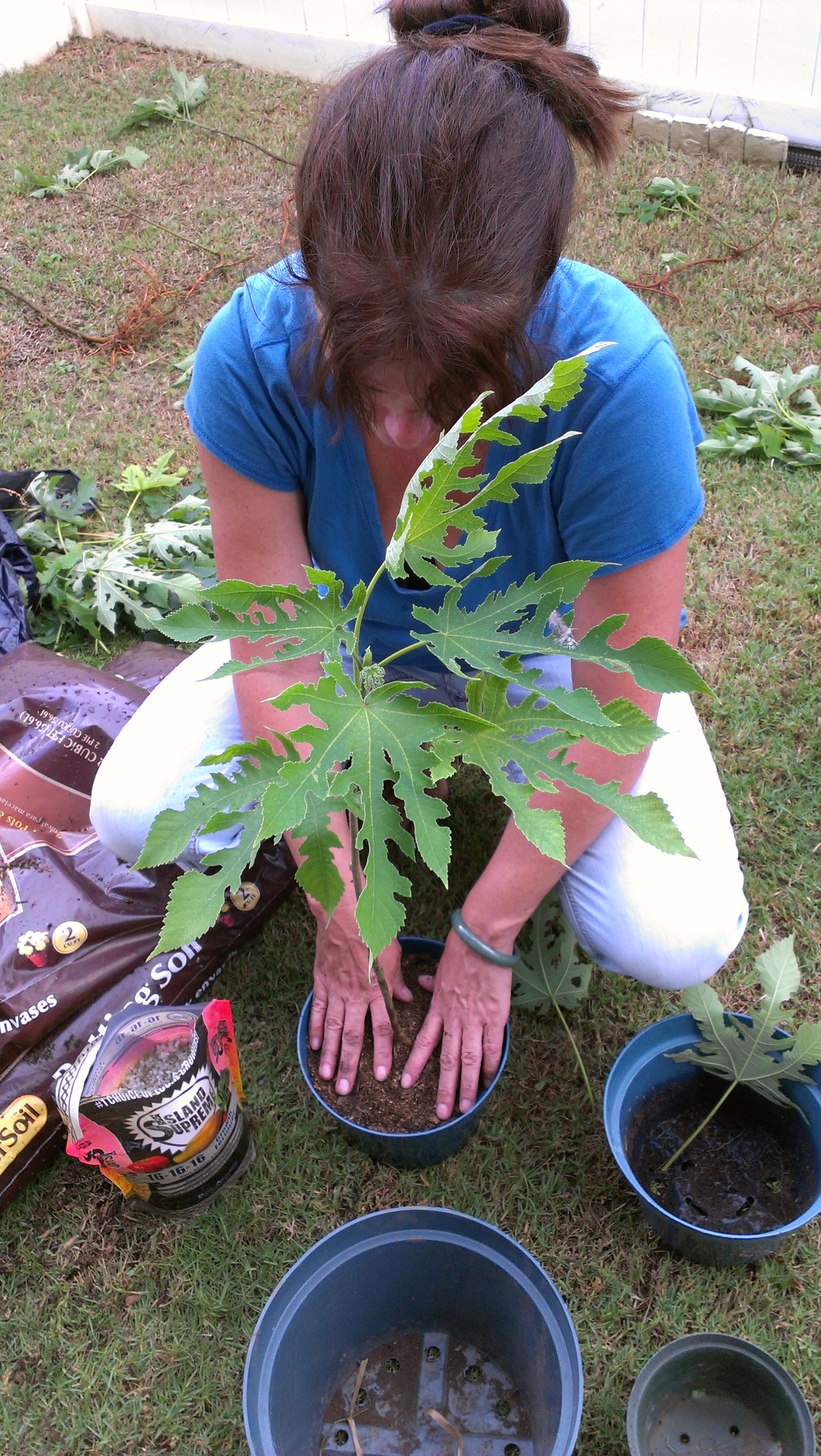
Kanu e ka mala wauke. (Plant the wauke garden.)
Manaʻo
Did you know that Hawaiian language was once considered a good example for a universal and global language? The alphabet is short and pronunciation is phonetic. Well, it may be true that phonetic spelling is simple to speak at face value, but Hawaiian language is far from that simple.
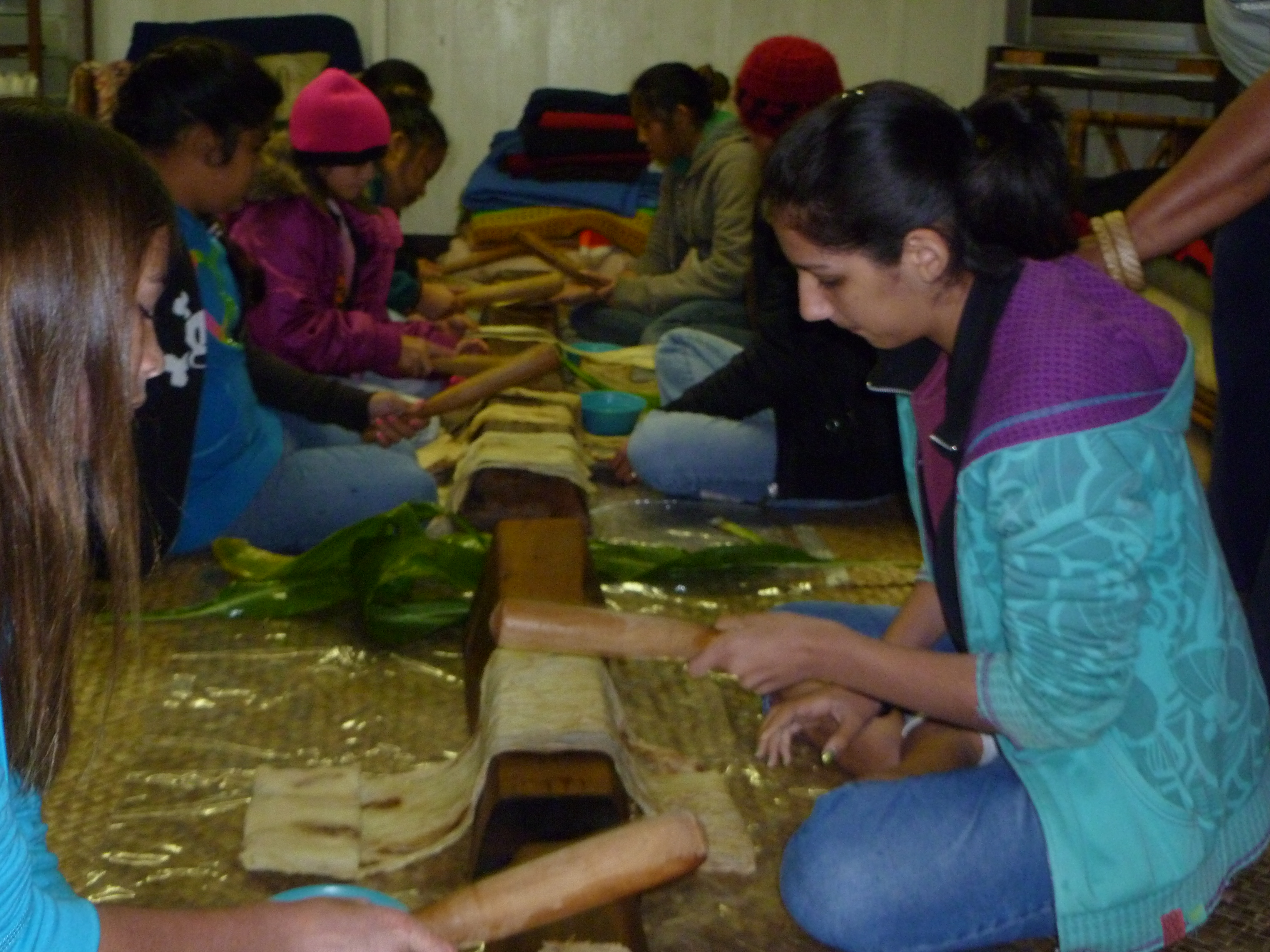
Hawaiian language has layers of depth, metaphoric expression, dualism, and symbolism that intertwine with scientifically-based manaʻo for living. This knowledge takes a lifetime to maopopo (recognize and understand). I think that generational transference is the best way for this kind of knowledge to be absorbed in language development. As with any language, idiosyncratic phrases are expressed colloquially and embedded in the language as cultural nuances. At any rate, immersion in cultural understandings is a must. For me, ongoing immersion implies a contextual base in which the language is used. For instance, making kapa is ideally suited for language development, and practical use. Some other activities with specific vocabulary can be found linked with culturally consistent practices such as fishing, farming, weaving, woodworking, and canoe paddling… these provide contexts for developing language and cultural understanding. Language and craft, and a healthy understanding of values are foundations of cultural growth and perpetuation…
Traditional stories, chants, riddles, and proverbs are relevant today for contemplation of Hawaiian manaʻo and can be used to build up our culture. This kind of culture-based education is already being done here and there. To this I say, E mahalo nō! E ola mau i ka Lāhui o Hawaiʻi! Thank you and long live the Hawaiian Nation!
Hawaiian Word of the Day: manaʻo ʻiʻo
manaʻoʻiʻo: Faith, confidence; to have faith, confidence; to believe. Kumu manaʻoʻiʻo, creed. Pelika o ka manaʻoʻiʻo, covenant of faith. Ua manaʻoʻiʻo i ke Akua, [he] believes in God.
 kapa kulture