kapa kulture
This blog is dedicated to Hawaiian kapa and matters related to Hawai'i nei…kuku kapa e!

Archive for the tag “sovereignty”
Population Decline of Native Hawaiians
The Native Hawaiian population decrease rose at an alarming rate since the first notable contact with Westerners in 1778. Disease was a major factor in this decline. Smallpox, cholera, and even the flu were introduced, and then decimated the Hawaiian people in record numbers. Venereal disease such as gonorrhea also had an additionally insidious effect of sterilizing its victims!
The perfection of the marine chronometer aided European cartographers in map making and was a primary reason for increased foreign invasion in the Hawaiian Islands. When the Hawaiian Islands were charted on maps beginning in the 1700’s, sailors, merchants, and missionaries came in droves until devastating consequences were reflected in cultural losses, loss of lands, way of life, and most importantly, decreasing numbers of the Hawaiian people.
Foreigners were instrumental in exploiting the natural resources in the region. Discovery that large profits could be made from the whaling industry, the sandalwood trade, and the subsequent development of sugar plantations brought famine, cultural disruption, and intermarriage to Hawaiian families. Combined with diseases, these factors had a fatal effect on the population of Native Hawaiian people.
In 2003, only 5000 individuals identified themselves as Native Hawaiian. This figure does not include races that identify themselves as part-Hawaiian, which is an independent category. In 2010, the United States Census combined all races from the Pacific Island region into one category and counted 540,013 individuals. This category includes people from the Philippines, Guam, Micronesia, Samoa, Tonga, and other island nations.

Population Decline of Native Hawaiians
Walaʻau–talking story
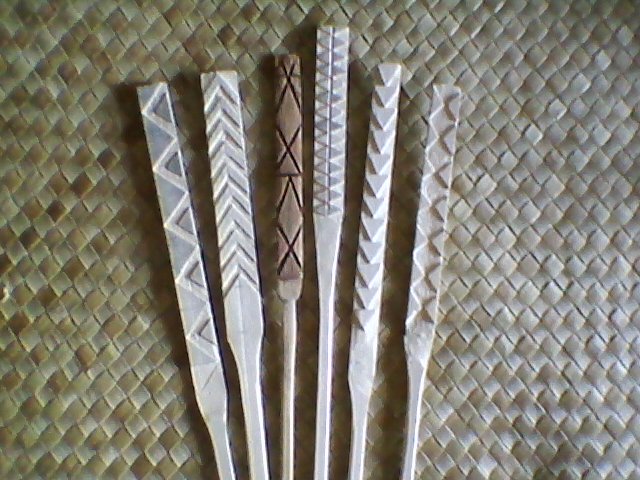
I spent my day yesterday playing around with some natural dyes I’ve collected, and dye mediums. I practiced printing designs with my ʻohe kāpala (bamboo stamps). This is one of my practice pieces done on watercolor paper with kukui nut ashes (grey) and ʻalaea (red).

kapa wehi
I used kukui nut oil mixed with water as the medium for the ‘alaea. It made a good consistency that enabled the pigment to be both dark enough and fluid enough for printing. The kukui ash did not work well with oil and/or water. I ended up using it dry and applied it using a small piece of kapa as a brush. This method of “dry painting” with a tapa brush was noted by Te Rangi Hiroa (Peter H. Buck) who was a director at the Bishop Museum from 1936 until he died in 1951. Among his many achievements, Buck wrote a series of scholarly publications entitled “Arts and Crafts of Hawaii” (1964) in which he wrote on various subjects of Hawaiian cultural life. Clothing, was one of the sections and it includes a pretty thorough discussion of Hawaiian kapa history, tools, and processes. Some other sections in the Arts and Crafts of Hawai’i series are food, houses, canoes, fishing religion, war and weapons, death and burial, and more.
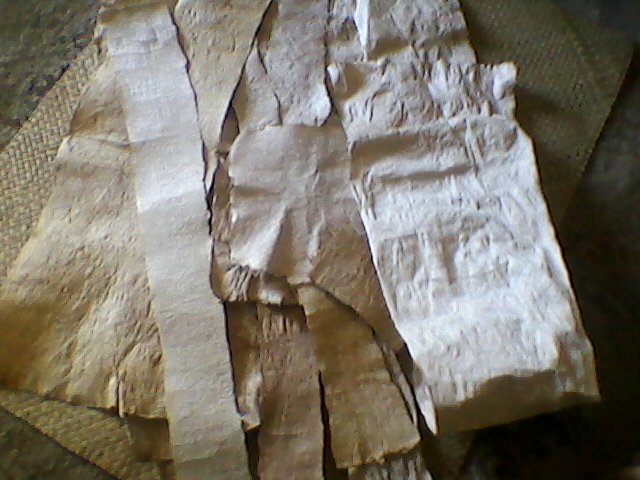
Kapa that I made over the past weeks…
This photo shows 14 pieces of kapa in a variety of sizes and textures. Some are heavy and stiff, some are thin, fine, and flexible. Many hours were spent pounding these using the hohoa and iʻe kuku to form a smooth cloth from the raw wauke tree bark, paper mulberry tree. These pieces are now ready for ho’owehi, decoration. The ʻohe kāpala are literally bamboo stamps, carved to be printing tools. I have gathered raw materials to make hoʻowaiulu, dyes. I have ʻōlena root for yellow, kukui nut ashes for black, and ʻalaea a mineral in the soil for red. I also have boiled down banana flower petals and got a brown wash. Stay tuned for the results! ~Aloha~
white kapa
kapa ke’ʻokeʻo
ʻohe kāpala, bamboo stamps

Hawaiian Word of the Day: kumu
kumu: 1. Bottom, base, foundation, basis, title (as to land), main stalk of a tree, trunk, handle, root (in arithmetic); basic; hereditary, fundamental. Kumu pali, base foot of a cliff. ʻIke kumu, basic, fundamental knowledge. Aliʻi kumu, hereditary chief. Alanui kumu, main street. ʻAuikumu, nominative case. Kumu kāhili, staff of a kāhili. Kumu nalu, source of waves, as where surfing starts. Mai ke kumu ā ka wēlau, from trunk to tip [all, entirely]. (Proto-Polynesian: tumu.) 2. Teacher, tutor, manual, primer, model, pattern. Kumu alakaʻi, guide, model, example. Kaʻu kumu, my teacher. Kumu hoʻohālike, pattern, example, model. Kumu hula, hula teacher. Kumu kuʻi, boxing teacher. Kumu kula, school teacher. Kumu leo mele, song book. Kumu mua, first primer. 3. Beginning, source, origin; starting point of plaiting. ho’okumu. To make a beginning, originate, create, commence, establish, inaugurate, initiate, institute, found, start. 4. Reason, cause, goal, justification, motive, grounds, purpose, object, why. Kumu no ka ʻoki male, grounds for divorce. Kumu ʻole, without reason or cause. He aha ke kumu i ʻeha ai kou wāwae? What is the reason for your foot hurting? 5. an article bought, sold or exchanged; price. kumu kūʻai. Kumu lilo, price paid, cost. Kumu loaʻa, selling price. 6. Herd, flock. kumu hipa, kumu pipi.


Hawaiian Word of the Day: lau
lau: 1. Leaf, frond, leaflet, greens; to leaf out. Lau is sometimes contracted to lā-, as lā’ī, lāʻie, lāʻō. ho’olau. to grow leaves; to leaf out. 2. Dragnet, seine, so called because formerly made of ti leaves (lau) tied to a rope. Hukilau, lauahi, lauʻapoʻapo, laukō. ho’olau. (a) To use a lau. (b) A bundle of grass or ferns set in water to attract shrimps or ʻoʻopu fish; a net was placed under this bundle, and the fish shaken into it. (Proto-Polynesian rau.) 3. Sheet; surface; blade, as of grass. 4. To be much, many; very many, numerous; four-hundred. Lau ā lau nā hōkū o ka lani, hundreds and hundreds of stars in the heaven. Lau lena ka pua o ka māmane, the māmane is yellow with blossoms. ho’olau. To make numerous; to assemble, as of numerous persons or animals; numerous. 5. Pattern, as for quilts; design; print of a cloth. Pāhoehoe lau, brocaded satin. 6. Thatched mountain hut, as used by farmers, canoe-makers, bird catchers. 7. Tip, as of the tongue; top (probably related to wēlau and ʻēlau, tip). Lau make, death-dealing tip, as of a weapon. Moe…i ka lau o ka lihilhi, to doze; lit., sleep by the tip of the eyelash. 8. Sweet-potato slip or vine.

Hawaiian Word of the Day: maopopo
maopopo: To understand, recognize, realize; clear; plainly, clearly; understanding. Ua maopopo iā’oe? Do you understand? Ua maopopo ia’u kou mana’o, I understand your idea. Ha’i maopopo, to tell clearly. Maopopo ka ‘ikena, clearly seen or known. Maopopo ‘ole, unintelligible, unaware, unaccountable. Maopopo loa, to understand clearly, definite, certain. Maopopo maika’i, maopopo le’a, obvious, evident, clearly understood.
ho’omaopopo. To understand, make plain or clear, tell clearly, cause to understand, pay attention in order to understand; to certify, inform, remember, recollect, recall, think about, remind, believe in, realize, ascertain, take care of, recognize, discover. (Depending on context, many translations are possible; for substitution of maopopo for ho’omaopopo) Ho’omaopopo ‘ē, to understand ahead, to anticipate; inkling. Ho’omaopopo ‘ole ‘ia, misunderstood, unintelligible, uncared for, unclear. E ho’omaopopo aku ‘oe, i ka hola ‘ehia kākou e hele ai, find out what hour we are going. E ho’omaopopo aku ‘oe e hele mai i kēla ‘apōpō, remind [him] to come tomorrow. E ho’omapopo mai ‘oe i kēia mea e a’o ‘ia aku nei, pay attention and comprehend these things being taught you. (From Hawaiian Dictionary, Pukui & Elbert, p 241, 1971).

e ala e
Hawaiian Word of the Day: wiwo’ole
wiwo’ole: Fearless, brave, bold, courageous, dauntless, intrepid. Hana wiwo’ole, bold or brave deed, adventure. Mea wiwo’ole, intrepid person, adventurer.

 kapa kulture