Kapa Revival Project
<a href="
” title=”Kapa Revival Project” target=”_blank”>
This photo shows 14 pieces of kapa in a variety of sizes and textures. Some are heavy and stiff, some are thin, fine, and flexible. Many hours were spent pounding these using the hohoa and iʻe kuku to form a smooth cloth from the raw wauke tree bark, paper mulberry tree. These pieces are now ready for ho’owehi, decoration. The ʻohe kāpala are literally bamboo stamps, carved to be printing tools. I have gathered raw materials to make hoʻowaiulu, dyes. I have ʻōlena root for yellow, kukui nut ashes for black, and ʻalaea a mineral in the soil for red. I also have boiled down banana flower petals and got a brown wash. Stay tuned for the results! ~Aloha~
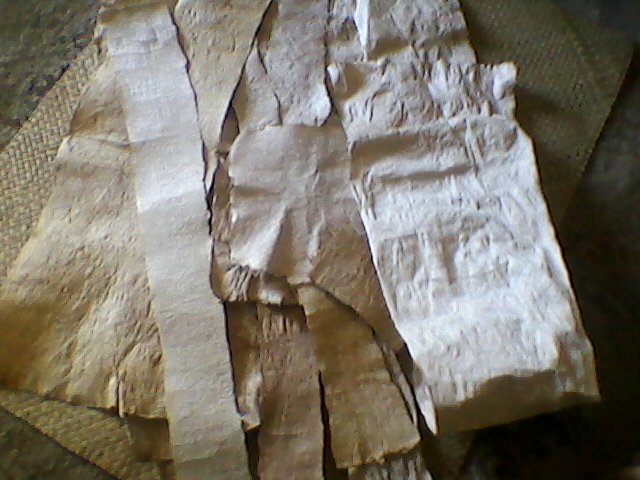
white kapa
kapa ke’ʻokeʻo
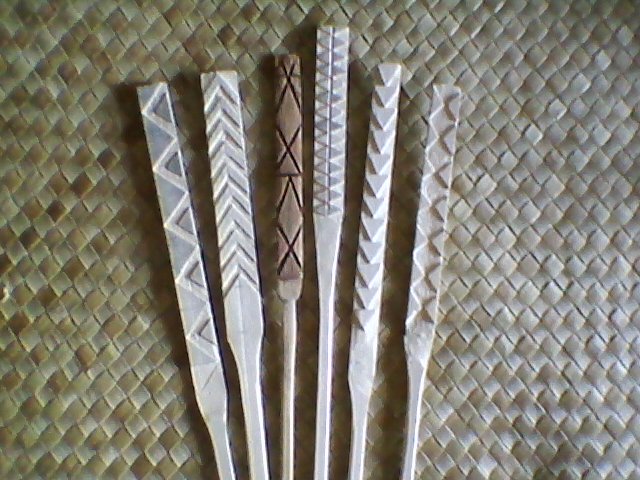
ʻohe kāpala, bamboo stamps
kumu: 1. Bottom, base, foundation, basis, title (as to land), main stalk of a tree, trunk, handle, root (in arithmetic); basic; hereditary, fundamental. Kumu pali, base foot of a cliff. ʻIke kumu, basic, fundamental knowledge. Aliʻi kumu, hereditary chief. Alanui kumu, main street. ʻAuikumu, nominative case. Kumu kāhili, staff of a kāhili. Kumu nalu, source of waves, as where surfing starts. Mai ke kumu ā ka wēlau, from trunk to tip [all, entirely]. (Proto-Polynesian: tumu.) 2. Teacher, tutor, manual, primer, model, pattern. Kumu alakaʻi, guide, model, example. Kaʻu kumu, my teacher. Kumu hoʻohālike, pattern, example, model. Kumu hula, hula teacher. Kumu kuʻi, boxing teacher. Kumu kula, school teacher. Kumu leo mele, song book. Kumu mua, first primer. 3. Beginning, source, origin; starting point of plaiting. ho’okumu. To make a beginning, originate, create, commence, establish, inaugurate, initiate, institute, found, start. 4. Reason, cause, goal, justification, motive, grounds, purpose, object, why. Kumu no ka ʻoki male, grounds for divorce. Kumu ʻole, without reason or cause. He aha ke kumu i ʻeha ai kou wāwae? What is the reason for your foot hurting? 5. an article bought, sold or exchanged; price. kumu kūʻai. Kumu lilo, price paid, cost. Kumu loaʻa, selling price. 6. Herd, flock. kumu hipa, kumu pipi.


lau: 1. Leaf, frond, leaflet, greens; to leaf out. Lau is sometimes contracted to lā-, as lā’ī, lāʻie, lāʻō. ho’olau. to grow leaves; to leaf out. 2. Dragnet, seine, so called because formerly made of ti leaves (lau) tied to a rope. Hukilau, lauahi, lauʻapoʻapo, laukō. ho’olau. (a) To use a lau. (b) A bundle of grass or ferns set in water to attract shrimps or ʻoʻopu fish; a net was placed under this bundle, and the fish shaken into it. (Proto-Polynesian rau.) 3. Sheet; surface; blade, as of grass. 4. To be much, many; very many, numerous; four-hundred. Lau ā lau nā hōkū o ka lani, hundreds and hundreds of stars in the heaven. Lau lena ka pua o ka māmane, the māmane is yellow with blossoms. ho’olau. To make numerous; to assemble, as of numerous persons or animals; numerous. 5. Pattern, as for quilts; design; print of a cloth. Pāhoehoe lau, brocaded satin. 6. Thatched mountain hut, as used by farmers, canoe-makers, bird catchers. 7. Tip, as of the tongue; top (probably related to wēlau and ʻēlau, tip). Lau make, death-dealing tip, as of a weapon. Moe…i ka lau o ka lihilhi, to doze; lit., sleep by the tip of the eyelash. 8. Sweet-potato slip or vine.

wiwo’ole: Fearless, brave, bold, courageous, dauntless, intrepid. Hana wiwo’ole, bold or brave deed, adventure. Mea wiwo’ole, intrepid person, adventurer.

kāhili: 1. Feather standard, symbolic of royalty; segment of a rainbow standing like a shaft (also a sign of royalty); to brush, sweep, switch (to spray, as in kāhilihili: Kāhilihili ke kai a ka he’e nalu, spraying sea of surf-rider).
Kāhili chants (As in ‘ou’ou, to describe the pinnacle or high peak): I ka lālā wēkiu ka pua o Lono, i ka ‘ou’ou o nā lani nui, in the topmost branch the flowers of Lono, among the highest of the high chiefs.
2. Pa’a kāhili, kāhili bearer. Kū kāhili, one standing by a kāhili or carrying it. Kāhili pulu, to clear away mulch. Haku ‘ia na’e ho’i ka hulu o ka moa i kāhili i mua o nā ali’i; kāhili ‘ia na’e ho’i kō kua, chicken feathers indeed are woven into a standard for the presence of the chiefs; your back is brushed by the kāhili.
ho’okāhili. To brush or fan gently. 2. The crape myrtle (Lagerstroemea indica), an ornamental shrub from China, with small oval leaves and panicles of pink, white, or purple crape flowers. 3. A small tree (Grevillea banksii) from Australia, related to the silky oak, ‘oka kilika, but the leaves with fewer subdivisions and the flowers red or cream-white. This is a later application of kāhili to a plant. Flowers not used for leis on head or around neck because of irritating hairs, but made into leis for hats by sewing alternated rows of flower clusters and own leaves on pandanus band. 4. Kāhili ginger (Hedychium gardnerianum), from the Himalaya region; much like the white ginger but with a more open flower head, the flowers with narrow yellow segments and one bright red stamen apiece. Also ‘awapuhi kāhili. 5. A seaweed, probably Turbinaria ornata.
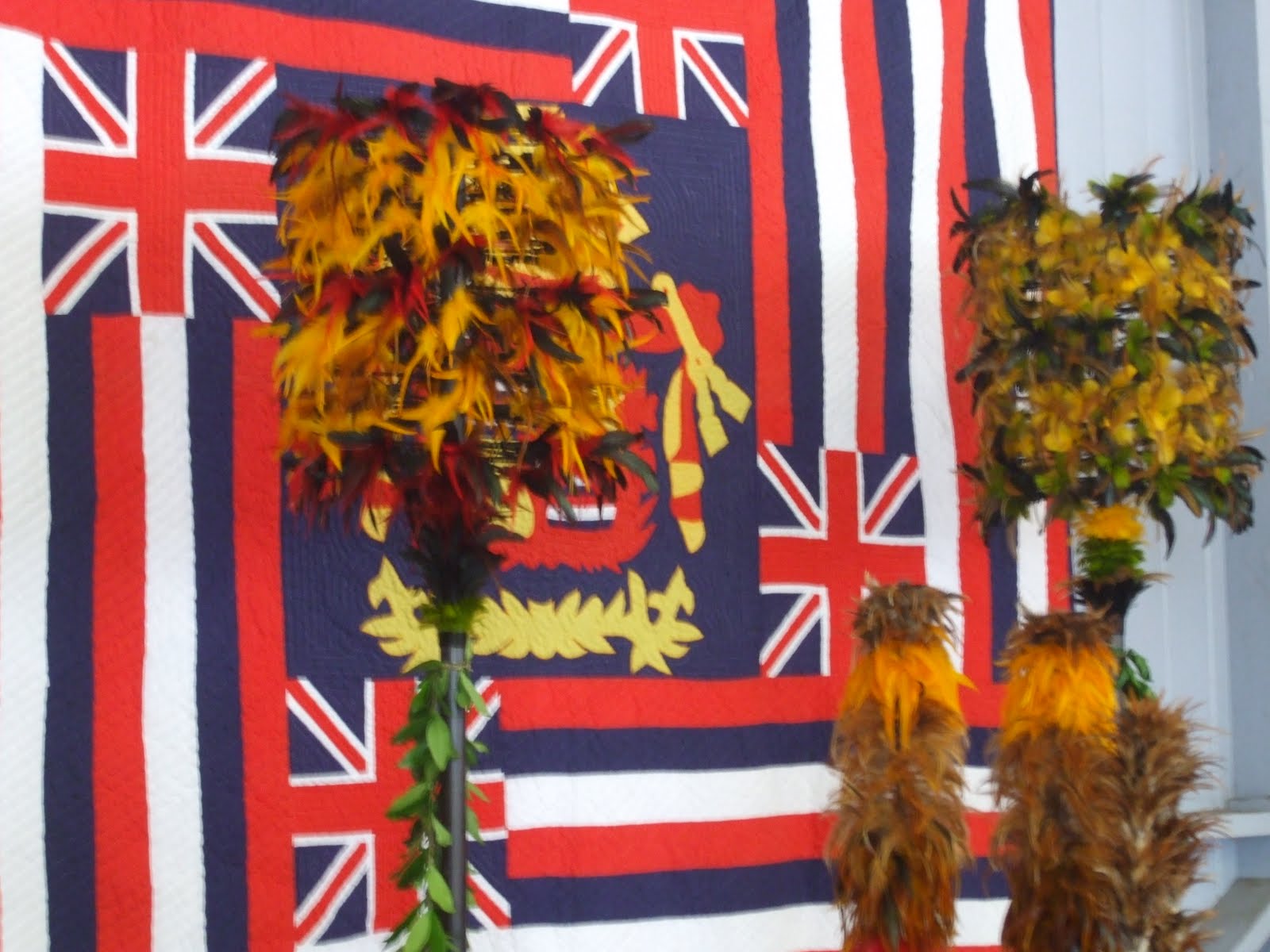

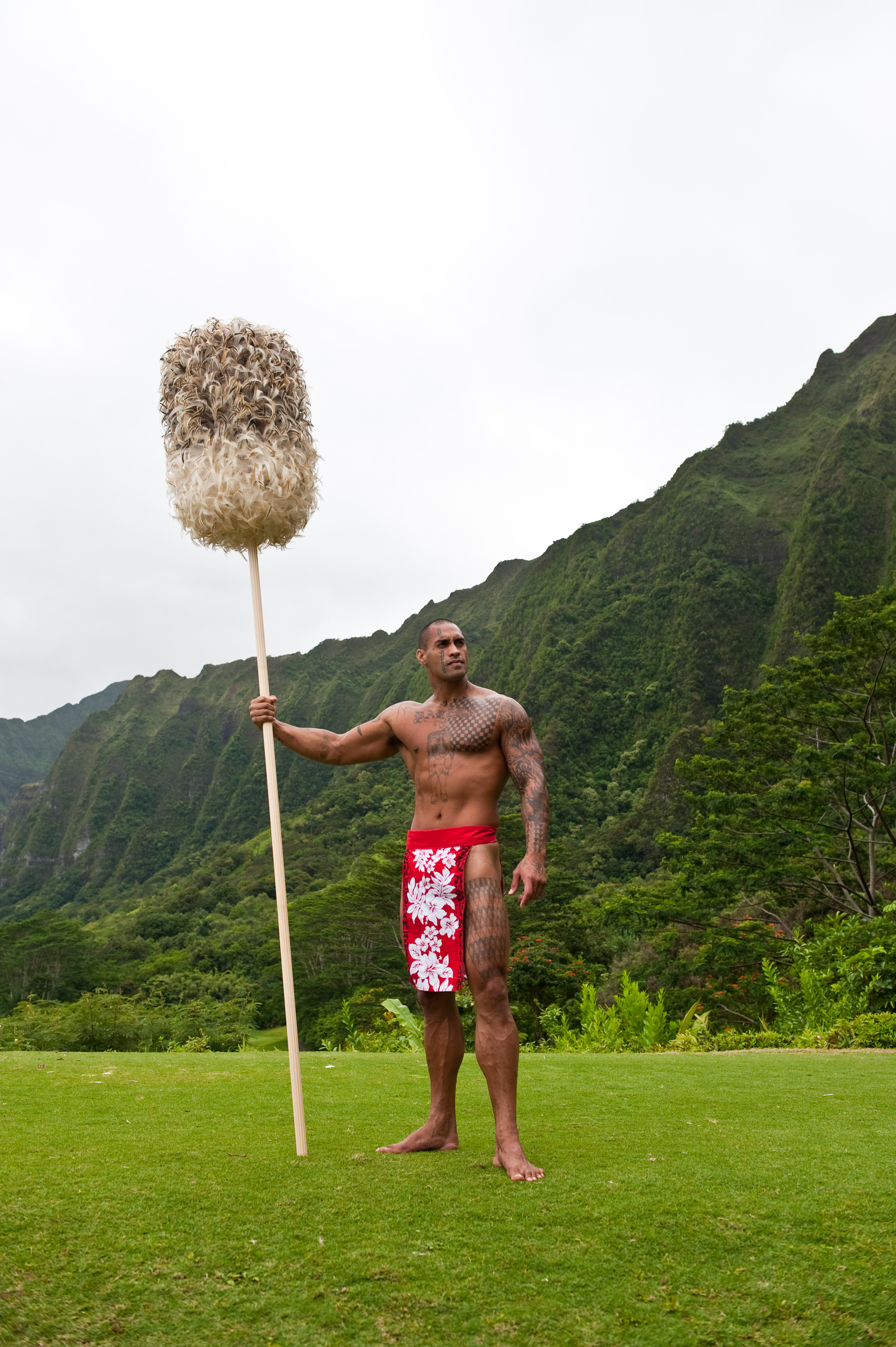

‘onipa’a: Fixed, immovable, motionless, steadfast, established, firm, resolute, determined (this was the motto of Ka-mehameha V and of Lili’u-o-ka-lani. Lit., fixed movement). hō’onipa’a. To fix, establish firmly. E hō’onipa’a loa wau iā ‘oukou (Bible: Jer. 42:10), I will plant you securely (Pukui & Elbert, Hawaiian Dictionary, 1971).
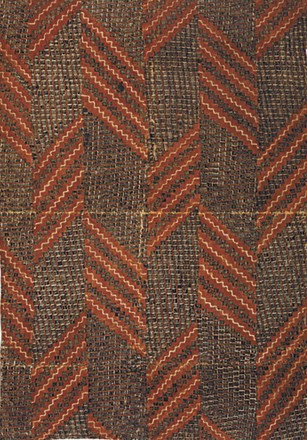
I had a long conversation the other night with my new friend and kapa maker extraordinaire, Dalani Tanahy www.kapahawaii.com. We hit on topics up, down, and sideways…but guided by a set of questions I held in my hand. The purpose of the call was to understand her point of view related to things of “kapa kulture.” Some of the Q’s were theoretical, political, or cultural in nature. But the practical, …oh, the practical… how wonderful to get the scoop from such a dedicated kapa master! Her wisdom and expertise inspired me to revisit several pieces of my own recently pounded kapa which I felt to be under par. I was unsatisfied with the look and feel of these pieces. I had underestimated the work involved and the previous 10 or more hours was not yet sufficient time spent to pound the wauke fibers into soft and flat submission. The result was striated sheets which were stiff and cardboard-like rather than the papery softness I was aiming for. If it was to be worn as a malo or pā’u garment, scratchy and uncomfortable to wear indeed!
Back to my kua I went, taking my kapa with me… I wet the dried sheet with sprays of misty water. After careful pounding for a couple of hours, I managed to produce a softer, whiter, and more delicate specimen that was getting closer to the ideal proposed by Hawaiian historian, Samuel Kamakau, who had declared that the “well-made tapa must be clearer than the light of the moon, whiter than the snow upon the mountains.” Kapa making is not for the faint of heart or impatient, but as an art it requires careful labor and the time to coax a smooth and graceful hand from coarse, raw material.

‘ili: 1. Skin, complexion, hide, pelt, scalp, bark, rind, peel. Ho’okae ‘ili, race prejudice; to have race prejudice. Ka ‘ili o ke po’o, scalp. Kāne i ka ‘ili, husband. ‘A’ohe mea ‘ē a’e, ‘o ka lole wale nō i ka ‘ili, there was nothing else except the clothing on the back. 2. Leather. ‘ili lahilahi, thin leather. ‘Ili mānoanoa, thick leather. 3. Surface, area. ‘ili ‘āina, ‘ilikai. 4. Binding, cover. ‘Ili pa’a, hard cover (of a book). 5. Land section, next in importance to ahupua’a and usually a subdivision of an ahupua’a. 6. Strap of any kind, as reins, harness, fan belt, machine belt; hose. 7. Pebble (less used than ‘ili’ili); kōnane pebble. 8. Square, as in measurements. A na ‘ili, square measurements (Pukui & Elbert, 1971).
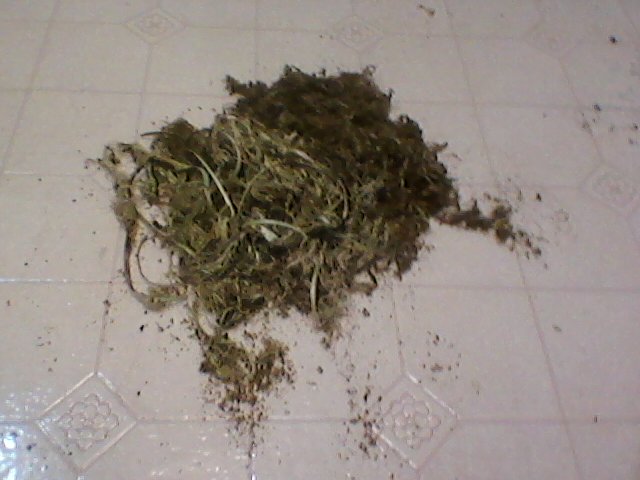
‘ili lepo o waho… dirty outer bark…of wauke when making kapa. The outer bark that is scrapped off to begin the process of making kapa.
‘ili lepo o waho
 kapa kulture