kapa kulture

This blog is dedicated to Hawaiian kapa and matters related to Hawai'i nei…kuku kapa e!

Archive for the tag “cultural arts”

Hawaiian Word of the Day: kahiki

kahiki:1. Tahiti. holokahiki. Holo i Kahiki, sail to Tahiti. The sky was divided into five areas beginning with the term Kahiki: Kahiki-moe, horizon; lit., prostrate Kahiki. Kahiki-kū, sky just above the horizon; lit., upright Kahiki. Kahiki-ka-papa-nu’u, the next layer; lit., Kahiki the elevated stratum. Kahiki-kapapa-lani, high in the sky, almost directly overhead; lit., Kahiki the sky (or god) stratum. Kahiki-kapu-i-Hōlani-ke-ku’ina, the sky directly overhead; lit., sacred Kahiki at Hōlani the meeting place. 2. Any foreign country, abroad, foreign. 3. A variety of banana, common wild on Maui. Kinds are kahiki hae, kahiki mauki, and kahiki puhi.

Hōkūle'a me ke Kahiki

Hōkūle’a me ke Kahiki

Hawaiian Word of the Day: wehi

wehi: 1. Decoration, adornment, ornament; to decorate. ho’owehi. to beautify, decorate, adorn. 2. A song composed as an adornment, a song honoring someone. Ha’ina kou wehi, sing the adornment, your song. 3. Dark (Pukui & Elbert, 1971).

Ka wehi ma kapa

Pā wehi ma kapa

Hawaiian Word of the Day: pōhaku

pōhaku: 1. Rock, stone, mineral, tablet; sinker; thunder; rocky, stony. Mauna Pōhaku, Rocky Mountains. Ke ka’a maila ka pōhaku, the thunder peals. ho’opōhaku. To harden, as lava; to petrify; hard. Fig., stubborn. (Proto Polynesian: fatu, Central Polynesian: poofatu.) 2. Weighted with rocks, hence stationary, not moving. Pōhaku kaomi moena, a stone weighing down a mat, said of a homebody. Pōhaku ‘au wa’a lā le’ale’a i kai nei (chant), fleet of canoes at anchor, happy here at sea. ho’opōhaku. To remain long in one place; to stay at home. E ho’opōhaku, e hoho mālie (chant), stay, rest quietly. 3. Type of crab (Pukui & Elbert, 1971).

2pohaku

Hawaiian Word of the Day: ku’i ku’i

ku’iku’i: To pound, punch, strike, box, hit, hammer; to beat out, as metals; to churn, as butter; to boom or clap, as thunder; to smite, injure, to jar; to prod, as ‘opihi shells from rocks with a knife, formerly with sharp stones; to clash (as sound).

wauke ku’iku’i: Bast from fully mature wauke that required more beating (ku’iku’i) than younger wauke (wauke ohiohi).

Hawaiian Word of the Day: ikaika

ikaika: 1. Strong, powerful, sturdy, stalwart, potent; strength, force, energy, might, vigor, determination. ho’oikaika, hō’ikaika. To make a great effort, work hard, encourage, animate, strengthen, fortify, try, strive, strain; calisthenics. Ho’oikaika kino, body building exercise. Pili ho’oikaika kino, relating to body building, athletic. Pōhaku ho’oikaika, stones lifted as a test of strength. E ho’oikaika ana au e hana i kēia, I’m going to make a great effort to do this. 2. A name reported for Jupiter (Pukui & Elbert, 1971).

ikaika

Hawaiian Word of the Day: hapa haole

hapa haole: Part-white person; of part-white blood; part white and part Hawaiian, as an individual or phenomenon. Hula hapa haole, a hula danced to a mele hapa haole (a Hawaiian type of song with English words and perhaps a few Hawaiian words) (Pukui & Elbert, 1971).

I am hapa haole.

I am hapa haole. He hapa haole au.

Hawaiian Word of the Day: palapala

palapala: 1. Document of any kind, bill, deed, warrant, certificate, policy, letter, tract, writ, diploma, manuscript; writing of any kind, literature; printing on tapa or paper; formerly the Scriptures or learning in general; to write, send a written message. 2. Maui name for pualu, a fish. 3. Variation of name for maomao, a fish (Pukui & Elbert, 1971).

Palapala to the U.S. written by Queen Lili'uokalani

Palapala to the U.S. written by Queen Lili’uokalani

Hawaiian Word of the Day: hali’a

hali’a: Sudden remembrance, memory, especially of a loved one; fond recollection, premonition; to recall, recollect fondly. Hali’a aloha, cherished or loving memory; to remember fondly. ho’ohali’a. To evoke reminiscence or recollection; remembrance; to remind (Pukui & Elbert, 1971)..

Hawaiian Word of the Day: ho’oki

ho’ōki: To put an end to, terminate, conclude, annul, to finish, stop; end.

Proto-Polynesian: oti.

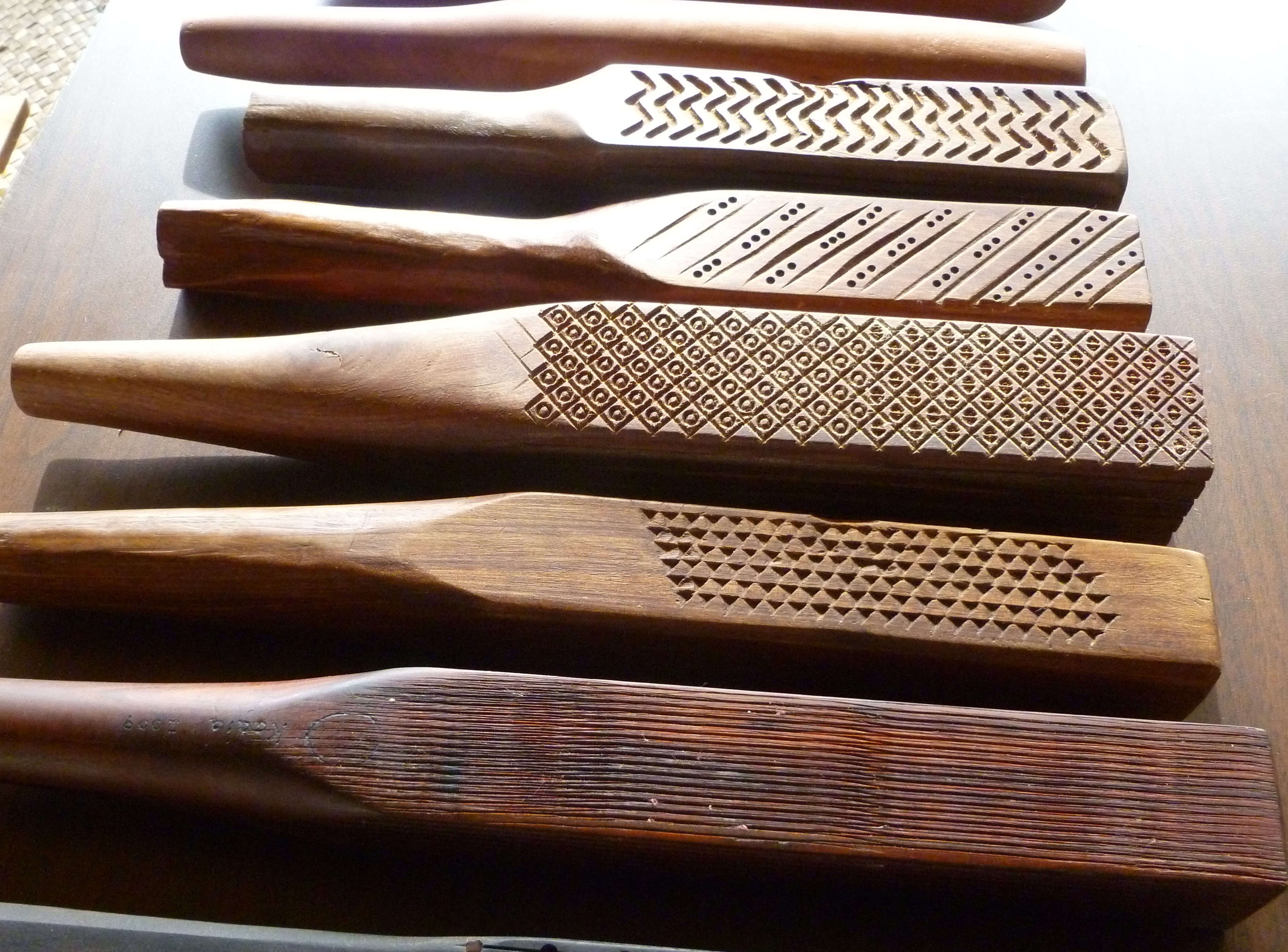
Stages of kapa-beating includes the final stage of ho’ōki, which requires using an i’e kuku ho’ōki with a watermark such as an ‘upena hālua niho mano, shark tooth with fishnet design.

P1020871

“The Tapa” History and Process, Part 3

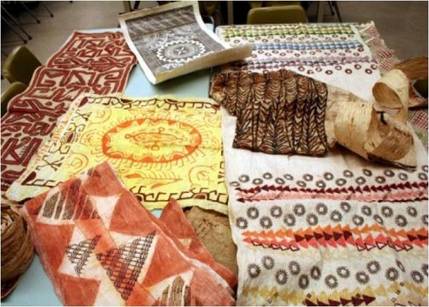
Throughout the South Pacific islands, each island nation has its own particular nuances in making tapa cloth, which distinguishes it from another. Traditional techniques were passed down and were a life skill in the community. Making tapa cloth was done primarily by women. It is a women’s art that has changed only slightly since ancient times.

Generally speaking, in Western Polynesia a piece of tapa was produced by pasting sheets together in layers and then joining smaller pieces by pasting to make a larger cloth. A heavy, coarse material results from this method. Whereas in Eastern Polynesia a felting process was done, pounding pieces into a single layer, without a fusing agent, or paste. Gradually a large piece of cloth is built up using this felting process. And a softer product is the result.

The tapa cloth in Polynesia begins with a basic process of removing the inner bark, or bast, from the trees and soaking this inner part in water for several days to soften and ferment the fibers and get them ready for pounding into thin sheets. The paper mulberry trees (wauke) are grown for this purpose and carefully cultivated. They are allowed to grow six to eight feet high until one to two inches in diameter. The trees are constantly cared for and tended while they grow. Young branches are broken off to ensure consistent, straight fibers to make smooth, whole tapa sheets unmarred by holes.

Special tools are used in the fabrication of tapa cloth. A type of anvil, a wooden block usually, is a sort of table that the bark is placed on and from start to finish, the tapa is pounded, or beaten. Techniques involve special shells used like knives to strip off the outer bark lengthwise from the tree, and to remove the bast. A selection of carved, wooden beaters flattens and spreads the fibers. Starting with a rounded club, moving to a grooved style that has four parallel sides, serving as steps toward finishing a smooth final product.

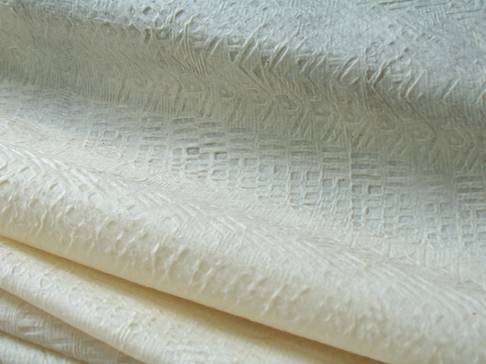
Additionally, Hawaiian tapa, or kapa cloth has a final step of beating, which leaves a watermark imprint on the cloth. This watermark is a unique carved design on a beater that served as the artist’s signature and finished the work in an important part of the felting process.
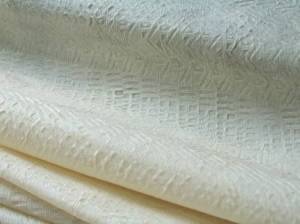
Kapa with watermark, at the California Academy of Sciences Natural History Museum, San Francisco

Kapa with watermark, made by Dalani Tanahy

Post Navigation