kapa kulture
This blog is dedicated to Hawaiian kapa and matters related to Hawai'i nei…kuku kapa e!

Archive for the tag “bark cloth”
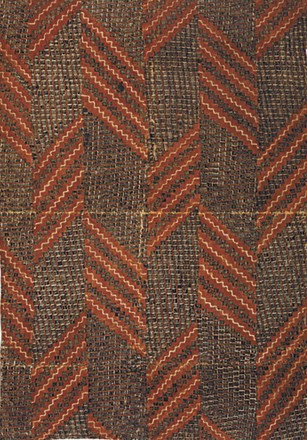
Kapa Māna’o…(knowledge)
I had a long conversation the other night with my new friend and kapa maker extraordinaire, Dalani Tanahy www.kapahawaii.com. We hit on topics up, down, and sideways…but guided by a set of questions I held in my hand. The purpose of the call was to understand her point of view related to things of “kapa kulture.” Some of the Q’s were theoretical, political, or cultural in nature. But the practical, …oh, the practical… how wonderful to get the scoop from such a dedicated kapa master! Her wisdom and expertise inspired me to revisit several pieces of my own recently pounded kapa which I felt to be under par. I was unsatisfied with the look and feel of these pieces. I had underestimated the work involved and the previous 10 or more hours was not yet sufficient time spent to pound the wauke fibers into soft and flat submission. The result was striated sheets which were stiff and cardboard-like rather than the papery softness I was aiming for. If it was to be worn as a malo or pā’u garment, scratchy and uncomfortable to wear indeed!
Back to my kua I went, taking my kapa with me… I wet the dried sheet with sprays of misty water. After careful pounding for a couple of hours, I managed to produce a softer, whiter, and more delicate specimen that was getting closer to the ideal proposed by Hawaiian historian, Samuel Kamakau, who had declared that the “well-made tapa must be clearer than the light of the moon, whiter than the snow upon the mountains.” Kapa making is not for the faint of heart or impatient, but as an art it requires careful labor and the time to coax a smooth and graceful hand from coarse, raw material.

Hawaiian Word of the Day: ‘ili
‘ili: 1. Skin, complexion, hide, pelt, scalp, bark, rind, peel. Ho’okae ‘ili, race prejudice; to have race prejudice. Ka ‘ili o ke po’o, scalp. Kāne i ka ‘ili, husband. ‘A’ohe mea ‘ē a’e, ‘o ka lole wale nō i ka ‘ili, there was nothing else except the clothing on the back. 2. Leather. ‘ili lahilahi, thin leather. ‘Ili mānoanoa, thick leather. 3. Surface, area. ‘ili ‘āina, ‘ilikai. 4. Binding, cover. ‘Ili pa’a, hard cover (of a book). 5. Land section, next in importance to ahupua’a and usually a subdivision of an ahupua’a. 6. Strap of any kind, as reins, harness, fan belt, machine belt; hose. 7. Pebble (less used than ‘ili’ili); kōnane pebble. 8. Square, as in measurements. A na ‘ili, square measurements (Pukui & Elbert, 1971).
‘ili lepo o waho… dirty outer bark…of wauke when making kapa. The outer bark that is scrapped off to begin the process of making kapa.
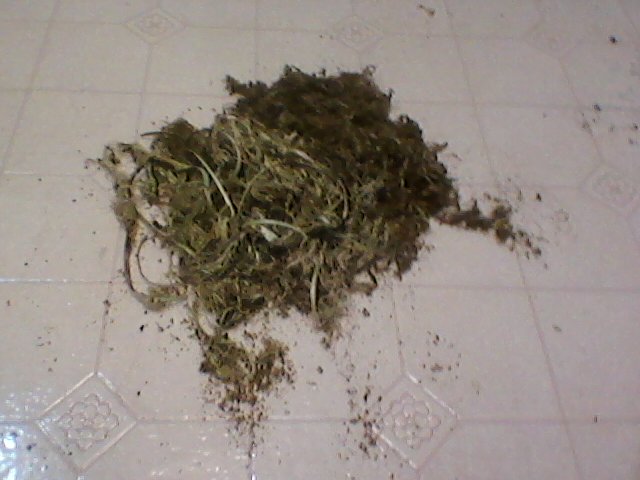
‘ili lepo o waho
Hawaiian Word of the Day: lawa
lawa: 1. Enough, sufficient, ample; to have enough, be satisfied. Lawa pono, plenty, abundant, ample, adequate. Lawa pono ‘ole, insufficient, deficit. Ka’a i ka lawa, to be enough. ho’olawa. To supply, apportion sufficiently, equip. E ho’olawa mai ‘oe i lau hala e pa’a ai keīa moena, supply me enough pandanus leaves to finish this mat. 2. Possessed of enough or ample knowledge, hence wise, capable, competent. Ua lawa ke ‘ike, knowing a great deal. Ua lawa i ka hānai keiki, wise in raising children. 3. As soon as, I lawa nō ā pau ka hana ho’i kāua, as soon as the work is finished, we’ll leave. 4. Strong, husky; strong man, as in a king’s retinue, lawakua. 5. To bind, make fast, tie securely. 6. White, as of a cock or dog. Moa lawa, moa lawa kea, white cock. 7. A large shark fishhook.
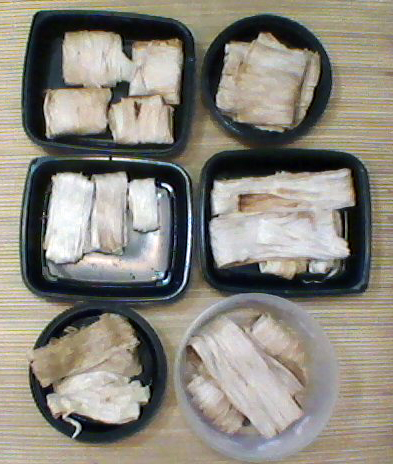
lawa pono wauke i ho’omo’omo’o
Hawaiian Word of the Day: lauhuki
lauhuki: 1. Tapa-soaking, to soak tapa. 2. (Cap.) Name of a goddess worshiped by tapa makers.

lauhuki
Hawaiian Word of the Day: pōhaku
pōhaku: 1. Rock, stone, mineral, tablet; sinker; thunder; rocky, stony. Mauna Pōhaku, Rocky Mountains. Ke ka’a maila ka pōhaku, the thunder peals. ho’opōhaku. To harden, as lava; to petrify; hard. Fig., stubborn. (Proto Polynesian: fatu, Central Polynesian: poofatu.) 2. Weighted with rocks, hence stationary, not moving. Pōhaku kaomi moena, a stone weighing down a mat, said of a homebody. Pōhaku ‘au wa’a lā le’ale’a i kai nei (chant), fleet of canoes at anchor, happy here at sea. ho’opōhaku. To remain long in one place; to stay at home. E ho’opōhaku, e hoho mālie (chant), stay, rest quietly. 3. Type of crab (Pukui & Elbert, 1971).

Hawaiian Word of the Day: ‘ohana
‘ohana: 1. Family, relative, kin group; related. ‘Ohana holo’oko’a, ‘ohana nui, extended family, clan. 2. To gather for family prayers (short for pule ‘ohana) (Pukui & Elbert, 1971).

Nā kupuna a’u. Ko’u ‘ohana.
Hawaiian Word of the Day: makakilo
makakilo: Observant, watchful eyes; to watch with great attention (Pukui & Elbert, 1971).
“The Tapa” History and Process, Part 3
Throughout the South Pacific islands, each island nation has its own particular nuances in making tapa cloth, which distinguishes it from another. Traditional techniques were passed down and were a life skill in the community. Making tapa cloth was done primarily by women. It is a women’s art that has changed only slightly since ancient times.
Generally speaking, in Western Polynesia a piece of tapa was produced by pasting sheets together in layers and then joining smaller pieces by pasting to make a larger cloth. A heavy, coarse material results from this method. Whereas in Eastern Polynesia a felting process was done, pounding pieces into a single layer, without a fusing agent, or paste. Gradually a large piece of cloth is built up using this felting process. And a softer product is the result.
The tapa cloth in Polynesia begins with a basic process of removing the inner bark, or bast, from the trees and soaking this inner part in water for several days to soften and ferment the fibers and get them ready for pounding into thin sheets. The paper mulberry trees (wauke) are grown for this purpose and carefully cultivated. They are allowed to grow six to eight feet high until one to two inches in diameter. The trees are constantly cared for and tended while they grow. Young branches are broken off to ensure consistent, straight fibers to make smooth, whole tapa sheets unmarred by holes.
Special tools are used in the fabrication of tapa cloth. A type of anvil, a wooden block usually, is a sort of table that the bark is placed on and from start to finish, the tapa is pounded, or beaten. Techniques involve special shells used like knives to strip off the outer bark lengthwise from the tree, and to remove the bast. A selection of carved, wooden beaters flattens and spreads the fibers. Starting with a rounded club, moving to a grooved style that has four parallel sides, serving as steps toward finishing a smooth final product.
Additionally, Hawaiian tapa, or kapa cloth has a final step of beating, which leaves a watermark imprint on the cloth. This watermark is a unique carved design on a beater that served as the artist’s signature and finished the work in an important part of the felting process.
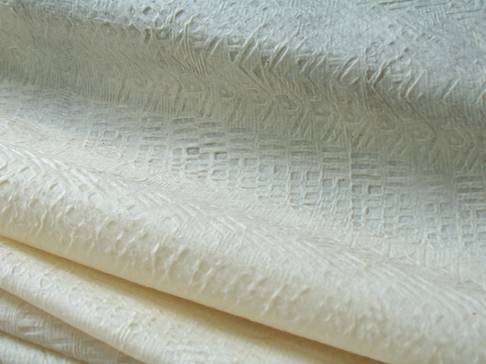
Kapa with watermark, made by Dalani Tanahy

