kapa kulture

This blog is dedicated to Hawaiian kapa and matters related to Hawai'i nei…kuku kapa e!

Archive for the category “Mo’olelo (stories)”

Hawaiian Word of the Day: ‘onipa’a

‘onipa’a: Fixed, immovable, motionless, steadfast, established, firm, resolute, determined (this was the motto of Ka-mehameha V and of Lili’u-o-ka-lani. Lit., fixed movement). hō’onipa’a. To fix, establish firmly. E hō’onipa’a loa wau iā ‘oukou (Bible: Jer. 42:10), I will plant you securely (Pukui & Elbert, Hawaiian Dictionary, 1971).

tree_canopy

Hawaiian Word of the Day: puke / buke

puke/buke: Book, volume (in a series).

ka puke

ka puke

Oratory is a valuable art form throughout Polynesia. As such it has an important role, with etiquette and rules of protocol. Passing down legacies of cultural stories, events, and skills exclusively through oral transmission was a way of life. When the Missionaries came to the islands of Hawai’i in 1820, they eventually established schools in which the spoken Hawaiian language was extended to written forms. The Hawaiian alphabet could be learned for reading and writing and vocabulary words were continuously being added to the written Hawaiian language.

In 1869, a Native Hawaiian historian reported in a newspaper article that Hawai’i was the only Pacific island government to be represented at an Exposition in Paris. Books of law, newspapers, agricultural products, Bibles, textbooks, as well as other examples of writing in ‘ōlelo Hawai’i were exhibited. It is said that European visitors to the Paris Exhibition were awestruck at the examples of their literary accomplishments. For in Europe at that time, monarchs and their noble classes alone received excellent educations. It is reported that one viewer exclaimed, “This…island is ahead in literacy; and the enlightened countries of Europe are behind it!”

Hawaiian Word of the Day: mo’o kū’auhau

mo’o kū’auhau: Genealogical succession, pedigree.

mo’o kupuna: Ancestral genealogy.

I am working on my mo’o kū’auhau, my family genealogy, today with the help of a good friend who has the mana’o about ‘ōlelo. The purpose is to be able to honor my kupuna, my ancestors, when the time comes to introduce myself in the proper way. Ancient protocol would have lengthy introductions in order to know with whom one was speaking… aloha kākou

making_a_family_tree_kalo

Kapa Māna’o…(knowledge)

I had a long conversation the other night with my new friend and kapa maker extraordinaire, Dalani Tanahy www.kapahawaii.com. We hit on topics up, down, and sideways…but guided by a set of questions I held in my hand. The purpose of the call was to understand her point of view related to things of “kapa kulture.” Some of the Q’s were theoretical, political, or cultural in nature. But the practical, …oh, the practical… how wonderful to get the scoop from such a dedicated kapa master! Her wisdom and expertise inspired me to revisit several pieces of my own recently pounded kapa which I felt to be under par. I was unsatisfied with the look and feel of these pieces. I had underestimated the work involved and the previous 10 or more hours was not yet sufficient time spent to pound the wauke fibers into soft and flat submission. The result was striated sheets which were stiff and cardboard-like rather than the papery softness I was aiming for. If it was to be worn as a malo or pā’u garment, scratchy and uncomfortable to wear indeed!

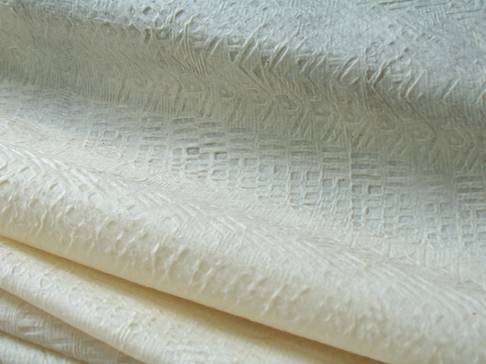
Back to my kua I went, taking my kapa with me… I wet the dried sheet with sprays of misty water. After careful pounding for a couple of hours, I managed to produce a softer, whiter, and more delicate specimen that was getting closer to the ideal proposed by Hawaiian historian, Samuel Kamakau, who had declared that the “well-made tapa must be clearer than the light of the moon, whiter than the snow upon the mountains.” Kapa making is not for the faint of heart or impatient, but as an art it requires careful labor and the time to coax a smooth and graceful hand from coarse, raw material.

kapa2

Hawaiian Word of the Day: honua

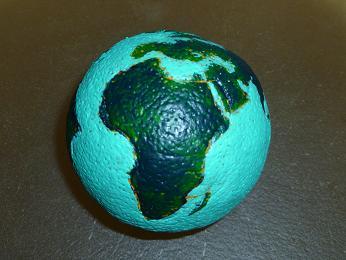
honua: 1. Land, earth, world; background, as of quilt designs; basic, at the foundation, fundamental. Kaua honua, world war. Ka wahine ‘ai honua, the earth-eating woman [Pele]. ho’ohonua. To establish land, act as land; to scoop out earth, as for a fireplace; firmly established (Pukui & Elbert, 1971).

small orange world

Hawaiian Word of the Day: pono’ī

pono’ī: Self, own; private, personal; directly, exactly. ‘O wau pono’ī, his own. Hawai’i pono’ī, Hawaii’s own [own people]. No’u pono’ī kēia, this is my own. I mua pono’ī, directly in front. ‘I’o pono’ī, own flesh and blood. Kona mana’o pono’ī, his personal opinion. Nā hana loio nona pono’ī iho, attorney’s private practice (Pukui & Elbert, 1971).

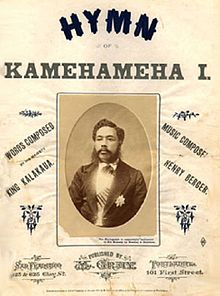
Hawai’i Pono’ī (The National Anthem of the Hawaiian Kingdom, words by King David Kalākaua, 1874)

Hawai`i pono`ī
Nānā i kou mō`ī
Ka lani ali`i,
Ke ali`i

Hui:
Makua lani ē,
Kamehameha ē,
Na kaua e pale,
Me ka ihe

Hawai`i pono`ī
Nānā i nā ali`i
Nā pua muli kou
Nā pōki`i

Hawai`i pono`ī
E ka lāhui e
`O kāu hana nui
E u`iē

Hawai’i’s own
Look to your King
The Royal Chief
The Chief

Royal Father
Kamehameha
We shall defend
With spears

Hawai’i’s own
Look to your Chiefs
The children after you
The young

Hawai’i’s own
O Nation
Your great duty
Strive

Hawaii_Ponoi1

“Beware of the half-truth. You may have gotten hold of the wrong half.” ~Author Unknown

As I was doing research for a timeline on Hawaiian history I came across a fellow by the name of Ken Conklin. At first, I thought I had stumbled upon a well-researched document of unbiased truth. As I continued to read through Mr. Conklin’s references, http://www.angelfire.com/hi2/hawaiiansovereignty/references.html … I was impressed by the wide variety of sources and annotations he listed. But the further down I got in his list, I realized that this man was voicing bigoted sentiment about Hawaiians who believe in a Hawaiian Nation, or Hawaiian Sovereignty in any form. In fact he doesn’t hide his brazen disdain. He ignores the facts of dispossessed Hawaiians… losses in land, culture, and language resulting from historical events.

I bring this up because others might share the views of Mr. Conklin. To these people, I would say, there are two sides to every story. Rationalizing what Conklin calls “the concept that there is no historical, legal, or moral justification for race-based political sovereignty for ethnic Hawaiians” is a clear case of more of the same from hypocrites and thieves… As history has shown, Hawaiians have been of generous spirit and inclusive to the point of our own detriment. Sorry if some people don’t agree with me on this.

e ala e

e ala e

Hawaiian Word of the Day: kahiki

kahiki:1. Tahiti. holokahiki. Holo i Kahiki, sail to Tahiti. The sky was divided into five areas beginning with the term Kahiki: Kahiki-moe, horizon; lit., prostrate Kahiki. Kahiki-kū, sky just above the horizon; lit., upright Kahiki. Kahiki-ka-papa-nu’u, the next layer; lit., Kahiki the elevated stratum. Kahiki-kapapa-lani, high in the sky, almost directly overhead; lit., Kahiki the sky (or god) stratum. Kahiki-kapu-i-Hōlani-ke-ku’ina, the sky directly overhead; lit., sacred Kahiki at Hōlani the meeting place. 2. Any foreign country, abroad, foreign. 3. A variety of banana, common wild on Maui. Kinds are kahiki hae, kahiki mauki, and kahiki puhi.

Hōkūle'a me ke Kahiki

Hōkūle’a me ke Kahiki

“The Tapa” History and Process, Part 3

Throughout the South Pacific islands, each island nation has its own particular nuances in making tapa cloth, which distinguishes it from another. Traditional techniques were passed down and were a life skill in the community. Making tapa cloth was done primarily by women. It is a women’s art that has changed only slightly since ancient times.

Generally speaking, in Western Polynesia a piece of tapa was produced by pasting sheets together in layers and then joining smaller pieces by pasting to make a larger cloth. A heavy, coarse material results from this method. Whereas in Eastern Polynesia a felting process was done, pounding pieces into a single layer, without a fusing agent, or paste. Gradually a large piece of cloth is built up using this felting process. And a softer product is the result.

The tapa cloth in Polynesia begins with a basic process of removing the inner bark, or bast, from the trees and soaking this inner part in water for several days to soften and ferment the fibers and get them ready for pounding into thin sheets. The paper mulberry trees (wauke) are grown for this purpose and carefully cultivated. They are allowed to grow six to eight feet high until one to two inches in diameter. The trees are constantly cared for and tended while they grow. Young branches are broken off to ensure consistent, straight fibers to make smooth, whole tapa sheets unmarred by holes.

Special tools are used in the fabrication of tapa cloth. A type of anvil, a wooden block usually, is a sort of table that the bark is placed on and from start to finish, the tapa is pounded, or beaten. Techniques involve special shells used like knives to strip off the outer bark lengthwise from the tree, and to remove the bast. A selection of carved, wooden beaters flattens and spreads the fibers. Starting with a rounded club, moving to a grooved style that has four parallel sides, serving as steps toward finishing a smooth final product.

Additionally, Hawaiian tapa, or kapa cloth has a final step of beating, which leaves a watermark imprint on the cloth. This watermark is a unique carved design on a beater that served as the artist’s signature and finished the work in an important part of the felting process.

Kapa with watermark, at the California Academy of Sciences Natural History Museum, San Francisco

Kapa with watermark, made by Dalani Tanahy

The Legend of the Kua Kapa

The Legend of the Kua Kapa
From “Nā Mo’olelo Hawai’i o ka Wā Kahiko, Stories of Old Hawai’i” By Roy Kākulu Alameida, Bess Press, Honolulu, 1997.

One day Kalei, who lived in Kahuku on O’ahu, could not find her kua kapa. She looked all over the hale, but it was nowhere to be seen. She asked her neighbors if they had seen it. No one had. She began to feel very sad because it was her favorite kua kapa.

Kalei walked through the village. She listened for her kua kapa. Each kua kapa gave a sound of its own that was either a high or low sound. Her kua kapa made a sound that only she could recognize. She heard others, but they were not hers. She walked to Maunalua, then to Manoa. She still could not find her kua kapa. After reaching Kapalama, she stopped to rest under a lama tree. She had been traveling all day and all night and she was very tired.

Soon Kalei was sound asleep. While she slept, a gentle breeze wafted over her. It carried a faint sound. She woke up with a start and listened carefully. Again, the gentle breeze wafted from ma uka. It carried a familiar sound through the valley to where she sat. “That sounds like my kua kapa,” Kalei said to herself. So Kalei started to walk in the direction of the sound. As she walked toward Līhu’e, near Ka’ala the sound got louder and louder. It sounded so sweet that tears began to roll down her cheeks. At last she would hold her favorite kua kapa again.

The woman who was using the kua kapa lived in Keanapueo, or owl’s cave, near Waikele. Kalei walked along the stream until she reached the cave. “That sounds like my kua kapa,” Kalei told the woman. “How did you get it?” She asked.

“I found it floating in the stream that comes from the mountain,” said the woman.

“It belongs to me. I recognize the sound,” said Kalei.

The woman gave back the kua kapa. But she was not convince that it belonged to Kalei. To see if Kalei was telling the truth, the woman followed her to Kahuku. When they reached there, the woman tied a bundle of ti leaves together. She tossed it into the stream at Pu’uho’olapa. After it floated downstream and disappeared, the woman returned to her home at Keanapueo. A few days later, she saw the bundle of ti leaves floating in the stream near her home. This proved to her that Kalei was the true owner of the kua kapa.

Glossary of Hawaiian Words

kua kapa: tapa-beating anvil

kapa: tapa (bark cloth)

hale: house

lama: hardwood tree

ma uka: toward the mountain
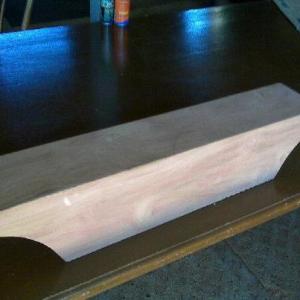
kua kapa o milo

kua kapa o milo

Post Navigation