kapa kulture

This blog is dedicated to Hawaiian kapa and matters related to Hawai'i nei…kuku kapa e!

Archive for the category “Research Project”

Tapa in Tahiti ~ A Close Cousin to Hawaiian Kapa

ʻAhu is what Tahitians a Society Islanders call bark cloth and clothing. The inner bark of the breadfruit, hibiscus, and ficus were used as well as the paper mulberry tree, called aute. Large amounts of aute were cultivated for the ariʻi noble class. Commoners had to use the stiffer breadfruit variety. The inner bark of these various trees were beaten in the same manner, with the wooden club, tupai on the beating anvil, tutua. The fibers were beaten until the fibers became stretched and interwoven using the felting technique of layering.

Large amounts of ʻahu was owned by nobles as a sign of their rank and prestige. It hung on house posts; it was stacked up somewhere in the home to be brought out to visitors in a sign of wealth and pride. Bundles of white ʻahu were hung above the house, pieces up to 590 feet in length were suspended from the roof in chief’s houses! Bundles were also kept in the houses as dedications to the gods, with the god images (Pacific Tapa, 1997).

ʻAhu had many uses and importance here as in the rest of Polynesia. It was used for clothing, funerary wrapping, and bedding. ʻAhu functioned as a gift in marriage, for declarations of peace, and burial objects (Life in the Pacific of the 1700s, 2006).

Layers of soft ʻahu were used for the clothes of ariʻi class nobles and chiefs. Common people wore ʻahu made of bark from breadfruit trees (Artocarpus altilis). Women’s clothing was a skirt called a pareu. Men wore a loincloth called a maro. An ahufara was worn by women as a shawl around the shoulders. The tiputa poncho was worn by all people. There was a different tiputa worn in different types of weather. It could be made of several layers of thick ʻahu from the bark of the Hibiscus tiliaceus. Or a single layer tiputa was worn in dry weather. Multi layered tiputa was worn at night or in cooler weather. High ranking people wore tiputa colored with red, yellow, or brown dye with an applique of red feathers. Colored ʻahu was reserved for people of rank, and only the very highest ranking nobles were permitted to wear red or yellow colored ʻahu (Life in the Pacific of the 1700s, 2006).

Production of dye was women’s work. Brown dye was obtained from the bark of the tiari or tutui trees (Aleurites trilobia). The bark was scraped or pounded and steeped until the strength of the color was achieved. The Aleurites bark has gummy substances and so strengthened the ʻahu cloth and made it more durable. The juice of the Nono shrub (Morinda citrifolia) and tumeric provided yellow dye. ʻAhu was dyed in immersion dye baths or left plain white (Life in the Pacific of 1700s, 2006; Pacific Tapa, 1997).

Fine lines in a single-layered ʻahu were imprinted using a bark cloth beater, called a tupai. In the society Islands red patterns would be made with bamboo stamps dipped in dye and applied. Figures were also drawn freehand (Life in the Pacific of 1700s, 2006). Brushes were used to draw freehand and were made from a grass known as mo’u.

Tahitian decorative motifs since contact with Westerners are recorded to be leaves and fern fronds dipped in dye and pressed to cloth in a pattern. Sometimes pieces of one color were pasted on the surface of another to create an interesting effect.

The art of beating the ʻAhu is not widely practiced today and was almost extinct. Since a revival of traditional skills and knowledge, interest in this cultural art form is stirring (Pacific Tapa, 1997).

Tahitian Design
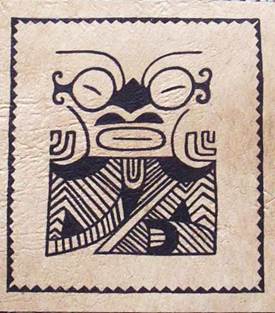
Tahitian Design

Marquesas Design

Marquesas Design

Hawaiian Word of the Day: loko iʻa

loko iʻa: Fish pond.

Loko Iʻa ʻAlekoko also known as "Menehune Fishpond" on Kauaʻi

Loko Iʻa ʻAlekoko also known as “Menehune Fishpond” on Kauaʻi

Loko iʻa are ecosystems created by Hawaiians for subsistence fishing. One of the most noteworthy Hawaiian innovations in this system of aquaculture is the pani wai, or dam, sluice, levee, dike. Of these, the sluice gate to ponds was a masterful invention. It allows for the minnows or baby fish to swim in, grow large within the pond, reaching a size that is too large to swim out.

The Hawaiians’ irrigation system rotated water from streams and sometimes through hand built ʻauwai (canals), to irrigate crops in the lo’i (taro patches), then returned it to the stream of origin. This system relies on a steady natural flow of nutrients to course through the stream to the sea, helping limu (algae) to grow, and fish and lobster to feed. Hawaiians took advantage of these stream-nourished coastal areas and streams to build fishponds for bountiful harvests of food. Fishponds on some islands were as large as 48 acres in coastal areas.

Classification of fish ponds at coastal areas:
loko kuapa: fish pond made by building a wall on a reef
loko wai: freshwater pond or lake
loko iʻa kalo: combination fish pond and taro patch
loko ʻume iki: fishpond with lanes leading in and / or out, used for trapping fish

Classification of fish ponds at upland areas:
akuli: to dam a stream with leaves making a forest pool
mano: dam, stream or water source, headwaters, place where water is obstructed for distribution in channels. Mud dams were made for fish and crustaceans; fish shelters were built in mud shoals.

http://sheri-majewski-art-edu.webstarts.com/community_heritage_2.html

Long Live Kapa! E Ola Mau Ke Kapa!

On Kapa the World
by Anuhea Yagi
June 09, 2011 | 12:15 PM

Two years ago, the following press release was written to announce an event commemorating the annual holiday for King Kamehameha I. The event was held at the Bailey House Museum on Maui…

“Hawaiian historian Samuel Kamakau wrote in 1870, that “all are dead who knew how to make the coverings… that made the wearers look dignified and proud and distinguished.” But the art of Hawaiian kapa-making (i.e. a painstakingly rendered traditional fabric made from the bast fibers of, often, paper mulberry called wauke) was revived some 100 years later—and in 1987, cultural practitioners Wesley Sen, Hokulani Holt and Pua Van Dorpe held kapa-making workshops at the Bailey House Museum.

Returning to the roots of this revitalization—and in honor of Kamehameha Day—Holt and Sen, with the Maui Historical Society and Bailey House Museum, present Hina & Maui: The Story of Hawaiian Tapa Making (Ka Mo’olelo no ke Kapa o Hawai’i Nei) this Friday. Holt has written original hula and chant that tells the legend of Hina and Maui, while Sen has fashioned one-of-a-kind costumes made of traditional kapa for the performers. In addition to the performance, antique kapa from the museum’s collection will be exhibited, plus a presentation on kapa-making by Sen.”

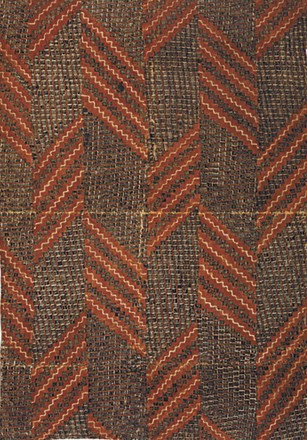
(Pictured: Hawaiian kapa, 18th century, Cook-Foster Collection at Georg-August University in Göttingen, Germany)

(Pictured: Hawaiian kapa, 18th century, Cook-Foster Collection at Georg-August University in Göttingen, Germany)

Hawaiian Word of the Day: kaona

kaona: Hidden meaning, as in Hawaiian poetry; concealed reference, as to a person, thing, or place; words with double meanings that might bring good or bad fortune. Kaona ho’oʻinoʻino, pejorative innuendo. No wai ke kaona o kēlā mele? Who is being referred to in veiled language in that song?

Archaeology at the Kukaʽiwaʽa Landshelf, Kalaupapa National Historical Park

kalaupapanps's avatarPacific Island National Parks

Kalaupapa National Historical Park preserves thousands of archaeological features, many of which date to the time of the kama‘aina and ancient Hawaiians. Recently, National Park Service staff conducted an archaeological survey of a remote area of the park known to have significant features. From April 22 – 26 and May 6-10, cultural resource staff from Kalaupapa National Historical Park camped in the park’s backcountry, on a remote landshelf on Molokai’s north shore, called Kūkaʽiwaʽa. The landshelf is on the eastern border of Waikolu valley, accessible only by boat or helicopter.

Image

Image

Kūka’iwa’a at a distance and on the landshelf.

Image

The helicopter lands at Kūka’iwa’a. Note ‘Ōkala and Mōkapu islands in the background.

The area is heavily vegetated with a native coastal forest of lauhala (Pandanus tectorius) and hau (Hibiscus tiliaceus). The features were obscured by dried lauhala and live vegetation, requiring removal before recording. After the area was…

View original post 266 more words

Hawaiian Word of the Day: kapaʻau

kapaʻau: Raised place in the heiau where images and offerings were placed, and where the invisible gods were thought to dwell.

Kapaʻau is also the name of a place in North Kohala on Hawaiʻi Island. This is the birthplace of King Kamehameha I and nearby is the Moʻokini Heiau, one of the oldest and most sacred sites of ancient worship in Hawaiʻi. Moʻokini is literally many moʻo or many lineages.

Kamehameha statue in Kapaʻau, with school children from plantation families, 1908

Kamehameha statue in Kapaʻau, with school children from plantation families, 1908

Sovereignty inspired at Kahoʻolawe

It is common knowledge that the Hawaiian Monarchy was illegally overthrown with the help of the United States military in 1893. Hawaiʻi was annexed as a territory to the United States illegally in 1898. The Hawaiian Islands became the 50th state in 1959.

“…And in our effort to appear American, we sought to bury that which was Hawaiian. We reorganized our Hawaiian-ness to conform with tourism’s and Hollywood’s pictures of Hawaiians” (p 95).

After decades of discrimination and dispossession, a movement coined the Hawaiian Renaissance began in the 1970’s. It was a turning point and a source of empowerment for Hawaiians.

“On the fourth of January, 1976, Hawaiian resistance broke through the surface. On that day, George Jarret Helm, Jr., Noa Emmett Aluli, Walter Ritte, Jr., and six other young Hawaiians illegally landed on the island of Kahoʻolawe to protest military use of Hawaiian land [for bombing practice and military exercises]” (p. 95).

“If the Dick and Jane books not going to make you proud of who you are, Kahoʻolawe is going to.” ~George Jarret Helm, Jr.

“George Helm and the Protect Kahoʻolawe ʻOhana sought their vision for the future in the wisdom of the past. The struggle for Kahoʻolawe was as cultural as it was political. The leaders of the movement went to kūpuna and kāhuna for guidance that comes from the Hawaiian past and for advice to help restore what is Hawaiian for the present and the future” (p. 97).

“One by one, and then by twos and threes and fours, people and groups rallied to the cause. Save Mākua, Save Sand Island, Save Waimānalo, Save Anahola, Save Kaʻū, Save Wao Kele O Puna, Save Honokahua, Save Hālawa Valley, Save Sunset Beach, Save Miloliʻi: Life of the Land, Pele Defense Fund, Ka ʻOhana o Ka Lae, Ka Lāhui Hawaiʻi, the Hawaiian Nation. Hawaiian voices rose in protest, protest against wrongs done in the past, against abuse in the present, against the loss of Hawaiʻi in the future” (p 99).

In 1992, the United States returned Kahoʻolawe to the people of Hawaiʻi…

Excerpts from “Then There Were None” by Martha H. Noyes (pp.95-97, 2003)

Operation Sailor Hat on Kahoʻolawe, 1965

Operation Sailor Hat on Kahoʻolawe, 1965

Map of Hawaiʻi showing Kahoʻolawe

Map of Hawaiʻi showing Kahoʻolawe

Island of Kahoʻolawe

Island of Kahoʻolawe

George Helm

Kaho’olawe Aloha ʻĀina

Population Decline of Native Hawaiians

The Native Hawaiian population decrease rose at an alarming rate since the first notable contact with Westerners in 1778. Disease was a major factor in this decline. Smallpox, cholera, and even the flu were introduced, and then decimated the Hawaiian people in record numbers. Venereal disease such as gonorrhea also had an additionally insidious effect of sterilizing its victims!

The perfection of the marine chronometer aided European cartographers in map making and was a primary reason for increased foreign invasion in the Hawaiian Islands. When the Hawaiian Islands were charted on maps beginning in the 1700’s, sailors, merchants, and missionaries came in droves until devastating consequences were reflected in cultural losses, loss of lands, way of life, and most importantly, decreasing numbers of the Hawaiian people.

Foreigners were instrumental in exploiting the natural resources in the region. Discovery that large profits could be made from the whaling industry, the sandalwood trade, and the subsequent development of sugar plantations brought famine, cultural disruption, and intermarriage to Hawaiian families. Combined with diseases, these factors had a fatal effect on the population of Native Hawaiian people.

In 2003, only 5000 individuals identified themselves as Native Hawaiian. This figure does not include races that identify themselves as part-Hawaiian, which is an independent category. In 2010, the United States Census combined all races from the Pacific Island region into one category and counted 540,013 individuals. This category includes people from the Philippines, Guam, Micronesia, Samoa, Tonga, and other island nations.

Population Decline of Native Hawaiians

Population Decline of Native Hawaiians

Hawaiian Word of the Day: waihoʻoluʻu

waihoʻoluʻu: Color, dye, coloring liquid: to impart scent. Paʻa i ka waihoʻoluʻu, dyed, colored. He aha ka waihoʻoluʻu o kēlā pua? What is the color of that flower?

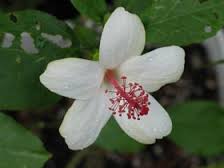
He Hibiscus waimeae keʻokeʻo kēia.

Hibiscus waimeae, a native to Kauaʻi

Hibiscus waimeae, a native to Kauaʻi

Post Navigation