kapa kulture

This blog is dedicated to Hawaiian kapa and matters related to Hawai'i nei…kuku kapa e!

Archive for the category “Research Project”

Bark Cloth of Uvea (Wallis Island) and Futuna Island

Wallis and Futuna

Wallis and Futuna

UVEA
In Uvea, the people speak a language closely related to Tonga, the term for bark cloth in the island of Uvea is ngatu. Paper mulberry, hiapo, is cultivated on the east coast where rainfall is heavy. Double layers of ngatu are beaten out and pasted together and are designed using freehand designs or kupesi-imprinted methods. If the kupesi pattern block is used, it is made form the midrib of leaf sewn to wads of leaf as in Tonga, and this is the traditional style for Uvea to make designs on the cloth.

Contemporary kupesi are carved in wood. Freehand painting is also done. The design motifs have changed over time from simple, repetitious patterns to modern designs that show a slice of life such as drinking kava, dancing, climbing trees, and fishing. Uses of ngatu include bed covers and screens, and clothing. There are two types of wrap-around skirts that are distinct in Uvea. One called a lafi that is decorated using the kupesi and then over-painted with black dye. The second is called a tohihina, which is decorated completely with freehand design using a pen in black dye on white ngatu cloth.
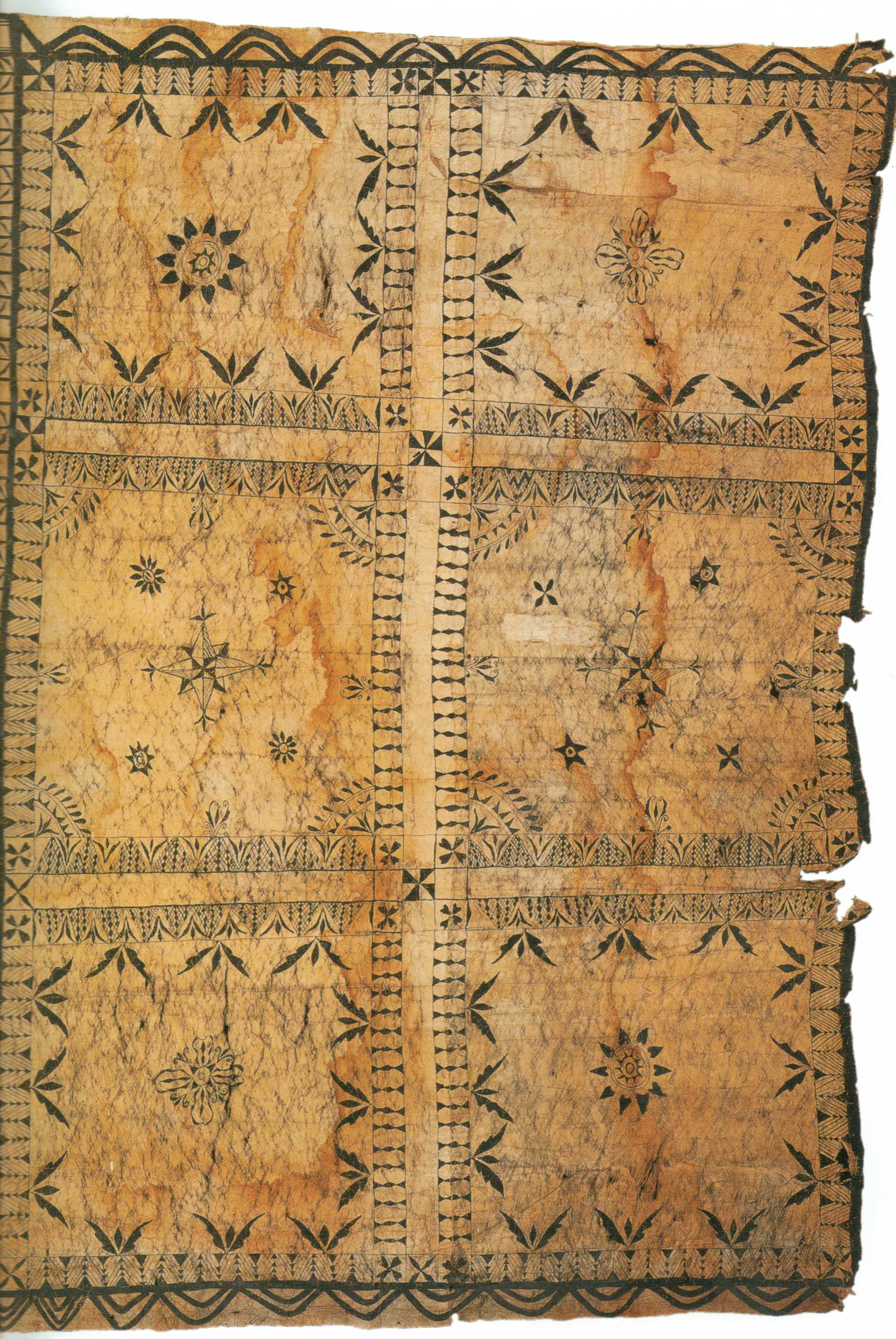
Ngatu of Uvea

Ngatu of Uvea

FUTUNA
As in Samoa, the general term used for tapa in Futuna is siapo. The name for the paper mulberry plant is lafi. Siapo is the term used when large pieces of the cloth are made by groups of women. A salatasi identifies a smaller sheet made by a single individual that is made into a waist wrap to be worn.

The bottom of an old canoe is carved for use as a design tablet, in the style of Tonga. Designs are also applied using bamboo pens or pens made from coconut midrib. The pens are used to draw very intricate patterned designs. Ruled grids are also drawn to create squared-off areas for a variety of patterns within one piece of cloth. As a finishing touch, sometimes the edges of an article are cut into fringes.
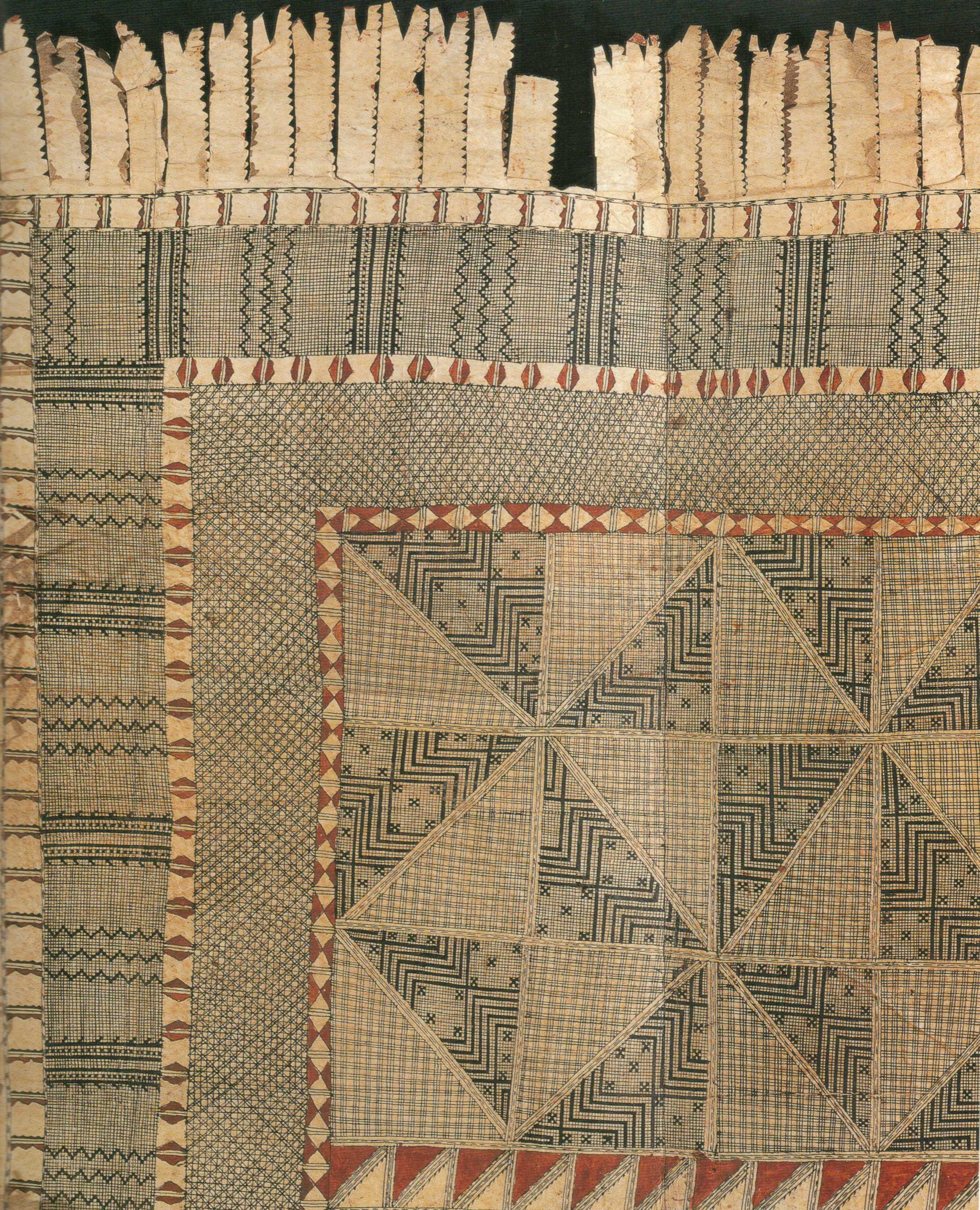
Siapo of Futuna Island

Siapo of Futuna Island

Today, costumes for dance consist of a tepi skirt, a lafi sash worn over one shoulder, and a white turban wrap for the head. Borders on tepi skirts are sometimes created by using freehand painting with a brush and fine lines applied with a pen.
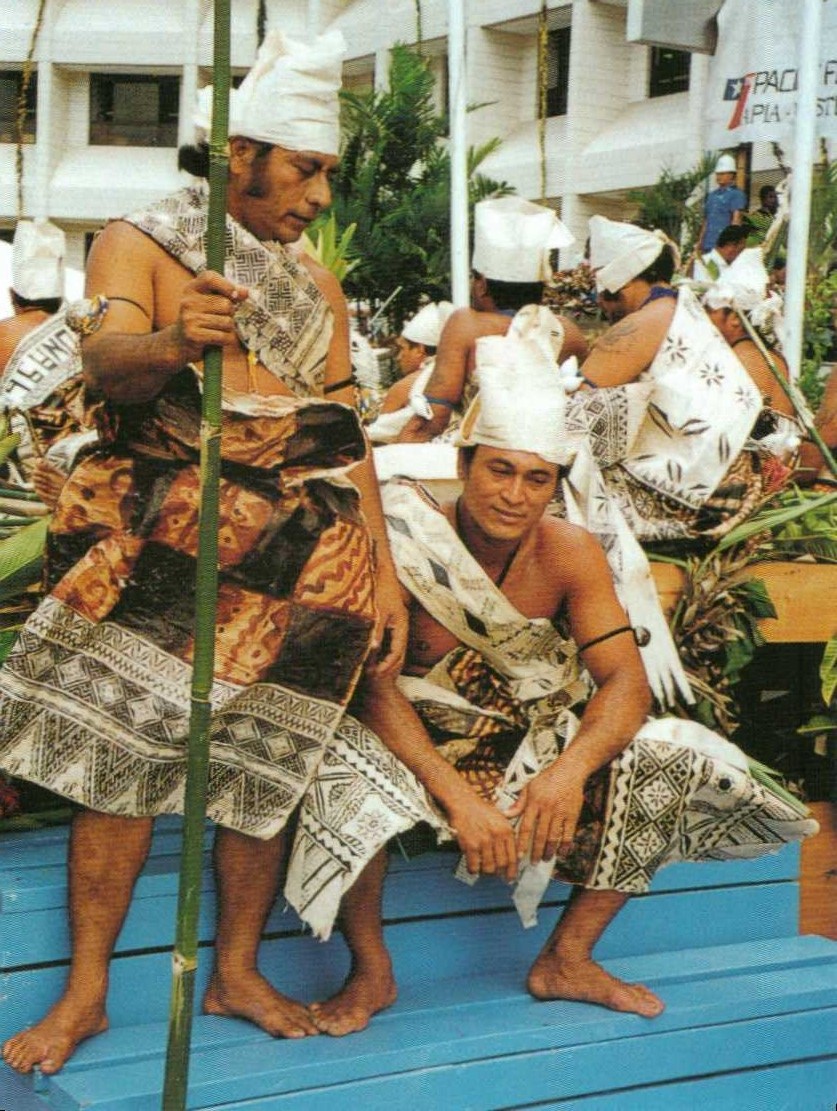
"Dancers from Futuna at the 1996 Festival of Pacific Arts, Apia Western Samoa.  The dress of these dancers consists entirely of newly made tapa, from the white turban to the lafe bandolier and the tepi skirt (p.64, Pacific Tapa, R. Neich & M. Pendergrast).

“Dancers from Futuna at the 1996 Festival of Pacific Arts, Apia Western Samoa. The dress of these dancers consists entirely of newly made tapa, from the white turban to the lafe bandolier and the tepi skirt (p.64, Pacific Tapa, R. Neich & M. Pendergrast).

Clinging for Life in Hawaii’s Streams

islanderparkscience's avatarPacific Island National Parks

Learn more.

And this is how we keep track of them.


View original post

Groundwater – The Movie

Archaeology Meets Modern Art

gmacg1's avatarheritagelandscapecreativity

Flow

Beware This Is A Modern Art Meets Archaeology Mash Up Post.

Text reports on presentations at a conference session with interspersed images found on streets of Pilsen & Prague, Czech Republic.

DoveArchaeology met modern art in a conference session ‘Archaeology meets modern art: artists’ approaches to prehistoric data‘ at the recent EAA in Pilsen.

Theatrum MundiThe presentations included Dragos Gheorghiu’s work on Artchaeology.  He presented examples of work in Romania which combined artistic modes of practice, reconstruction and experimental archaeology, and creation of digital environments which are blended to generate an augmented reality: ‘immersive transport to the past’.  One such example was the reconstruction at Vadastra of a fragment of the workshop of a Roman villa rustica and associated ceramic kiln, glass kiln and iron furnace.  

Flea StencilArtist Sebastian Walter explained the approach to the development of the Schoeppingen time-machine for the Schoppingen Art Foundation, Germany. …

View original post 622 more words

Te Papa Tongarewa Museum in Aotearoa~New Zealand~

Te Papa Tongarewa Museum in Aotearoa, New Zealand has an incredible collection of Pacific tapa on exhibit. The exhibition is on for 2 more days on site. Check out their awesome online tapa gallery by clicking on the link below!

tapa gallery

Info about the onsite exhibit here:

Tapa Exhibit, “Paperskin”
Te Papa

Hoʻowehi i ke kapa

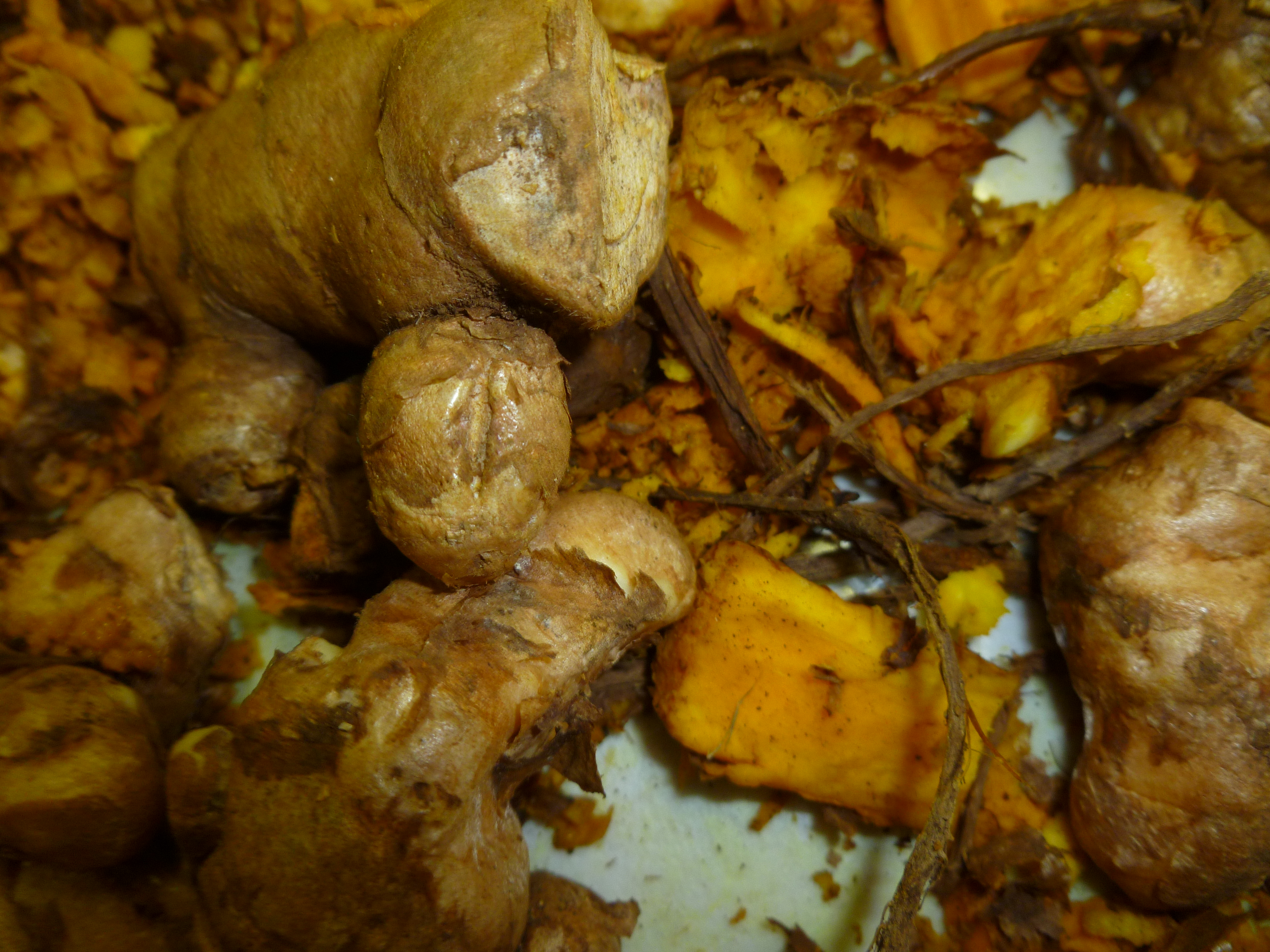
Today I am experimenting with various dyes and creating colors that will be used to dye the kapa I have made. I will hoʻawa, extract dye colors from plants, to make ka waihoʻoluʻu, the dye, using ʻōlena for yellow, ʻukiʻuki for blue… overlapped they might make green… we shall see…will post photos later…

The botanical names for these dye plants are:

ʻōlena

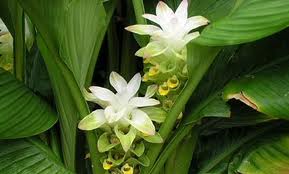
ʻōlena ~ Curcuma longa


ʻōlena plant

ʻōlena plant

ʻukiʻuki ~ Dianella Sandwicensis

ʻukiʻuki ~ Dianella sandwicensis

~ALOHA~

Hawaiian Word of the Day: pōpoki

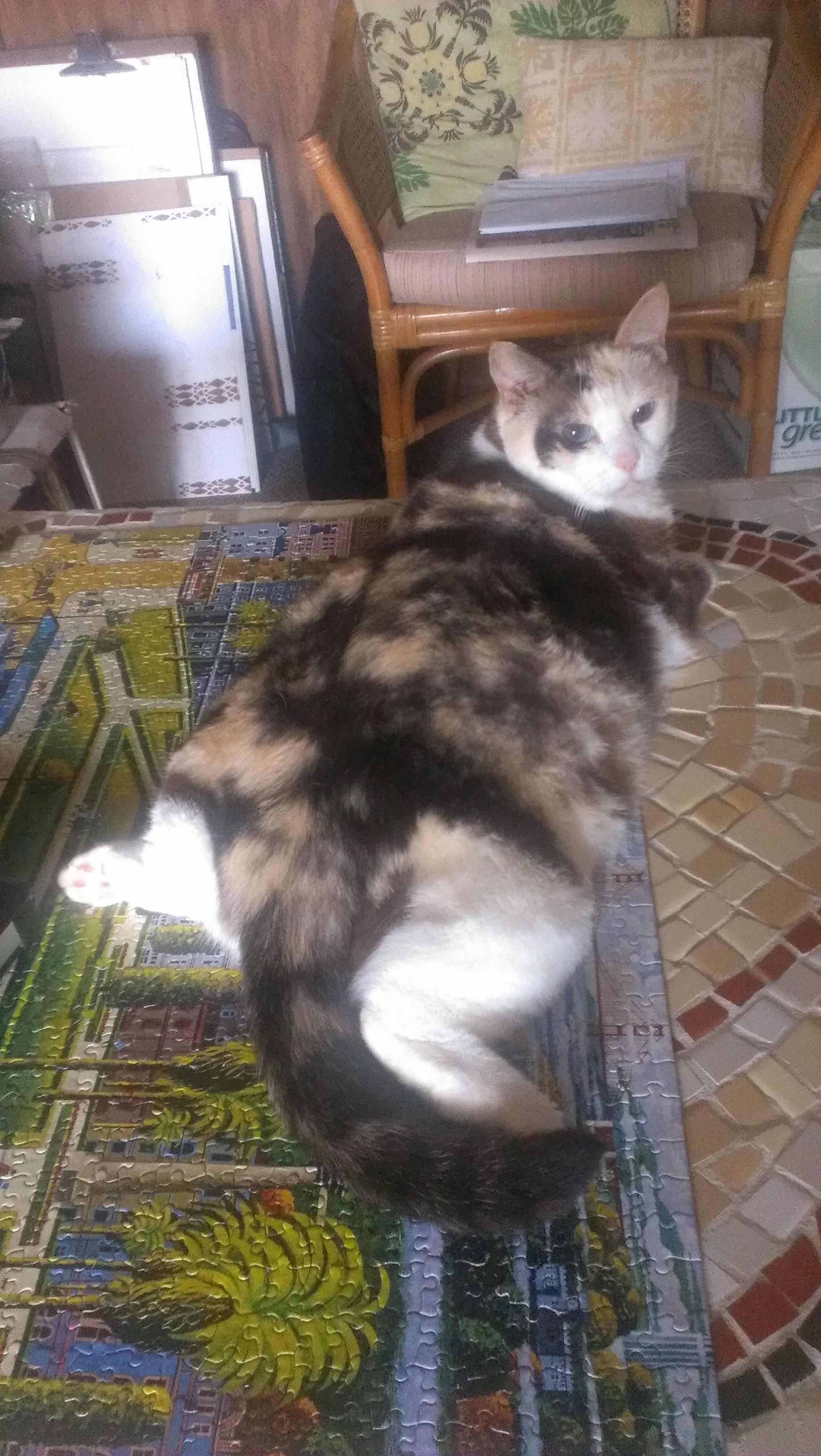
pōpoki: Cat (said by some to be derived from English “poor pussy”). Pōpoki kī, a spitting cat [spiteful, malignant person]. Pōpoki lehu, Maltese cat; lit., ash cat. Pōpoki nāwaliwali, weak cat [a weakling]. Pōpoki peʻelua, gray cat with darker markings, as a tabby cat; lit., caterpillar cat.

ko'u pōpoki, my cat

ko’u pōpoki, my cat

Tapa from Fiji is called Masi

Fijian Masi
The term for the beaten cloth in Fiji is masi. The method for making masi is basically the same as in Tonga where it is prepared using a process of soaking and beating the inner bast of the paper mulberry (Broussonetia papyrifera) is followed by pasting the pounded sheets together for length and strength.

Fiji Masi

Fiji Masi

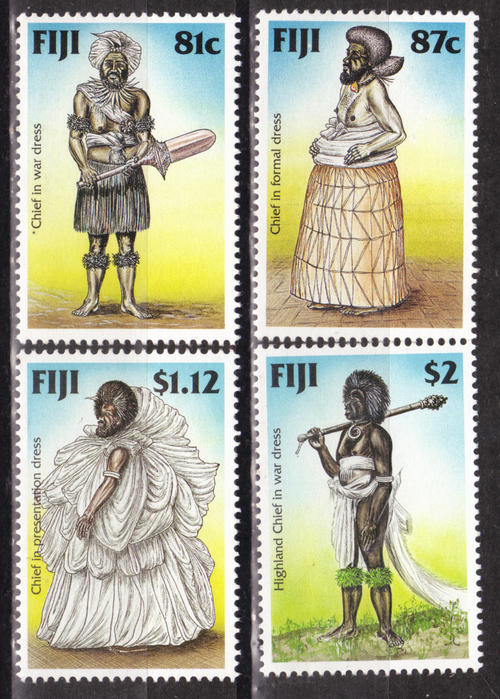
In the past, men commonly wore a malo or masi, which is a strip of plain white bark cloth wound around the waist and between the legs, with a train billowing behind. The longer the length of the train, the greater the chiefly status. For women, everyday clothing was a skirt called a liku. Masi is considered nearly obsolete for traditional dress since its replacement by western style clothing and textiles. Traditional dress styles using masi are not worn as everyday wear but they are still used for dances and important ceremonies like the installation of a chief, or special family occasions.

Traditional Wedding Dress

Traditional Wedding Dress

Ceremonial masi on the occasions of funerals, weddings, and chiefly ceremonies is ongoing. The bride and groom will be wrapped in long pieces of masi, in the customary fashion, and similar coverings would be worn when chiefs are installed. There is great honor associated with masi and it is a symbol of wealth. Gifts of masi are given in extravagance for marriages. It is a source of pride for the whole village to produce this exchange of wealth. Masi is very significant at death and is presented as a gift when someone dies. There is spiritual power associated with masi, as it was “recognized as having ability to carry the strength of the gods” (Fulmer, 1998).

Fijian Chiefs Wearing Masi Depicted on  Commemorative Stamps

Fijian Chiefs Wearing Masi Depicted on Commemorative Stamps

Design work of Fijian Masi
There is a variety of techniques used in Fiji to decorate the masi. They range from freehand painting with pandanus brushes as in Samoa, to Fijian rollers and stencils, to the design tablets of Tongan influence. The finished lengths of masi decorated using rubbing tablets with midrib patterns are known as gatu vakatoga, translated as “Tongan cloth made in the Tongan way.” Gatu vakaviti is a combination of the Tongan rubbing method and the Fijian stencil application method. Gatu vakaviti literally means, “Tongan cloth in the style of Fiji” (Neich & Pendergrast, 1997).

Do you want to know more about Fiji? Here are two good articles that explain current events, traditional foundations, and colonial history:

TRADITIONAL CHIEFS REMAIN CORNERSTONE IN CHANGING FIJI

Fiji’s military ruler disbands Great Council of Chiefs

Fiji in Oceania

Fiji in Oceania

Hawaiian Word of the Day: hāʻawi

hāʻawi: To give, grant, allot, hand, present; to bid as at auction; to offer; to deal, as cards; a deal. Hāʻawi lokomaikaʻi, to give freely, open-handed. Hāʻawi wale, to give freely, gratis.

ʻukiʻuki ~ Dianella Sandwichensis

ʻukiʻuki ~ Dianella Sandwicensis


Ka ukiʻuki ʻo ia haʻawi. The ʻukiʻuki it’s giving.

Hawaiian Word of the Day: heiau

heiau: Pre-Christian place of worship, shrine; some heiau were elaborately constructed stone platforms, others simple earth terraces. Many are preserved today. Several types are listed below. On the island of Kauaʻi where I live, there are 17 heiau located in the Na Pali district, 22 in the district of Haleleʻa, 20 in the Koʻolau district, 13 in the Puna district, and 81 in Kona district. Dedication of these heiau were to the four major gods; KU, KANE, KANALOA, and LONO, who represented Akua in natual phenomena. ʻAumakua were also honored by prayer and offerings.

Hale heiau, house of worship.

heiau hoʻōla: Heiau for treating sick.

heiau hoʻouluʻai: Heiau where first fruits were offered to insure further growth. Lit., heiau for the increase of food crops.

heiau hoʻoulu ua: Heiau where offerings were made to insure rain.

heiau hoʻoulu iʻa: Heiau where fish were offered to insure good fishing.

heiau kālua ua: Heiau for stopping rain, or (less frequently) for bringing rain. One such heiau named Imu-Kālua-ua (rain-baking oven) was in the Kaunakakai quadrangle, Molokaʻi; a land section in Puna, Hawaiʻi, also has this name. Rain in leaf packages is said to have been baked in an oven.

heiau maʻo: Small temporary heiau covered with tapa stained green (maʻo). Used for the hoʻouluʻai ceremony to bring food.

heiau poʻo kanaka: Heiau where human sacrifice was offered.

heiau waikaua: Heiau used for services to bring success in war.

luakini: Temple, church, cathedral, tabernacle; large heiau where ruling chiefs prayed and human sacrifices were offered; to perform temple work.

Luakini-type heiau were the largest and most complex and were sacrificial to KU. The KANE heiau were the simplest and were accessible to commoners. LONO heiau were dedicated to agriculture, and KANALOA heiau were associated with fishing. KU and LONO required complex worship and offerings.

Puʻu honua were places of refuge and restoration of pono when kapu was broken. The puʻu honua were consistent with Hawaiian protocol and would not be adjacent to heiau where human sacrifice was conducted. For example, at the puʻu honua at Wailua, Kauaʻi were for royal birth and burial. At such a place of mana and esteem, respite and peace was sought and mau haʻa lelea or repentance was made.

heiau tower

http://www.kaimi.org/heiau.htm

Moʻokini Luakini

Post Navigation