kapa kulture

This blog is dedicated to Hawaiian kapa and matters related to Hawai'i nei…kuku kapa e!

Archive for the category “Mo’olelo (stories)”

Hawaiian Word of the Day: kapaʻau

kapaʻau: Raised place in the heiau where images and offerings were placed, and where the invisible gods were thought to dwell.

Kapaʻau is also the name of a place in North Kohala on Hawaiʻi Island. This is the birthplace of King Kamehameha I and nearby is the Moʻokini Heiau, one of the oldest and most sacred sites of ancient worship in Hawaiʻi. Moʻokini is literally many moʻo or many lineages.

Kamehameha statue in Kapaʻau, with school children from plantation families, 1908

Kamehameha statue in Kapaʻau, with school children from plantation families, 1908

Sovereignty inspired at Kahoʻolawe

It is common knowledge that the Hawaiian Monarchy was illegally overthrown with the help of the United States military in 1893. Hawaiʻi was annexed as a territory to the United States illegally in 1898. The Hawaiian Islands became the 50th state in 1959.

“…And in our effort to appear American, we sought to bury that which was Hawaiian. We reorganized our Hawaiian-ness to conform with tourism’s and Hollywood’s pictures of Hawaiians” (p 95).

After decades of discrimination and dispossession, a movement coined the Hawaiian Renaissance began in the 1970’s. It was a turning point and a source of empowerment for Hawaiians.

“On the fourth of January, 1976, Hawaiian resistance broke through the surface. On that day, George Jarret Helm, Jr., Noa Emmett Aluli, Walter Ritte, Jr., and six other young Hawaiians illegally landed on the island of Kahoʻolawe to protest military use of Hawaiian land [for bombing practice and military exercises]” (p. 95).

“If the Dick and Jane books not going to make you proud of who you are, Kahoʻolawe is going to.” ~George Jarret Helm, Jr.

“George Helm and the Protect Kahoʻolawe ʻOhana sought their vision for the future in the wisdom of the past. The struggle for Kahoʻolawe was as cultural as it was political. The leaders of the movement went to kūpuna and kāhuna for guidance that comes from the Hawaiian past and for advice to help restore what is Hawaiian for the present and the future” (p. 97).

“One by one, and then by twos and threes and fours, people and groups rallied to the cause. Save Mākua, Save Sand Island, Save Waimānalo, Save Anahola, Save Kaʻū, Save Wao Kele O Puna, Save Honokahua, Save Hālawa Valley, Save Sunset Beach, Save Miloliʻi: Life of the Land, Pele Defense Fund, Ka ʻOhana o Ka Lae, Ka Lāhui Hawaiʻi, the Hawaiian Nation. Hawaiian voices rose in protest, protest against wrongs done in the past, against abuse in the present, against the loss of Hawaiʻi in the future” (p 99).

In 1992, the United States returned Kahoʻolawe to the people of Hawaiʻi…

Excerpts from “Then There Were None” by Martha H. Noyes (pp.95-97, 2003)

Operation Sailor Hat on Kahoʻolawe, 1965

Operation Sailor Hat on Kahoʻolawe, 1965

Map of Hawaiʻi showing Kahoʻolawe

Map of Hawaiʻi showing Kahoʻolawe

Island of Kahoʻolawe

Island of Kahoʻolawe

George Helm

Kaho’olawe Aloha ʻĀina

Population Decline of Native Hawaiians

The Native Hawaiian population decrease rose at an alarming rate since the first notable contact with Westerners in 1778. Disease was a major factor in this decline. Smallpox, cholera, and even the flu were introduced, and then decimated the Hawaiian people in record numbers. Venereal disease such as gonorrhea also had an additionally insidious effect of sterilizing its victims!

The perfection of the marine chronometer aided European cartographers in map making and was a primary reason for increased foreign invasion in the Hawaiian Islands. When the Hawaiian Islands were charted on maps beginning in the 1700’s, sailors, merchants, and missionaries came in droves until devastating consequences were reflected in cultural losses, loss of lands, way of life, and most importantly, decreasing numbers of the Hawaiian people.

Foreigners were instrumental in exploiting the natural resources in the region. Discovery that large profits could be made from the whaling industry, the sandalwood trade, and the subsequent development of sugar plantations brought famine, cultural disruption, and intermarriage to Hawaiian families. Combined with diseases, these factors had a fatal effect on the population of Native Hawaiian people.

In 2003, only 5000 individuals identified themselves as Native Hawaiian. This figure does not include races that identify themselves as part-Hawaiian, which is an independent category. In 2010, the United States Census combined all races from the Pacific Island region into one category and counted 540,013 individuals. This category includes people from the Philippines, Guam, Micronesia, Samoa, Tonga, and other island nations.

Population Decline of Native Hawaiians

Population Decline of Native Hawaiians

Walaʻau–talking story

I spent my day yesterday playing around with some natural dyes I’ve collected, and dye mediums. I practiced printing designs with my ʻohe kāpala (bamboo stamps). This is one of my practice pieces done on watercolor paper with kukui nut ashes (grey) and ʻalaea (red).

kapa wehi

kapa wehi

I used kukui nut oil mixed with water as the medium for the ‘alaea. It made a good consistency that enabled the pigment to be both dark enough and fluid enough for printing. The kukui ash did not work well with oil and/or water. I ended up using it dry and applied it using a small piece of kapa as a brush. This method of “dry painting” with a tapa brush was noted by Te Rangi Hiroa (Peter H. Buck) who was a director at the Bishop Museum from 1936 until he died in 1951. Among his many achievements, Buck wrote a series of scholarly publications entitled “Arts and Crafts of Hawaii” (1964) in which he wrote on various subjects of Hawaiian cultural life. Clothing, was one of the sections and it includes a pretty thorough discussion of Hawaiian kapa history, tools, and processes. Some other sections in the Arts and Crafts of Hawai’i series are food, houses, canoes, fishing religion, war and weapons, death and burial, and more.

Kapa that I made over the past weeks…

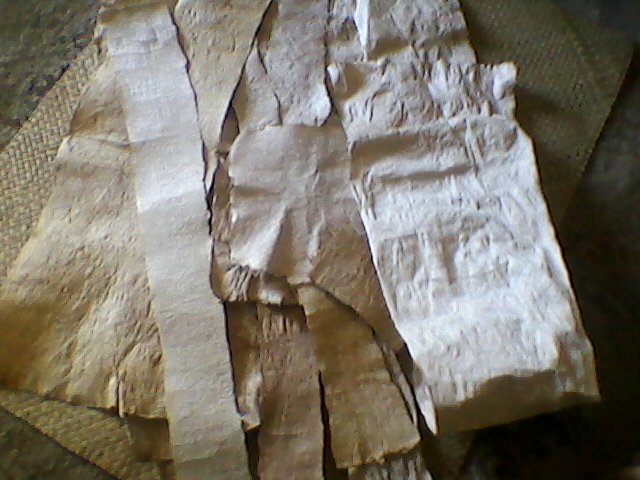
This photo shows 14 pieces of kapa in a variety of sizes and textures. Some are heavy and stiff, some are thin, fine, and flexible. Many hours were spent pounding these using the hohoa and iʻe kuku to form a smooth cloth from the raw wauke tree bark, paper mulberry tree. These pieces are now ready for ho’owehi, decoration. The ʻohe kāpala are literally bamboo stamps, carved to be printing tools. I have gathered raw materials to make hoʻowaiulu, dyes. I have ʻōlena root for yellow, kukui nut ashes for black, and ʻalaea a mineral in the soil for red. I also have boiled down banana flower petals and got a brown wash. Stay tuned for the results! ~Aloha~

white kapa  kapa ke'ʻokeʻo

white kapa
kapa ke’ʻokeʻo

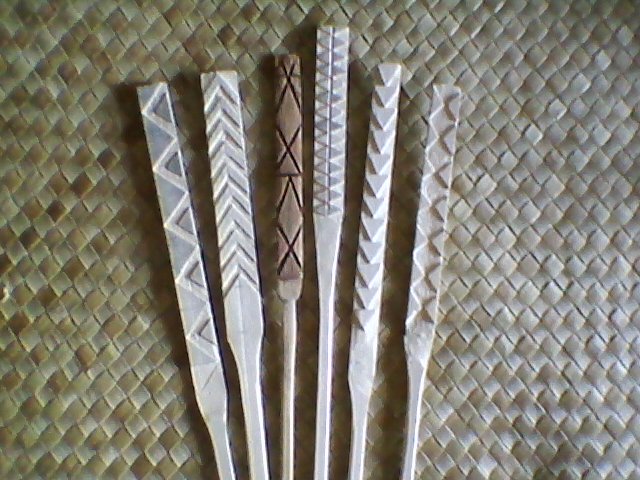
ʻohe kāpala, bamboo stamps

ʻohe kāpala, bamboo stamps

Nā Maka o ka ʻĀina (The Eyes of the Land)…Hawaiian documentary and educational videos

http://www.hawaiianvoice.com/video-catalog/language/Nā Maka o ka ʻĀina, Eyes of the Land…Hawaiian documentary and educational videos

Education: Culture Matters…a video produced by Kamehameha Schools

Education: Culture Matters, a video produced by Kamehameha Schools

An intimate look at the heart of culture-based education and the indisputable evidence that children thrive in an environment that fosters a learning process they can relate to.

Ka Hana Kapa Video by lomilomihawaii…it’s a good one!

” title=”ka hana kapa” target=”_blank”>

Hawaiian Word of the Day: kāhili

kāhili: 1. Feather standard, symbolic of royalty; segment of a rainbow standing like a shaft (also a sign of royalty); to brush, sweep, switch (to spray, as in kāhilihili: Kāhilihili ke kai a ka he’e nalu, spraying sea of surf-rider).

Kāhili chants (As in ‘ou’ou, to describe the pinnacle or high peak): I ka lālā wēkiu ka pua o Lono, i ka ‘ou’ou o nā lani nui, in the topmost branch the flowers of Lono, among the highest of the high chiefs.

2. Pa’a kāhili, kāhili bearer. Kū kāhili, one standing by a kāhili or carrying it. Kāhili pulu, to clear away mulch. Haku ‘ia na’e ho’i ka hulu o ka moa i kāhili i mua o nā ali’i; kāhili ‘ia na’e ho’i kō kua, chicken feathers indeed are woven into a standard for the presence of the chiefs; your back is brushed by the kāhili.

ho’okāhili. To brush or fan gently. 2. The crape myrtle (Lagerstroemea indica), an ornamental shrub from China, with small oval leaves and panicles of pink, white, or purple crape flowers. 3. A small tree (Grevillea banksii) from Australia, related to the silky oak, ‘oka kilika, but the leaves with fewer subdivisions and the flowers red or cream-white. This is a later application of kāhili to a plant. Flowers not used for leis on head or around neck because of irritating hairs, but made into leis for hats by sewing alternated rows of flower clusters and own leaves on pandanus band. 4. Kāhili ginger (Hedychium gardnerianum), from the Himalaya region; much like the white ginger but with a more open flower head, the flowers with narrow yellow segments and one bright red stamen apiece. Also ‘awapuhi kāhili. 5. A seaweed, probably Turbinaria ornata.

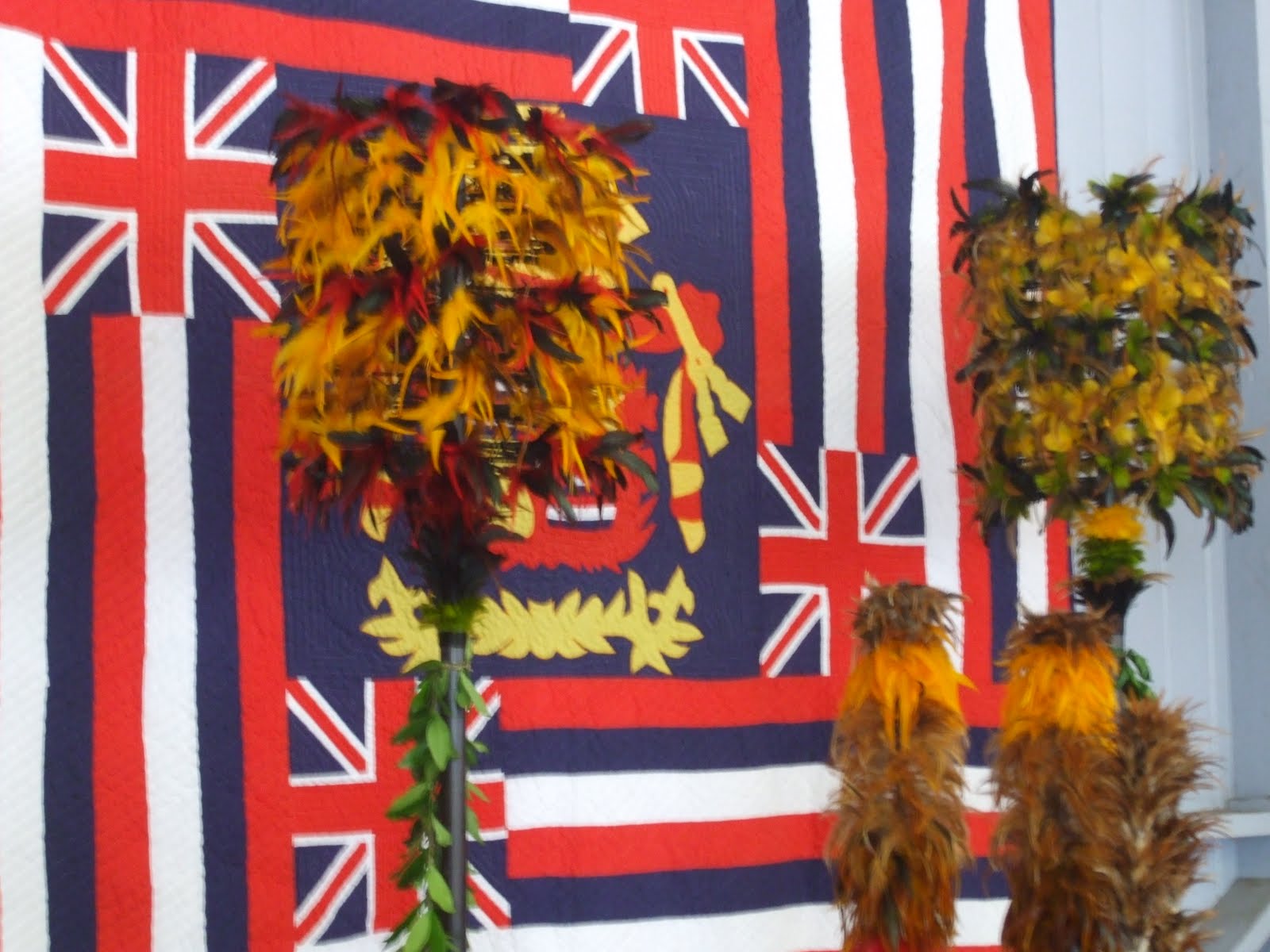
kahili against flag quilt

kahili ginger

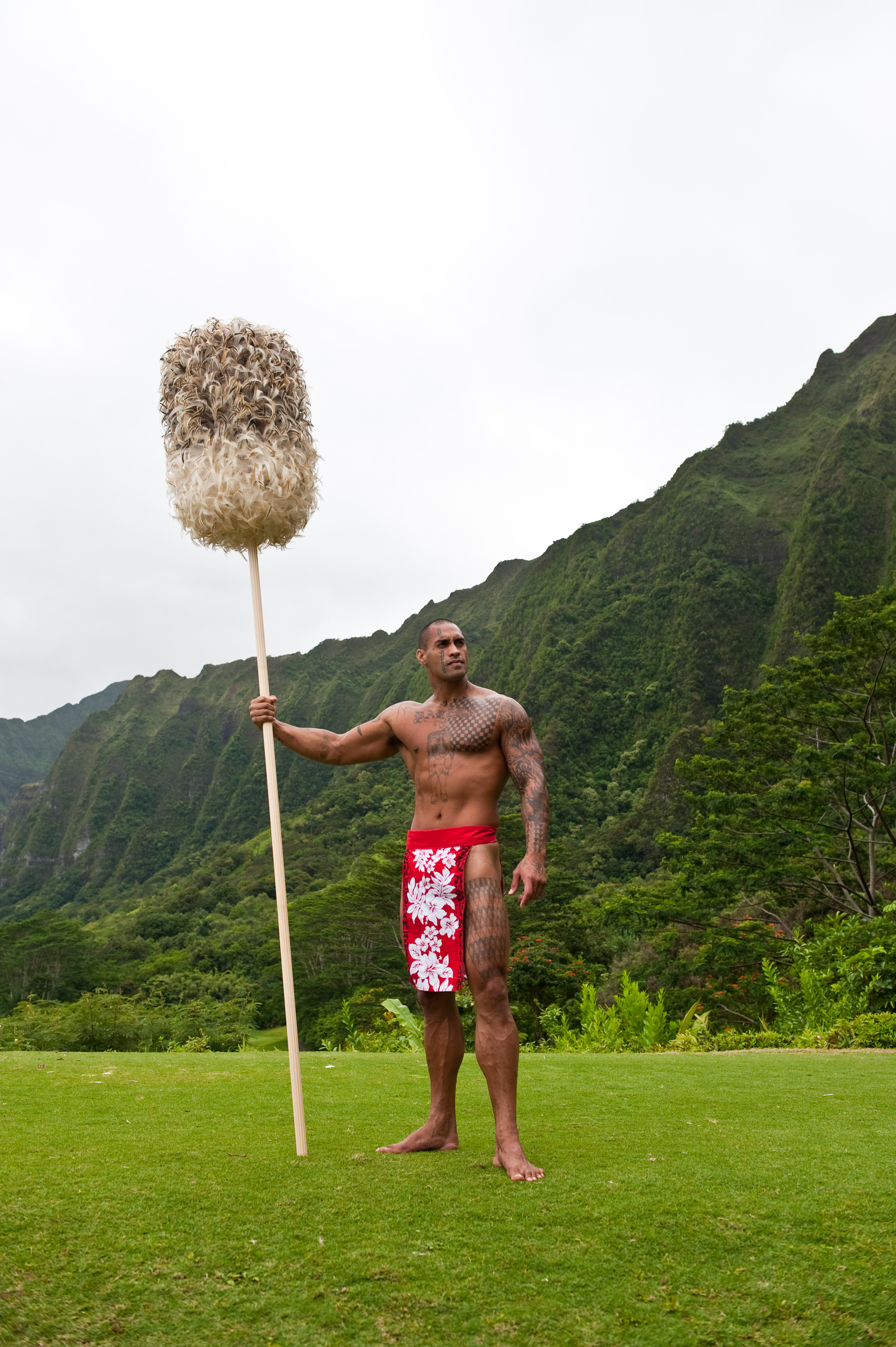
kahili bearer

restored kahili returned to bishop museum

Post Navigation